Category Archives: American literature

Everything I Never Told You: Secrets, Lies and Misunderstandings

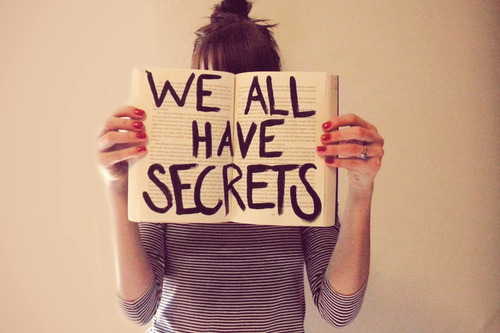
One of the questions at the heart of Celeste Ng’s excellent Everything I Never Told You is what might be the difference among secrets, lies and silences, and where responsibility falls for speaking (truth or lies) and for listening.

At first blush the novel is about unravelling mystery and secrets. The opening sentence “Lydia is dead,” invites the immediate line of questioning of who, what, when, where and how. Talk about using conflict to drive plot. In exploring the mystery of her death we learn of Lydia’s family – Marilyn, James, Nath and Hannah – and how they collectively and individually both keep secrets and assign meaning to one another’s behaviours (and silences).

To me the most engrossing parts of the novel are those when characters inaccurately – and frustratingly – ascribe meaning to someone else. Layers of misunderstanding and misinterpretation are confounded by a resolute and seemingly intractable refusal to ask one another about the validity of these (deeply held) (and false) beliefs. Of course the more certain we are of the motivations and beliefs of those we love the less likely we are to realize we might be best off checking whether these are, after all, true. Hardly the case that those we love are lying to us, or keeping secrets, rather the responsibility for the falsehood is ours as we fail to check our assumptions and instead walk around certain of the falsehood we have created.

It’s been well established that I love good character-driven stories, and the characters here are richly drawn. There are moments when their motivations seem a bit rigidly defined by what the character is ‘like,’ but these motivations do evolve as the characters learn about themselves, grow and change.

The first line (and chapters) primed me for a murder mystery, but this is not a who-dunnit novel. The initial frenetic pace of setting the scene for Lydia’s death tempers after the opening chapters and settles into something more of a family and character drama. I say that not as a complaint, but more of a caution that while you may find yourself staying up late to read this one it won’t be because you’re driven to figure out the crime, so much as to figure out when – and if – the family members will recognize their false assumptions, the limits of their beliefs about themselves and those they love, the necessity to openly share.

I’ll be putting this one on my ‘books to buy or borrow’ list (post to come soon…) as you think about possible holiday shopping. I’d say it’s a great book to buy for any reader on your list, and perhaps for yourself. And certainly one to prompt you to ask yourself what do I actually know about my family and myself, what stories do I tell myself, and when is a secret simply the question we never thought or borthered to ask.

1 Comment

Filed under American literature, Fiction, Mystery, New York Times Notable, Prize Winner

Your Fathers, Where Are They? And the Prophets, Do They Live Forever?: My Ongoing Love Affair With Dave Eggers

Dave Eggers doesn’t know it, but I love him. Hard. I just double checked his bibliography and I’ve read most of it (see my reviews of The Circle, A Hologram for the King, and Zeitoun for proof. A Heartbreaking Work of Staggering Genius and What is the What date from the dark time in the Era Before the Blog). Count me among the devotees of The Believer and McSweeney’s. I’m not ashamed to love him (why would I be? It’s not cool in the McSweeney’s universe to be sincere). I love him for the earnest efforts to share literacy, the belief in his novels in the power of storytelling to make social change, the imagination in the form and voice of his texts.

Did I love this book? No. But happily a reader can not love a book and still love an author. So there. I did like it a lot. Here’s the premise: disgruntled, slightly off-kilter, Thomas, kidnaps a heap of people so that he can interrogate them on a wide range of questions. The novel is told entirely in dialogue (the reviewers love this sort of formal play, and I did find it neat) as Thomas tries to get to the bottom of why an astronaut isn’t on a shuttle, why his friend was killed by the police, why his mother wasn’t a better mother, and, you know, why the crisis among American youth.

It’s this last question that really undergirds the novel. It’s not so much a question as it is the thesis: the promise of hard work is a lie and the lie has led to all sorts of sadness. Those who insist on perpetuating the lie – media, government, state officials, parents – do so at their own peril, as the ‘disaffected youth’ who are confronted by the gap between the promise and their experience are set up for all kinds of volatile response as a result. Cue kidnapping a senator.

Why didn’t I love it? The form felt a bit forced. The argument a bit overwrought (and while I can’t imagine any other way of ‘stating’ the argument in a book that is entirely statements I did think Eggers could have trusted me more to work out the argument (come to think of it I think I had the same complaint in The Circle).

Despite these annoyances, it’s a timely book for the start of another academic year. As students flood my campus I wonder what might happen if I stopped each and every one of them and asked the same kinds of pointed questions Thomas does: why are you here? what are  you hoping to accomplish? what is it you believe the point of this whole thing to be? stop using your credit card (okay, not a question). How would I answer these questions? How do I channel my own frustration at not having the job I was promised – despite ticking the right boxes? The answer of course is I read the book and it demanded I ask myself and reflect. And I don’t need to stop each and every one, I just need to get them to all read Eggers (easy, right?).

2 Comments

Filed under American literature, Fiction, Funny

The Truth According to Us: Why Second Novels Suck

The summer of 2008 was a magical book summer for me (stay tuned for my next post on ‘what I’m reading this summer and what you should read’). I read a series of incredible novels, in some cases staying up all night to finish them. Such was the case with Annie Barrow’s first novel, The Gurnsey Literary and Potato Peel Pie Society (a title that belies the brilliance of the story and makes it difficult to recommend to others because of the constant fumbling about for the proper order of words). I devoured it; I cried in earnest at the ending; I recommended it to others.

So imagine my delight in seeing Annie Barrow’s has a new novel: The Truth According to Us. I signed up for an Advance Review Copy and put aside other books on my to-read list to read it. I filled the bath, poured my wine. Veritably rubbing my hands with excitement.  I anticipated an immersive world full of rich characters and affecting themes. I hoped for the terrific realist American fiction focused on small town life that one finds in Songs in Ordinary Times or Empire Falls or anything by my beloved favourite, Anne Tyler.

Instead I got an interminably dull plot, with unbelievable, unsympathetic, uncomplicated characters, set in the necessarily arid and characteristically tired moment of Depression era, midwestern America. If I had only one word to describe this novel it would be “dust.”  The supposed point of conflict centers around a high-class woman, Layla, who is sent to Macedonia, the outpost of the midwest, to write the chronicle of the town. Layla boards with the once-wealthy-now-rocked-by-scandal-and-poverty Romeyn family and finds herself “embroiled” (I use quotes as embroiled suggests some level of urgency or intrigue, which are decidedly lacking from this plot) in their history. There’s some attempt to raise questions about truth-telling and historiography. The gist? History (capital H) is shaped by those telling it.

This book was the first time in recent memory I’ve properly considered a) throwing a book at a wall b) buying an e-reader (this 400+ tomb -dustdustdust- was my unfortunate and only travel companion on a cross-country trip – I even considered buying a magazine to save myself the horror of being stuck with this thing on the plane).

So what went wrong? You might be expecting some grand theory on the fate of second books (as my click-bait title suggested). Instead I pose this: The Gurnsey Literary and Potato Peel Pie Society was co-authored. A collaboration between Barrows and Mary Ann Shaffer. It was brilliant. This second, solo effort? Not so much.

Here’s hoping for better luck with my summer reading list. Which brings me to: what do you want me to read this summer? I promise to read the first three suggestions, and consider all others. (note: I put this call out last summer and read all that was recommended!)

1 Comment

Filed under American literature, Book I'll Forget I Read, Fiction, Worst Books

Ghost Light: How to get out of paying your taxes

Lydia Millet’s Ghost Lights is so great. It’s funny, dark, complex. It’s a fast read. It takes on the complicated and fraught questions like what agency do we have as individuals? what are our responsibilities to our children and spouses? how do we make sense of tragedy?

*Minor spoilers to come (as in all this gets revealed in the first 40 pages*

You want more context? Sure.The book folks Hal, the IRS tax-guy, as he figures out what his life means in the present and what parts of that life he can control. Hal’s wife is cheating on him. His daughter, paralyzed after a car accident, makes her living as a phone sex… what’s the noun? operator? When Hal’s wife boss Thomas Stern (who prefers to go by T. – a choice he’s made, but can’t control sensing a theme here) goes missing in Belize, Hal decides to go and find him. After years of feeling and acting tethered to the loss of the life that could have been have been (had Casey not been paralyzed), Hal throws himself into the present. Realizes that there’s not much he can properly control. Realizes “he should not think too much. As a rule he set too much store by thinking. Or at least, complacent in the knowledge that thought was the most useful tool available to men – and one so often neglected by his fellow Americans – he relied on it to the exclusion of other ways of filtering information. Thought was the act of conscious cognition but there were alternative processes of the mind that could work around or alongside it” (77).

It’s a novel that looks at what happens when you radically shift your approach to decision making – and realize that you still can’t control anything and that ‘choice’ is entirely dependent on circumstance. Into this realization comes Hal (no accident then that Hal works for the IRS: the only things you can’t avoid in life being death and taxes) who in his effort to do something (rescue Stern, have an affair) proves the limits of choice and action: he spends good chunks of the plot passed out from drinking and having his life happen to him.

So what can you choose? What can you decide? Probably only that you should read this book. Probably not even that.

Stern has gone AWOL from running his fancy-pants company and making bazillions of dollars.

Leave a comment

Filed under American literature, Bestseller, Prize Winner