Category Archives: Historical Fiction

Daughter of Fortune: Bold Claims to Begin 2016

I have been known to get carried away in recommending books. I have said out loud on more than one occasion ‘this is the best book you will ever read.’ About different books. And I was going to start this post by saying Isabel Allende’s Daughter of Fortune is the best book I’ll read in 2016. But then I picked up H is for Hawk this morning and now all bets are off. It’s probably better to stop ranking things (this is good advice all round, actually) and accept that there might just be many books that are very, very good and worth pausing whatever you’re doing in order to read (just as there are many pies worth eating and why do we need to have a best one? Because best lists are the best that’s why. And obviously raspberry. Oh fine, let’s carry on with having bests).

ANYWAY. So the book. Continue reading

Leave a comment

Filed under Bestseller, Erin's Favourite Books, Fiction, Historical Fiction, Prize Winner

February: Tiny Catastrophes (and a plug for Eden Mills Writers Festival)

“Is this what a life is? Someone, in the middle of cleaning the bathroom, remembers you tasting the ocean on your fingers long after you’re gone. Someone draws that out of the fog, draws out that memory, detached from circumstance, not locatable on a timeline” (115-116).

I can’t remember who told me this, but someone told me once that their hope when they die is not that their friends and family will remember them on birthdays or holidays, but that those they love might pick ‘ordinary’ days each year to remember and celebrate the dead. This idea resonated with me – with my own fears about creating meaning and being remembered. You might be able to tell that I’m in the position of not yet experiencing the death of someone so close to me (though loss is another matter – let’s come back to that). And then I read Lisa Moore’s incredible February. The book showed me that grief and memory doesn’t need to be requested or planned. No date scheduled. Moore’s book takes readers inside a grief that is perpetual, with shape and contour and bite.  It follows Helen and her family in the years before, during and after the Newfoundland Ocean Ranger oil rig disaster, during which Helen’s husband, Cal, dies.

At first I found the novel slow. I kept waiting for big chunky plot elements. Not realizing that in the incremental layering of small family moments that Moore was working literary magic: heaping these tiny details of family life and love to the point that this reader ached with the catastrophe of the loss. It wasn’t until three quarters in when I realized the sub-plot of John was just that –  a sub-plot – that I recognized the point of the book. I guess that’s my failing as a reader, or my suggestion to you that if you start out and find yourself wondering ‘what’s this all about’ that you keep reading. You keep reading to discover that it’s all about how the small is the epic.

Aside: It’s a little over a week until the Eden Mills Writers Festival.  If you live in the Greater Toronto Area you might consider visiting. Many of my favourite authors will be there reading (think Lawrence Hill, Sean Michaels, Camilla Gibb, Anne Marie MacDonald, John Valliant, Elizabeth Hay). And the ever fabulous Guelph Poetry Slam Team will be there performing. Better still: *I’ll* be there. And if you want to meetup, you should let me know: literaryvice@gmail.com

Leave a comment

Filed under Canadian Literature, Historical Fiction, Prize Winner

After the War is Over: Altogether too many descriptions of hats

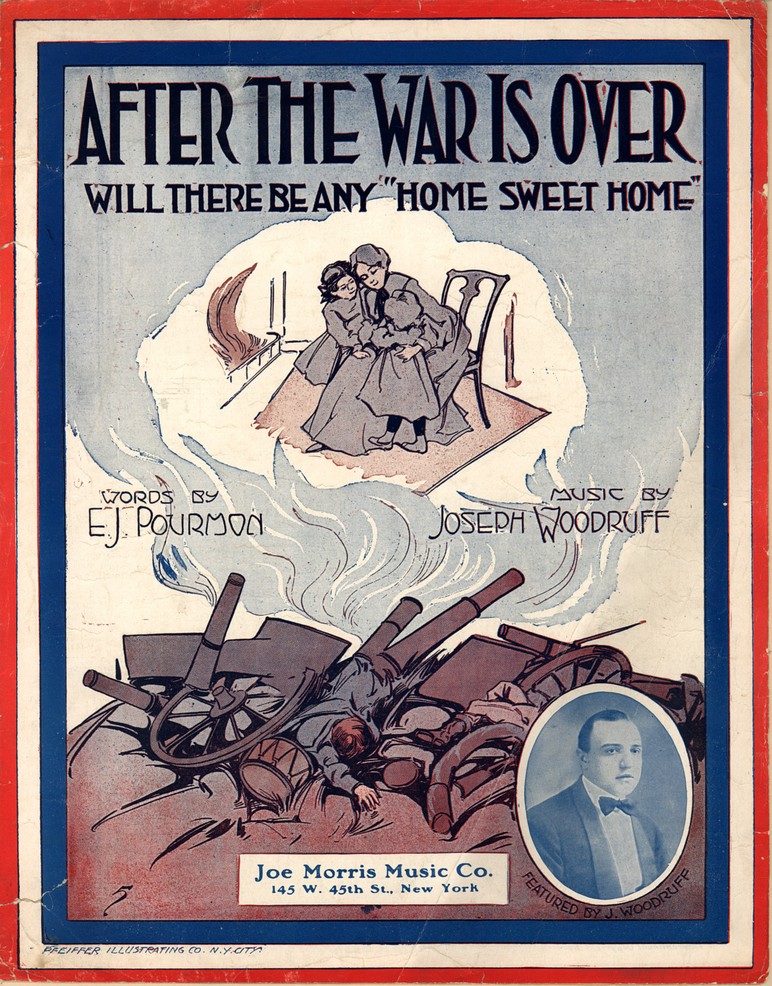
Here are a few reasons I didn’t enjoy Jennifer Robson’s *After the War is Over*:

1. It was altogether ridiculously predictable in plot: to the point that I anticipated the union of our lower-class protagonist with her Lord for so many chapters I skimmed through yet another obstacle-in-the-path-of-true-love, stopping only to admire the frequent use of ‘visage’ and ‘shirtwaist’ (and other lovely period diction).

2. On the subject of unnecessary attention to historical particulars: It included many (many) pointless detours in plot with the sole purpose of showing off historical detail. Details that were only there (I can only assume) because the author holds a PhD in History and seems quite taken with historical specificity for post-Great War era fashion, dances and food. Detours like visits to dress shops, or bedroom dance lessons. Page long descriptions of historical bathing suits. Really. Detours with no discernable relation to character or theme development. Detours entirely devoted to hats.

3. The protagonist is a repressed, self-righteous free spirit just waiting for the right (rich, handsome, rich, cultured, sensitive, rich) man to liberate her from her self-imposed dourness and expose the true glow of her unique petals of utter stunning beauty flower.

Here is 1 1/2 reasons I did:

1. Because Downtown Abbey got it right: there’s something fascinating about the historical moment of 1919 in which class and gender hierarchies (nevermind accepted and expected rules of decorum) get shaken.

1.5 Because it includes a beautiful scene of our protagonist casting her vote in the first election that allowed women (of certain classes) to vote. And because this reader cannot resist swelling feeling of gratitude and respect for those women (and men) who fought – and fight – so hard for franchise.  That said, this scene takes up the first three pages of the book. So you could read those and then… stop.

Leave a comment

Filed under Bestseller, Book I'll Forget I Read, British literature, Canadian Literature, Historical Fiction

A Measure of Light: The Audacity of Belief

Ask yourself if there is a cause or belief you would die to serve. Or what your death might accomplish for this cause. Hardly speculative questions in our contemporary moment. Where Beth Powning’s A Measure of Light departs from the present of this reader is, well, the setting and plot: 17th century Puritan New England and the emergence of the Quaker movement. Less obviously, it departs in the sense that those who die for their beliefs do so not as suicides where bodies are the available weapons, but rather those who die for their beliefs are killed by the state for holding beliefs that are deemed so threatening, so challenging as to be violently and publicly killed. It’s a grammar slip there, you’ll notice, between the belief being killed and the person. And one worth noticing.

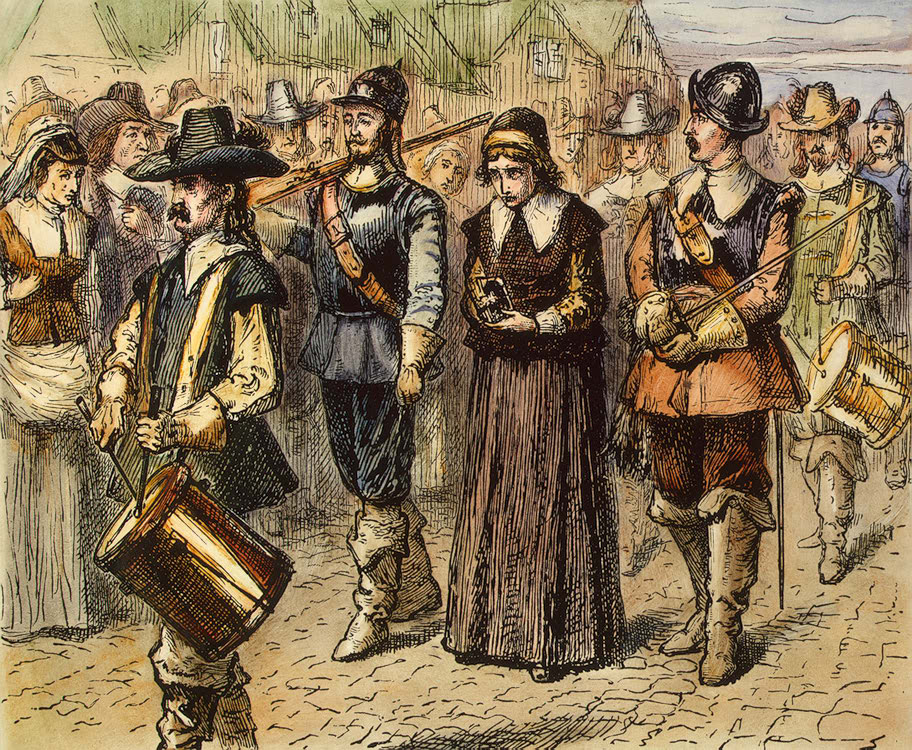
Our protagonist, historical figure Mary Dyer, is killed by the Boston officials that see her views of God (as accessible to all with equal access and without the intercedence of the Church) as heretical and threatening to the socio-political (and importantly economic) well-being of the region. So while she and several of her Friends are publicly hanged, their deaths do not accomplish the aims of the state in that the belief cannot be killed by killing the person. Or at least not easily. Rather, as Powning’s narrative suggests, Mary Dyer the martyr does more to raise the profile of the belief in their death than she does in her actively proselytizing life.

A Measure of Light is a fascinating read for its unravelling of the development of the Quaker movement and its portrait of New England life. It’s a rich (and beautifully written) exploration of what it means to hold beliefs with such conviction and the consequences both for the individual life, but for the family and community of that individual. It’s perhaps even more interesting – at least for me – in its representation of women and women’s bodies in this period. Mary’s journey through faith is irrevocably marked by the death of her three-day old child and the subsequent still-birth of her premature child as she and her community view these tragedies as evidence of her damned soul. I admit, as an atheist and 2015 reader, that I struggled to empathize with her conviction that it was God that spoke through her (markedly female) body, but what I could understand and relate to – only to well – was the feeling of my body, and its interpretation, as outside my control and dominion. The sense that others read what women’s bodies do – and don’t do – in questions about when (not if) these bodies will have children, in how (not whether) these bodies will be held up against impossible standards of beauty and in the sexualization and objectification of these bodies at every turn. So while the patriarchal source might be different – God – the experience of a distorted and disturbed relationship between the self and the body is all too recognizable.

All this to say, that between the resonant and provocative questions about the power of religious conviction to drive (violent) action and the representation of women’s bodies as sites for public debate, A Measure of Light is an exemplary piece of historical fiction, doing what historical fiction does best in representing the past in a way that allows us to better understand our present experience. Given the preponderance of historical fiction in Canadian literature (and no, I’m not just saying that because it’s my thing) and the attention this genre tends to get in awards season, I’d flag A Measure of Light as one likely to come up in discussions of best’s of this year.

Leave a comment

Filed under Canadian Literature, Historical Fiction