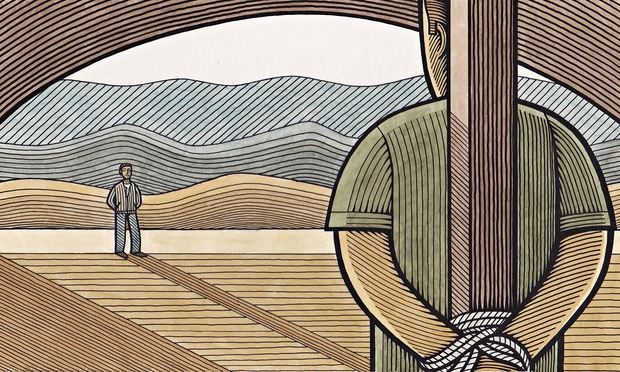
You’ll enjoy Behold the Dreamers. Except for the references to the coming Obama presidency and how it has the potential to turn around Wall Street and rekindle the American dream. That part you’ll find a painful reminder of where we are in the American political-civic moment. But if you can put aside your current historic moment (ha) and slip into the novel’s time period – just before, during and after the financial collapse of 2008 – you’ll find yourself in a fully realized, fully human exploration of income inequality, privilege, race and nationality in America. And occasionally laughing about it. Continue reading
Category Archives: Funny
Behold the Dreamers: We need fiction today. (and every day)
Filed under American literature, Fiction, Funny, New York Times Notable
Swing Time: Was this Book-fate?
A week ago Donald Trump was elected President. A week ago I put out an urgent plea for book suggestions that would give my mind somewhere else to be. The same day as my request, Zadie Smith’s Swing Time arrived for me to review. I won’t claim to believe in book-fate*, but it sort of felt like book-fate.
It wasn’t book-fate. It was a great read, yes. Continue reading
Filed under British literature, Fiction, Funny, New York Times Notable
Your Fathers, Where Are They? And the Prophets, Do They Live Forever?: My Ongoing Love Affair With Dave Eggers
Dave Eggers doesn’t know it, but I love him. Hard. I just double checked his bibliography and I’ve read most of it (see my reviews of The Circle, A Hologram for the King, and Zeitoun for proof. A Heartbreaking Work of Staggering Genius and What is the What date from the dark time in the Era Before the Blog). Count me among the devotees of The Believer and McSweeney’s. I’m not ashamed to love him (why would I be? It’s not cool in the McSweeney’s universe to be sincere). I love him for the earnest efforts to share literacy, the belief in his novels in the power of storytelling to make social change, the imagination in the form and voice of his texts.
Did I love this book? No. But happily a reader can not love a book and still love an author. So there. I did like it a lot. Here’s the premise: disgruntled, slightly off-kilter, Thomas, kidnaps a heap of people so that he can interrogate them on a wide range of questions. The novel is told entirely in dialogue (the reviewers love this sort of formal play, and I did find it neat) as Thomas tries to get to the bottom of why an astronaut isn’t on a shuttle, why his friend was killed by the police, why his mother wasn’t a better mother, and, you know, why the crisis among American youth.
It’s this last question that really undergirds the novel. It’s not so much a question as it is the thesis: the promise of hard work is a lie and the lie has led to all sorts of sadness. Those who insist on perpetuating the lie – media, government, state officials, parents – do so at their own peril, as the ‘disaffected youth’ who are confronted by the gap between the promise and their experience are set up for all kinds of volatile response as a result. Cue kidnapping a senator.
Why didn’t I love it? The form felt a bit forced. The argument a bit overwrought (and while I can’t imagine any other way of ‘stating’ the argument in a book that is entirely statements I did think Eggers could have trusted me more to work out the argument (come to think of it I think I had the same complaint in The Circle).
Despite these annoyances, it’s a timely book for the start of another academic year. As students flood my campus I wonder what might happen if I stopped each and every one of them and asked the same kinds of pointed questions Thomas does: why are you here? what are you hoping to accomplish? what is it you believe the point of this whole thing to be? stop using your credit card (okay, not a question). How would I answer these questions? How do I channel my own frustration at not having the job I was promised – despite ticking the right boxes? The answer of course is I read the book and it demanded I ask myself and reflect. And I don’t need to stop each and every one, I just need to get them to all read Eggers (easy, right?).
Filed under American literature, Fiction, Funny

 Literary Vice