The Best 0.5 Book I’ve Ever Read: GPW Reader Request

So I’m trying this thing where I let my great friend GPW give reader requests for blog posts. I don’t know that he was serious about it, but what he ought to have known (and as you all do): I take reading questions altogether too seriously.

His challenge: best half of a book I’ve ever read?

Answer: Everything I’ve ever read by Timothy Findley (Not Wanted on the Voyage, The Wars, Famous Last Words, Pilgrim). I admit my memory of these books is spotty, but what I *do* remember is setting out thinking I was on the Best Journey of Incredible Reading only to discover I was going instead to Somewhere Altogether Mediocre. In all of these instances I finished the book, but as you know I’ve stopped reading books I think are rubbish instead of making the Odyssean effort to finish them for the sake of being a Good Reader. It does give me some worry to think the reverse sort of book might be true: one that has a wretched first half but a tremendous FTW second.

More recent 0.5 is the first book our book club read, Ali Smith’s How to Be Both, an obvious choice in that the book is deliberately divided into two parts, two protagonists, two points of view. I found (as did all of those at book club) that one half was much, much better than another. So let’s go with that as my final answer: Ali Smith’s How to Be Both.

Have your own question for this reader? I do take reader requests… (maybe too eagerly?) at literaryvice@gmail.com  Stay tuned for the new GPW request. Or don’t.

Leave a comment

Filed under Reader Request

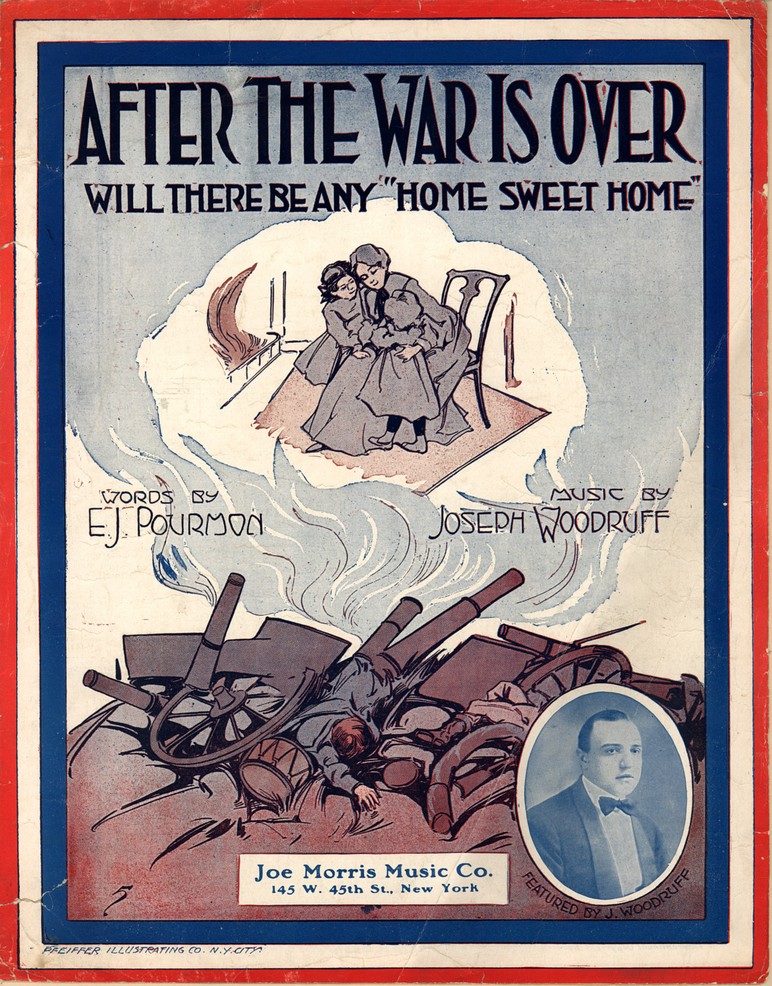
After the War is Over: Altogether too many descriptions of hats

Here are a few reasons I didn’t enjoy Jennifer Robson’s *After the War is Over*:

1. It was altogether ridiculously predictable in plot: to the point that I anticipated the union of our lower-class protagonist with her Lord for so many chapters I skimmed through yet another obstacle-in-the-path-of-true-love, stopping only to admire the frequent use of ‘visage’ and ‘shirtwaist’ (and other lovely period diction).

2. On the subject of unnecessary attention to historical particulars: It included many (many) pointless detours in plot with the sole purpose of showing off historical detail. Details that were only there (I can only assume) because the author holds a PhD in History and seems quite taken with historical specificity for post-Great War era fashion, dances and food. Detours like visits to dress shops, or bedroom dance lessons. Page long descriptions of historical bathing suits. Really. Detours with no discernable relation to character or theme development. Detours entirely devoted to hats.

3. The protagonist is a repressed, self-righteous free spirit just waiting for the right (rich, handsome, rich, cultured, sensitive, rich) man to liberate her from her self-imposed dourness and expose the true glow of her unique petals of utter stunning beauty flower.

Here is 1 1/2 reasons I did:

1. Because Downtown Abbey got it right: there’s something fascinating about the historical moment of 1919 in which class and gender hierarchies (nevermind accepted and expected rules of decorum) get shaken.

1.5 Because it includes a beautiful scene of our protagonist casting her vote in the first election that allowed women (of certain classes) to vote. And because this reader cannot resist swelling feeling of gratitude and respect for those women (and men) who fought – and fight – so hard for franchise.  That said, this scene takes up the first three pages of the book. So you could read those and then… stop.

Leave a comment

Filed under Bestseller, Book I'll Forget I Read, British literature, Canadian Literature, Historical Fiction

Higher Ed: Bulimia isn’t the worst part

Tessa McWatt beat me to the novel I haven’t written in Higher Ed. The novel takes up the current state of higher education in Britain (to be fair, I’d write the novel about Canadian higher ed, so perhaps there’s still a market – not). Through the interwoven narratives of five characters – the administrator, the film professor, the waiter, the law student and the civil servant – the novel explores the way we live in alienated, precarious and exhausted existences and how we might live otherwise.

Metaphors work to give contour to this exploration. Our administrator, Francine, works as a Quality Assurance officer at the University, helping programs through the absurd and demeaning process of justifying their existence by way of forms, counts, assessment checks and more forms. Francine, our character-stand-in for the university itself, has a distorted self image and bulimic practices. She wants to be ever trimmer, ever more efficient, to see herself, and more importantly to be seen by others, as successful. Yet, as any bulimic would know, in the attempt to purge, all she succeeds in doing is wasting energy on what isn’t important (and getting – ironically – bloated in the process). She sells out her ideals (and her body) to get ahead, only to discover that in the process of proving her worth to others she’s forgotten her own sense of self and priorities. Read the last paragraph again replacing “she” with “the university” and you see how the metaphor works in the novel.

Enter the civil servant who works disposing of the forgotten or “lonely dead,” those who have no one but the state on which to rely when they die. The civil servant, Ed, works with his once estranged daughter, the law student, Olivia, to bring some kind of meaning to these sanitized and bureaucratic deaths complete with mass graves and – again – forms. Their attempts at meaning take the shape we all recognize as meaning-makers: song, storytelling and poetry. As the two characters make this lone and ultimately futile (like life, the novel poses) effort, they deepen their relationship and come to trust and rely on one another. Pitted against the horror of the forgotten, lonely, death this quickening of a relationship is meant – I suspect – to offer us some hope and solace.

And there’s the crux. The novel suggests we live and function among cold and uncaring bureaucracies that are driven by profit and absent either individual or community. Yet, against these efficiency efforts the novel offers budding relationships and clumsy romance. As if to say we may have forgotten how to reach out to one another, how to use poetry to understanding our humanity and how to speak to one another in words not in text(s), but we are not so far gone that we can’t try to, maybe, hazard the attempt at, remembering and connecting.

In other words it’s not an overly optimistic or heartwarming story. Instead, as a sort-of administrator in higher ed myself, I find the call for connection, for real conversation, for extended empathy as at one and the same time entirely appealing and utterly insufficient. We live in the tragic gap, says Parker Palmer, between the reality we recognize and the reality we imagine as possible. In this novel we sit precisely in that space between what the university (what our society) is– profit driven – and what it could be – people driven. And from this gap we’re meant to both witness and imagine. If only we had a way to do that. Oh wait, we do: we can read.

2 Comments

Filed under Book Club, British literature, Canadian Literature, Fiction

Ghost Light: How to get out of paying your taxes

Lydia Millet’s Ghost Lights is so great. It’s funny, dark, complex. It’s a fast read. It takes on the complicated and fraught questions like what agency do we have as individuals? what are our responsibilities to our children and spouses? how do we make sense of tragedy?

*Minor spoilers to come (as in all this gets revealed in the first 40 pages*

You want more context? Sure.The book folks Hal, the IRS tax-guy, as he figures out what his life means in the present and what parts of that life he can control. Hal’s wife is cheating on him. His daughter, paralyzed after a car accident, makes her living as a phone sex… what’s the noun? operator? When Hal’s wife boss Thomas Stern (who prefers to go by T. – a choice he’s made, but can’t control sensing a theme here) goes missing in Belize, Hal decides to go and find him. After years of feeling and acting tethered to the loss of the life that could have been have been (had Casey not been paralyzed), Hal throws himself into the present. Realizes that there’s not much he can properly control. Realizes “he should not think too much. As a rule he set too much store by thinking. Or at least, complacent in the knowledge that thought was the most useful tool available to men – and one so often neglected by his fellow Americans – he relied on it to the exclusion of other ways of filtering information. Thought was the act of conscious cognition but there were alternative processes of the mind that could work around or alongside it” (77).

It’s a novel that looks at what happens when you radically shift your approach to decision making – and realize that you still can’t control anything and that ‘choice’ is entirely dependent on circumstance. Into this realization comes Hal (no accident then that Hal works for the IRS: the only things you can’t avoid in life being death and taxes) who in his effort to do something (rescue Stern, have an affair) proves the limits of choice and action: he spends good chunks of the plot passed out from drinking and having his life happen to him.

So what can you choose? What can you decide? Probably only that you should read this book. Probably not even that.

Stern has gone AWOL from running his fancy-pants company and making bazillions of dollars.

Leave a comment

Filed under American literature, Bestseller, Prize Winner