Tag Archives: American literature

Between the World and Me: Read it.

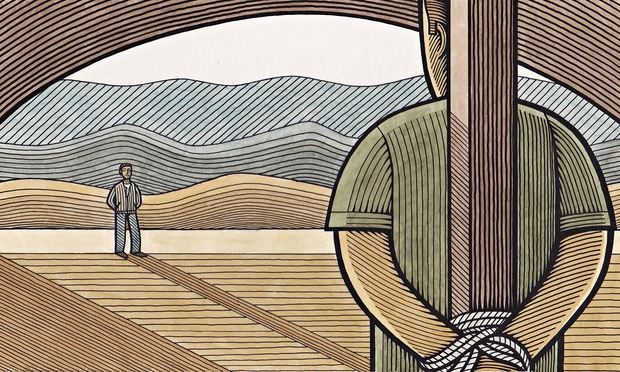
I first heard about Ta-Nehisi Coates on an episode of This American Life. The story was about what happens when your friend makes it big and you… don’t. [Relevant episode for you to listen to as you’ll all have to deal with this question when I make it big…hahaha] I asked for his book Between the World and Me for Christmas not with any real enthusiasm for the book (after all, it’s non-fiction) but with curiosity about what kind of book could propel an author and his work to such consistent and widespread consideration, conversation and celebration. Heralded as the voice of black America, bazillions of reviews called it the book everyone should read – especially white liberal America: here, here and here. Another bazillion of reviewers are disappointed: here  and here that it doesn’t go far enough, or isn’t hopeful enough, or speaks to the right people or the wrong people.

I know enough to know I don’t know enough to comment on the content of the book with any nuance or authority. I can only comment on the experience of reading it and that was the entire time felt like I was reading something urgent. Not written for me (the book is addressed to his son -though the people-who-think-they-are-white, liberal audience is called forward throughout) the book does the work of educating on systemic racism and the material effects on black bodies. It also straddles a frustrated pessimism and a call to action: articulating the intractability and pervasiveness of structural racism and nevertheless urging his son/the readers to struggle. While the explicit call to action isn’t included (nor does it need to be), the reflection it demands and the likelihood you will both tell someone else to read it and talk to them about it is it’s own kind of clarion call.


Leave a comment

Filed under Bestseller, Non-fiction

& Sons: The Only Reason to Run a Marathon is So You Can Say “I Ran a Marathon”

Don’t believe anyone who tells you they ran a marathon out of a sense of personal achievement. Or to raise money for a charity. Or in honour of someone else. They’re lying. They ran the marathon so they could tell you they ran the marathon.

I’ve run two marathons.

And I read all of David Gilbert’s & Sons even though every page of the last third (two thirds?) felt like an agonizing shuffle to the end. In running they call it “hitting the wall” – the moment around 30km when your body realizes it is still running and decides continuing is a very bad idea and would rather stop, if fact, would rather we had stopped 28km ago. But your brain is all like ‘no no, we need to be able to tell people we ran a marathon,’ so it supersedes all the pain and lactic acid and in a feat of masochistic revel marches each foot forward. Reading & Sons didn’t physically hurt (beyond the arm strain of hauling about a 5lb monster), but it nevertheless felt like a slog. A slog I’d made my way too far into to abandon, and one that I felt I ought to finish so I could say I had. An absolutely ridiculous idea because no one seems to have read or to care about the book – and if vanity was my motivation I really should have finished (okay, started and finished) Ulysses ages ago. Why did I begin in the first place? I don’t know. I’d ordered it from the library. I’d paid some late fines. I felt literary guilt. (what is literary guilt? I’d like to know).

I digress.

What do you need to know about it? Plot wise it’s another novel about being a writer in New York and attending parties with writerly folks and sharing the unstated but nevertheless omnipresent anxiety of writerly folks. Actually that’s not a plot. Someone alert David Gilbert! Writing about being a writer in New York is not a plot! Sure, sure. He strings in some business about fathers raising sons, human cloning (don’t get excited – there’s nothing thematically or plot-ly interesting about it) and funerals as a waving of the hands like ‘hey! look! a plot!’ But it’s really just more about being a writer. In New York. Character? I guess it’s supposed to be interesting that we have an unreliable narrator – Philip? Patrick? I forget his name and can’t be bothered to look it up – who inserts himself into the famous writerly Dyer family because he so wants to be a part of the family and to tell us about what goes on with the Dyers. I guess it’s interesting like listening to a runner tell you about their training runs and carb loading is interesting. Which is to say: not at all. Setting: Did I mention this is a book about being a writer in New York? That doesn’t actually spend any time on the New York part except to remind us that we’re in New York?  Theme: Uhhh… something about the ethics of writing about people you know, and the desire for immortality, and the inheritance of sons (if the title didn’t give it away you should know this book is entirely uninterested in women. In fact it seems genuinely put out that mothers have to exist at all. I think there’s probably some interesting thematic questions buried in here – just like you probably run past some beautiful scenery – but in the focused effort to just. keep. reading. I didn’t notice.

So yeah. Give me my medal and my banana. Time for a recovery read.


3 Comments

Filed under American literature, Bestseller, Book I'll Forget I Read, Fiction, Worst Books

Fourth of July Creek: The Unexpected Delight of Rural Montana

With a name like Smith Henderson, you’re probably thinking, this author is mixed up. He has a last name for a first name. How could he possibly write a compelling, gripping and fascinating novel about rural Montana in 1980? Probably he made up the name Smith Henderson to sound more rugged. Whatever. It works. Fourth of July Creek is a brilliant novel.

The novel opens with Pete Snow, a social worker, arriving at the home of one of his clients. Pete’s initial characterization as a man who cares deeply about the welfare of children remains consistent throughout the novel. What changes is the initial impression of him as a wholesome, got-his-shit-together-even-if-no-one-else does man. As the novel unfolds we explore the complexities of Pete’s past, his fraught relationship with his ex-wife and daughter, the degree to which we are all in need of some kind of support, even (and perhaps especially) those in care-giving roles.

You’re thinking *yawn* we don’t care about another fascinating character study, E. Well, fine. Fourth of July Creek just happens to also have a fascinating plot delivered through detailed, show-don’t-tell description in a realist fashion that somehow leaves room for experiment and play (thinking specifically here of the chapters with Rachel and… discuss). So what do we have? A libertarian/fundamentalist family living in the mountains. Threats on the president. Crime. The chance to save them all. The slow and steady build to a climax of sweeping proportions. A deep care for the characters involved.

Arg. It’s just so unexpectedly good. I really thought setting out that I wasn’t interested. But heck but if this isn’t why we read fiction I don’t know what is: I don’t have to have (or think I have) any relationship to the plot/character/setting/ideas of the novel in order to be utterly absorbed and enriched. So for what it’s worth, Smith Henderson, you have a silly name, but an incredible first novel.

1 Comment

Filed under American literature, Bestseller, Fiction, Prize Winner

Your Fathers, Where Are They? And the Prophets, Do They Live Forever?: My Ongoing Love Affair With Dave Eggers

Dave Eggers doesn’t know it, but I love him. Hard. I just double checked his bibliography and I’ve read most of it (see my reviews of The Circle, A Hologram for the King, and Zeitoun for proof. A Heartbreaking Work of Staggering Genius and What is the What date from the dark time in the Era Before the Blog). Count me among the devotees of The Believer and McSweeney’s. I’m not ashamed to love him (why would I be? It’s not cool in the McSweeney’s universe to be sincere). I love him for the earnest efforts to share literacy, the belief in his novels in the power of storytelling to make social change, the imagination in the form and voice of his texts.

Did I love this book? No. But happily a reader can not love a book and still love an author. So there. I did like it a lot. Here’s the premise: disgruntled, slightly off-kilter, Thomas, kidnaps a heap of people so that he can interrogate them on a wide range of questions. The novel is told entirely in dialogue (the reviewers love this sort of formal play, and I did find it neat) as Thomas tries to get to the bottom of why an astronaut isn’t on a shuttle, why his friend was killed by the police, why his mother wasn’t a better mother, and, you know, why the crisis among American youth.

It’s this last question that really undergirds the novel. It’s not so much a question as it is the thesis: the promise of hard work is a lie and the lie has led to all sorts of sadness. Those who insist on perpetuating the lie – media, government, state officials, parents – do so at their own peril, as the ‘disaffected youth’ who are confronted by the gap between the promise and their experience are set up for all kinds of volatile response as a result. Cue kidnapping a senator.

Why didn’t I love it? The form felt a bit forced. The argument a bit overwrought (and while I can’t imagine any other way of ‘stating’ the argument in a book that is entirely statements I did think Eggers could have trusted me more to work out the argument (come to think of it I think I had the same complaint in The Circle).

Despite these annoyances, it’s a timely book for the start of another academic year. As students flood my campus I wonder what might happen if I stopped each and every one of them and asked the same kinds of pointed questions Thomas does: why are you here? what are  you hoping to accomplish? what is it you believe the point of this whole thing to be? stop using your credit card (okay, not a question). How would I answer these questions? How do I channel my own frustration at not having the job I was promised – despite ticking the right boxes? The answer of course is I read the book and it demanded I ask myself and reflect. And I don’t need to stop each and every one, I just need to get them to all read Eggers (easy, right?).

2 Comments

Filed under American literature, Fiction, Funny