Tag Archives: fiction

All the Light We Cannot See: Go For It

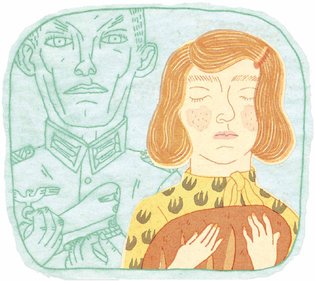
I got a book light in my stocking. How appropriate for the late night staying up to read “just one more chapter” of All the Light We Cannot See. The trouble, of course, is that the chapters in this novel are never more than five page long – most two or three – and so resolving to do “just one more chapter” is a promise to still be reading an hour later. Thankfully I’m on holiday and sleeping in is requisite. If you’re not on holiday you might prepare to be stern with yourself, or accept being a bit groggy eyed as this isn’t a story easily put down.

Appropriate, too for the images in the novel. It’s a story with parallel narratives – that of Marie-Laure, the blind Parisian girl who is a prodigious reader and world-creator, and that of Werner, the starkly Aryan orphan with a prodigious talent for electronics, radio in particular. As their two tales unfold against the backdrop of France under Nazis occupation, we get intricately woven and masterfully described scenes and plot moments with richly imagined conflicts and consequences. Symbolism abounds: diamonds, curses, radios and silence, snow-white hair and 20 000 leagues under the sea: it’s all meant to mean something and to mean so much.

It’s tempting to give this an unqualified endorsement, and I do strongly suspect that if you pick it up, you’ll absolutely enjoy the read (I certainly did). I have to admit a certain reluctance, however, as I found two problems: 1. The characters, while compelling for what they do and for what happens to them, are not, on their own, fully imagined or realized. They certainly experience conflict and are called upon to make heroic or challenging choices, they have complex interactions with other characters, but their interior lives remain opaque and stunted. 2. The ending is entirely too tidy for my taste. Resolved. And the leadup – the climaxes – read with the certainty of resolution. In part the flashback structure – we begin in 1944 and move back and forth in time – promises this kind of conclusion, but I suppose there’s also the structural point that we couldn’t create such intricately woven parallel narratives without having them meet (or that certain assurance that we could not put characters with such extraordinary and exceptional lives in such danger and not have some resolution).

My complaints are more a way of saying while this is a book you’ll enjoy reading (much as anyone can enjoy reading WWII fiction, I suppose) it isn’t without problems. Look past these quibbles and you’ll find yourself reading by whatever light you’ve got – probably something backlit and electronic. Which will, I’m sure you know, ruin your eyes and keep you up all night.

1 Comment

Filed under Bestseller, Book Club, Fiction, Prize Winner

The Round House: Doing (it) Justice

I made the mistake of reading three books at the cottage without immediately blogging and *The Round House* was the first, so my “penetrating insights” will be somewhat dulled by the intermediary reads and days. With that said I found *The Round House* to be exceptionally good. Best I’ve read in 2013.  Continue reading

1 Comment

Filed under American literature, Erin's Favourite Books, Fiction, Prize Winner

Mr Peanut: Hates Women

I think Adam Ross thinks that *Mr Peanut* isn’t a novel about hating women. I also think maybe Ross thought he had to be overly simplistic and overly didactic in theme because otherwise his reader might not get it.  The reason I think Adam Ross thinks this way and not the speaker or a character is that *Mr Peanut* is as much a book about metafiction as it is a meditation on gender, matrimony and identity. 

The novel opens with a brilliant montage of possible ways a wife could die. The images set up the premise of the novel: husbands (note: not partners, but definitely male spouses) want their wives to disappear, and the easiest (or least imaginative) way for that to happen is for them to die.

I don’t think Adam Ross trusts the reader to be very clever, because the rest of the novel belabours this premise with repetitious lines like “if only she would disappear,” or “she became invisible” or “she disappeared” or “she vanished.” These direct statements are couple with the none-to-metaphorical “disappearance” of Alice as she loses 200 pounds or the growing invisibility of whatsherface as she takes on jobs outside the home. 

Where the novel is brilliant is in the nesting of the detective’s narrative within the murder mystery – a doubling of mysteries that resonates into the readers present as a matryoshka doll where eventually you are meant to lose track of who the narrator is and wonder/realize that we’re all meant to either want to kill/disappear our wives, or we are all women on our way to being replaced/disappeared.

And why erase women? Principally, it seems, because we are bodily. We have materiality – blood, fluids, gases – that make us inconvenient distractions from the pursuits of the mind: fantasy, abstraction, *metafiction*. The male mind – taken to such abstraction as to be avatars (hammered home again in the last line of the novel *as if we didn’t get it* from David’s job as a video game designer and the repeated descriptions of him enacting GTA-like adventures with voluptuous women). The contrast of the bleeding (heart) women with the obtuse/abstruse (purposefully juxtaposed here) men serves no thoughtful purpose. That is to say, I’m okay, or at least willing to entertain, a reductionist rendering of gender if it *does something interesting*, if it draws attention, or asks a question, or forces us to look again. But this rendering of the gender dynamic – for all the self-congratulatory self-awareness our author seems to possess – appears to take place without recognition of its gross essentialism.   

So while I enjoyed moments of *Mr Peanut* for being clever, I was, overall, dissatisfied because the novel didn’t trust *me* to be clever: far too much explaining, too much symbolic/dialogue repetition of key themes, far too little in the way of mystery for a book purportedly a murder mystery. And while I enjoyed the exploration of men’s perversity and the unsettling realization that our lives are *not* unfolding in multiple universes (with as many iterations as there are attempts to play a video game) nor are they unfolding with the glamour of a video game – I found the essentialist rendering of gender to be both uninteresting and offensive.

And not offensive because I am a feminist, but offensive because I’m a smart reader. 

Leave a comment

Filed under Fiction, Mystery