The thing about an allegory (like a metaphor) is that the comparison is made between two unexpected things (pigs and communist leaders; shadows on the wall and ideas). So when reading Lauren Belfer’s excellent City of Lights I struggled to figure out whether the novel was allegory or something else. A literary term that escapes me, but exists, I’m sure.
So tell me what this literary term is that I’ve missed out on. I’m looking for a term that describes when the fictional plot events/setting/character parallels a contemporary and real plot event/setting/character. Not parallels in an unexpected way, but parallels in a way you recognize the contemporary thing. You’d like an example? Sure.
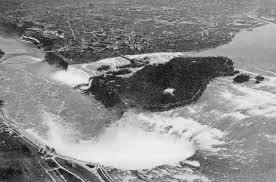
So a bit to set this example up. The novel is a few things: historical fiction, murder mystery, romance, tragedy of manners. The plot goes something like this – it’s 1901, Buffalo is playing host to the pan-american exposition. Industrialists and engineers are developing hydroelectric power at Niagara Falls with all sorts of complications: union organizing and labour conditions; nature-preservationists and eco-terrorism (that the development of the Falls was protested on environmental grounds was an absolute revelation to me); public versus private ownership of resources. Our protagonist, Louise Barrett is headmistress of an exclusive all-girls school and passionate about the way education can transform individual women and reform society as a whole. She’s also afforded unusual social liberties because of her ‘spinster’ status; a status she’s had to assume for good reason (which I won’t spoil here) to do with gender-based violence and independence for women. A man gets murdered. The hydroelectric project gets complicated. The cast of characters and their secrets and lies thickens.
Right, so in this example Louise is talking to a reporter (masquerading as a photographer – because performativity and identity is also a big thing here), Franklin (who is also a potential love interest). Franklin explains his cynicism as to why he doesn’t think the industrialists care about the ordinary people when the choice is between the people and the extraction of a resource:
I served time in the Philippines, remember? I saw our fine and honorable American soldiers using the too-aptly named ‘water cure’ to exact confessions from prisoners; of course the prisoners weren’t ‘white’ so it didn’t matter. (135) He goes on… Electricity should be a public service, not a commodity sold to the highest bidder. The electricity created at Niagara belongs to the people. Not to the industrialists, not to the nature preservationists […] but to the people” (136).
It parallels waterboarding, right? Electricity – throughout – parallels oil extraction with immediate gains prioritized over long term environmental damage. But it’s not an allegory because it is – in the fictional past – a recognizable reflection and deepening of our understanding of the present. Am I just describing a term called ‘the beauty and wonder of historical fiction’?
Anyway. I really loved this one. The murder mystery, while a driving plot point, wasn’t the focus of the text so much as Louise’s journey to understand her past and present. The historical details about Niagara and hydro development are genuinely fascinating. The socio-political-economic context that underpins the plot is as rich a character in its own right as any. Including the one moment Louise doubts her self-reliance and thinks how lovely it would be to rely on a man, she is a model of feminist independence. So yeah, please read the book and tell me what the term is that I’m looking for. Or maybe you don’t have to read the book because it’s so obvious. It’s probably alliteration. Kidding. (Am I?)

 Literary Vice