Tag Archives: religion

The Strange and Beautiful Sorrows of Ava Lavender: This Book is Wildly Overrated

The internet loves Lesley Walton and The Strange and Beautiful Sorrows of Ava Lavender. They love the love story. The magic. The mystery of the ending. They love love love this YA novel. It’s enough to fill this reader with despair. How can so many people love a book that is so completely and totally average?

Maybe it’s like every time I’ve ever had a glass of wine with C. and R. I get super excited about the $15 bottle and its smooth taste, because really I can barely tell the difference between red and white. You get me – I’m accusing readers of The Strange and Beautiful as having unrefined tastes. Even though the readers are meant to be young adults who haven’t tasted enough to know what’s good or not. Ohmygoshdidshejustwritethat. Yes. Yes I did. Sometimes you need a trusted sommeli (*cough* let me, like Walton, make my analogy clear: a librarian. a teacher. a well-read friend) to steer you in the right direction. To correct your gushes of enthusiasm for the overly sweet – the gewurztraminer you can’t get enough of, the wine spritzer you claim as life changing.

On the surface this book should be good. It uses magic realism to explore… oh wait, nothing. Babies born with wings and mothers with a magical sense of smell, aunties that turn into canaries. All to suggest – get this – those who are different are sometimes mistreated by the rest of society that doesn’t quite understand difference. An overly pious man who brutalizes a young woman lets us know sometimes religion is hateful. It offers up some beautiful writing and then includes sentences like “death smelled like sadness” and images of women wearing *actual* wedding dresses to signal virginity. And then *actual* dirty wedding dresses to signal sexual awakening.  You could defend these trite and surface elements as a consequence of the novels intended young adult audience, but then you’d run up against the inclusion of sexually graphic scenes and vivid moments of violence  that – while certainly not to be forbidden the young adult, nevertheless read as intentionally provocative inclusions at best. Add in the underdeveloped and internally inconsistent characters, the absence of any plot conflict worth describing and a thematic depth better described as evaporation and you get… a wildly overrated novel.

Am I being overly arrogant in claiming to know what’s good or not in books? What makes for good value in reading? Sure. But it’s not a matter of taste. Books are not simply neutral objects awaiting the individual preferences of readers (*bracing for onslaught of outrage*). I appreciate different readers will enjoy different things – your Merlot for your Cab Sav – but there are qualitative differences and popularity is not one of them. Trust me?

Leave a comment

Filed under Bestseller, Book I'll Forget I Read, Fiction, Young Adult Fiction

Twelve Steps to a Compassionate Life: What Happens When a Nun Quits Religion

I’ve started going to *church. Don’t panic. I’m still an atheist: it’s a Unitarian church, so my minister is an atheist, too. If you thought all us athesists were just running around eating babies you might not have realized that I (certainly don’t want to speak for all athesists) do believe in things – I just don’t believe in God, an afterlife, divine-whatever. Instead I believe in community, in our collective and individual need to make meaning. Anyway, this year the congregation has been reading Karen Armstrong’s The Twelve Steps to a Compassionate Life and many of the sermons have picked up on themes from the book. Wanting to be the best at church (and earn a gold star at the optional book group discussion) I overcame my instinctual resistance to non-fiction and to a book that appeared – at first – dangerously self-helpy (a post for another day on my objections to self-help books) and gave it a go.

The twelve steps can be neatly summarized (and are by Armstrong) in “do unto others as you would have done unto you.” What makes it an interesting read from a religious studies perspective is the lengths at which Armstrong goes to include a diversity of religious perspectives (though no Unitarians?) on the “Golden Rule”. Her attempt to illustrate the similiarities among not just religions, but a sort of common humanity that has, as part of its nature (she argues), compassion, empathy and care, leads her to close readings of a range of religious, political and literary texts. Each chapter offers a “step” on the path to a more compassionate life. Steps like “empathy,” “self compassion,” or “understanding the limits of our knowledge” and “learning more about others.” With each step she offers daily exercises for extending compassion (indeed she makes a repeated comparison between training for a race or a ballet, and training compassion – that is, she suggests compassion is both an inherent quality and one that needs to be cultivated) like meditating on an enemy and extending to that enemy care and empathy. Of all the steps I found the chapter on ’empathy’ most resonant, and probably because it urges reading literature as a possible means to grow empathetic understanding (a repeated argument I’ve made here on the purpose of reading).

So what did I think of the book? Would I recommend it? I think Armstrong’s belief that we can learn to be individually – and collectively – better at caring for one another is a powerful, if only partially persuasive one. I found the first chapter that provides an overview of how Confusianism, Buddihism, Christianity, Islam and Judaism have understood and practiced ‘compassion’ a potent reminder (and a flashback to first year religious studies) of the similarities among these faith groups, the consistency in their fundamental belief in communal care. I did find that many of the later chapters – five or six pages in length – slipped into something of pat directives to be kinder to other people, to not assume you know everything. I would say that as a non-believer the book was both accessible and non-preachy. I don’t know. Read it if you find yourself frequently overcome with frustration at work: when you can’t stand another meeting, or your boss has just finished explaining the difference between a word document and a pdf for five minutes. You might find then that some of the calls to compassion are helpful, even healing. You may also find lobbing the book at the wall an equally restorative exercise. You be the judge.

Leave a comment

Filed under Non-fiction, Prize Winner

A Measure of Light: The Audacity of Belief

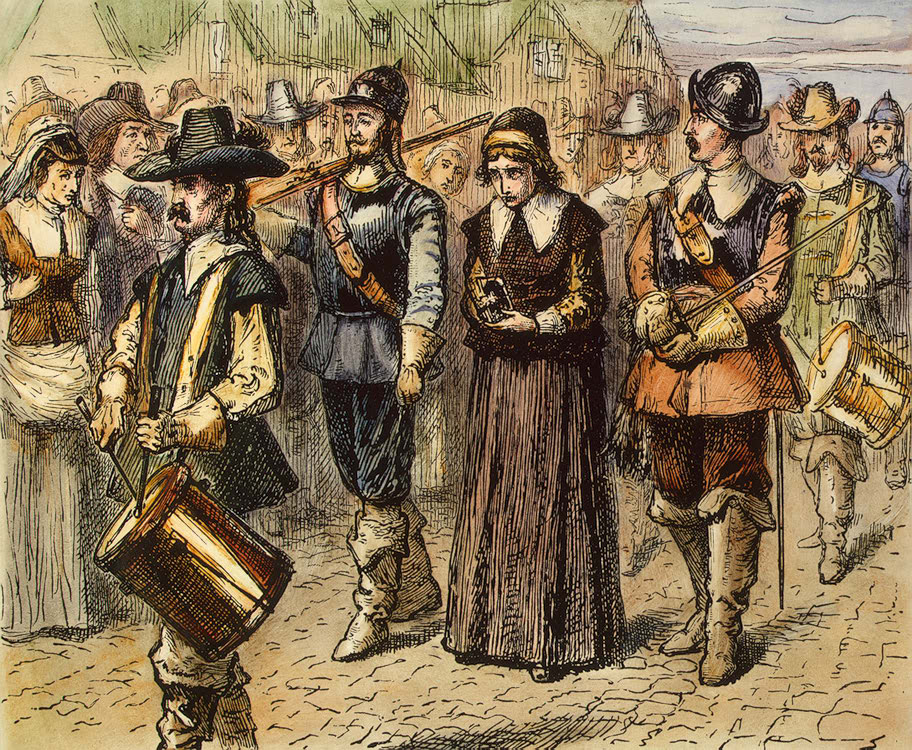
Ask yourself if there is a cause or belief you would die to serve. Or what your death might accomplish for this cause. Hardly speculative questions in our contemporary moment. Where Beth Powning’s A Measure of Light departs from the present of this reader is, well, the setting and plot: 17th century Puritan New England and the emergence of the Quaker movement. Less obviously, it departs in the sense that those who die for their beliefs do so not as suicides where bodies are the available weapons, but rather those who die for their beliefs are killed by the state for holding beliefs that are deemed so threatening, so challenging as to be violently and publicly killed. It’s a grammar slip there, you’ll notice, between the belief being killed and the person. And one worth noticing.

Our protagonist, historical figure Mary Dyer, is killed by the Boston officials that see her views of God (as accessible to all with equal access and without the intercedence of the Church) as heretical and threatening to the socio-political (and importantly economic) well-being of the region. So while she and several of her Friends are publicly hanged, their deaths do not accomplish the aims of the state in that the belief cannot be killed by killing the person. Or at least not easily. Rather, as Powning’s narrative suggests, Mary Dyer the martyr does more to raise the profile of the belief in their death than she does in her actively proselytizing life.

A Measure of Light is a fascinating read for its unravelling of the development of the Quaker movement and its portrait of New England life. It’s a rich (and beautifully written) exploration of what it means to hold beliefs with such conviction and the consequences both for the individual life, but for the family and community of that individual. It’s perhaps even more interesting – at least for me – in its representation of women and women’s bodies in this period. Mary’s journey through faith is irrevocably marked by the death of her three-day old child and the subsequent still-birth of her premature child as she and her community view these tragedies as evidence of her damned soul. I admit, as an atheist and 2015 reader, that I struggled to empathize with her conviction that it was God that spoke through her (markedly female) body, but what I could understand and relate to – only to well – was the feeling of my body, and its interpretation, as outside my control and dominion. The sense that others read what women’s bodies do – and don’t do – in questions about when (not if) these bodies will have children, in how (not whether) these bodies will be held up against impossible standards of beauty and in the sexualization and objectification of these bodies at every turn. So while the patriarchal source might be different – God – the experience of a distorted and disturbed relationship between the self and the body is all too recognizable.

All this to say, that between the resonant and provocative questions about the power of religious conviction to drive (violent) action and the representation of women’s bodies as sites for public debate, A Measure of Light is an exemplary piece of historical fiction, doing what historical fiction does best in representing the past in a way that allows us to better understand our present experience. Given the preponderance of historical fiction in Canadian literature (and no, I’m not just saying that because it’s my thing) and the attention this genre tends to get in awards season, I’d flag A Measure of Light as one likely to come up in discussions of best’s of this year.

Leave a comment

Filed under Canadian Literature, Historical Fiction

A Land More Kind Than Home: Acknowleding Faith

Im an atheist. Telling you this will reduce your trust in me, but it should also help you understand my reaction to Wiley Cash’s (excellent) first novel A Land More Kind Than Home. I loved the book. Found it moving, brilliantly paced and narrated, complex in its themes and written with an even, understated beauty. I loved the book, too, because the book directly engages with the consequences of belief and ideas of fate and free choice.

As an atheist I really ought to consider the actions and predispositions that come attached to belief in God more than I do. Atheism is a belief structure (if only a negative belief structure) that warrants a thoughtful engagement with justice, choice and morality just as living within a religious framework does. But I don’t think about these questions within the context of faith (or its absence) very often, and when I do, it’s usually because I’ve been prompted by a book (yet further evidence of the importance of reading). And so I loved A Land More Kind Than Home for both its complex presentation of these questions and for prompting me to reframe the questions within the context of my own life: what do I hold as dogmatic? when/how do I follow/resist authority? Under what circumstances will I take a principled stand?

Enough circling: what’s the book actually about? Set in the American South, the novel follows the Hall family before and after the oldest son, Christopher/Stump is killed during a revival meeting at the local (Baptist?) Church. More complex than following just the family, the interwoven narrative voices of the town sheriff and a local spinster (crone?!) bring forward the ways in which faith and fate impact those within and outside the Church itself. In some ways a mystery, the novel slowly unfolds what properly took place in the Church and who might be held to account for the crimes (a mild complaint, but this “mystery” element wasn’t necessary from my point of view and added little complexity so much as frustration with just wanting to know what had happened). It then does (really remarkable) work in expanding the scope of time and place around this central plot line by weaving in histories of the families and town in ways that add depth to both the characters, but more importantly to the central conflict/crime. As the novel unfolds and these lives and their histories are explored, the death of Christopher/Stump comes to resonate with whole new sets of questions (how are crimes of fathers inherited? is it possible to change our nature?) in a way that lets the reader circle back to the instigating plot moment with new intensity and feeling.

Finally it is a novel about what we do and do not say or speak. Christopher/Stump is a mute – attention metaphor hunters! – and his brother, Jess, attaches responsibility for Stump’s death because of what he – Jess – didn’t say when he could have. There are other moments where silence/speaking surfaces as significant, but for me it crystallized questions around bystanders and bystanders of faith: what do we allow under the auspices of religion that would not be borne under other circumstances? what do we say and not say under the banner of faith or freedom of expression? Certainly questions in 2014 Canada, with different levels of government trying to legislate what kinds of religious accommodations will be “tolerated” within the framework of multicultural Canada and different community groups and individuals muddling through what can and cannot be “said” with reference to belief structures and practices. And certainly questions worth asking and exploring for ourselves – through reading this book! – to know, regardless of – or rather precisely because of – the belief systems we hold to be most true.

So yes, definitely a book worth reading. A book worth talking about with others, but certainly a book worth talking to yourself about.

(Aside: Also! This book has some of the best “acknowledgements” of any I’ve recently read. I’m a sucker for book acknowledgements – I love a taste and tease of the “real life” behind the author. Wiley Cash writes sincere and sweet – but not saccharine! – acknowledgements and I just loved the apparent genuineness of his appreciation).

Leave a comment

Filed under American literature, Book Club, Fiction, Mystery, Prize Winner