Category Archives: Book Club

Friend of My Youth: What happens if you don’t like Alice Munro?

Does someone come and take away your PhD in English? Does your Canadian passport spontaneously catch on fire? Are you called before a panel to prove you still recognize what it means to be human? what constitutes beauty?

Thankfully I’ll never know, because I did like Friend of My Youth, though not as much as other members of book club, and more than M. I can’t tell you much about it because it’s a short story collection and I’ve already forgotten all of the stories. What I do remember is lots of layering of narration such that the person telling the story isn’t really the person the story is about. My wild insight for book club: can we ever really know anyone?! No, E., no we cannot. I also remember the accuracy of K.’s observation that with a Munro story you’re reading along happy as can be and then *bam* someone is an adulterous, soul-rending, murderous… housewife (re: can we ever really know anyone). My other insight: I serially underestimate how long it will take me to read a collection of short stories. My ill-founded belief that it’s ‘just’ a short story collection belies that it’s still 300 pages of reading. I should have never dropped out of maths.

1 Comment

Filed under Book Club, Canadian Literature, Fiction, Prize Winner, Short Stories

The Girl on the Train: Over-hyped, misogynistic nonsense

I admit I bought in to the hype around The Girl on the Train. I heard about it three times in two days and couldn’t resist the summer blockbuster appeal. I bought in to the point of buying the book (something I rarely do what with the existence of libraries and the scarcity of free money), though I got it for $10 as a ‘Heather’s Pick’ at Chapters (my local and fantastic bookshop was sold out and I had to have it Right Now). I’m embarrassed by the whole thing. (Would I be as embarrassed if it had been a better book? Or if J. hadn’t warned me that it wasn’t as great as people were saying?). Continue reading

4 Comments

Filed under Bestseller, Book Club, Popular Posts, Worst Books

A Tale for the Time Being: You Probably Haven’t Heard Of This Book; Here’s Why You Should Read It

Or maybe you have heard of Ruth Ozeki’s A Tale for the Time Being. After all, it was shortlisted for the Booker Prize, hyped in all of the right places. All the same it slipped through my Canlit net, and seems to have for all those I’ve talked about the book with as I’ve been reading it, and so I’ll assume you haven’t heard of it either (you’re my made-up audience, so I may as well, right?).

This idea of the reader-audience and how readers make novels mean something by reading them is one of the (many) preoccupations of this fantastically rich and layered story. At one point our protagonist-cum-author notes “Surely a reader wasn’t capable of this bizarre kind of conjuration, pulling words from the void? But apparently she had done just that, or else she was crazy. Or else… Together we’ll make magic… Who had conjured whom?” (392). The role of reader in the novel is complex: with two threaded narratives – that of Ruth, an author living on an island in British Columbia who finds a diary washed up on the beach and that of the diarist, Nao, an American-Japanese schoolgirl – that both reflect, influence and respond to one another, one of the questions the novel asks is how readers determine and impact the meaning and influence of a story. Within the novel itself this question is explored in the relationship between Ruth and Nao, but the novel expands this question with metafictional play and probity to include this reader, too. So you ought to read it because the novel presupposes its existence depends on your reading it.

You ought to read it because the philosophical questions it explores like the nature of time and quantum mechanics; the role of animals in the interconnected web of being; restitution, responsibility and war; the relationship of class and identity (and bullying); the purpose of art and art-making; – are those questions that make both for great dissertations and for great discussions (and I know you have a thesis you want to write or a book club to attend [*cough* this was a book club choice for the book club I attend]). These questions look esoteric when I write them down, and there are moments of the novel – like reading the Appendixes on Schrodinger’s Cat – that stray in that direction, but the overwhelming feeling this novel evoked for me was exhilaration: it’s simply thrilling to see a masterful exploration of questions of time, identity and the nature of meaning in life through grounded (if somewhat fantastical) story.

And you ought to read it because I say so. Okay, not that. But because it’s beautiful.  Layered with complexity and richness, yet not so dense as to be inaccessible or off-putting. And you see it and think 400 pages, really? And I say, consider the time it takes to read. No really, consider “time” and “takes”: what does it mean to “take time”? Once you’re asking that question you may as well be reading the novel because in reading you find time, time-taking, time-making – well, you might have a different feeling on the other side (which assumes you ever leave a novel once you’ve read it… another question for another time being).

1 Comment

Filed under Book Club, Canadian Literature, Fiction, Prize Winner

Higher Ed: Bulimia isn’t the worst part

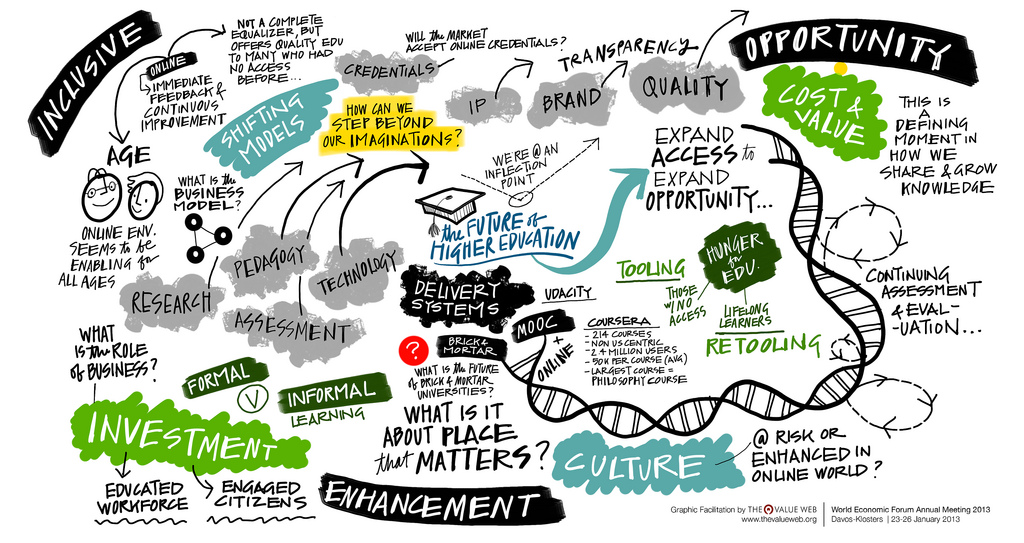
Tessa McWatt beat me to the novel I haven’t written in Higher Ed. The novel takes up the current state of higher education in Britain (to be fair, I’d write the novel about Canadian higher ed, so perhaps there’s still a market – not). Through the interwoven narratives of five characters – the administrator, the film professor, the waiter, the law student and the civil servant – the novel explores the way we live in alienated, precarious and exhausted existences and how we might live otherwise.

Metaphors work to give contour to this exploration. Our administrator, Francine, works as a Quality Assurance officer at the University, helping programs through the absurd and demeaning process of justifying their existence by way of forms, counts, assessment checks and more forms. Francine, our character-stand-in for the university itself, has a distorted self image and bulimic practices. She wants to be ever trimmer, ever more efficient, to see herself, and more importantly to be seen by others, as successful. Yet, as any bulimic would know, in the attempt to purge, all she succeeds in doing is wasting energy on what isn’t important (and getting – ironically – bloated in the process). She sells out her ideals (and her body) to get ahead, only to discover that in the process of proving her worth to others she’s forgotten her own sense of self and priorities. Read the last paragraph again replacing “she” with “the university” and you see how the metaphor works in the novel.

Enter the civil servant who works disposing of the forgotten or “lonely dead,” those who have no one but the state on which to rely when they die. The civil servant, Ed, works with his once estranged daughter, the law student, Olivia, to bring some kind of meaning to these sanitized and bureaucratic deaths complete with mass graves and – again – forms. Their attempts at meaning take the shape we all recognize as meaning-makers: song, storytelling and poetry. As the two characters make this lone and ultimately futile (like life, the novel poses) effort, they deepen their relationship and come to trust and rely on one another. Pitted against the horror of the forgotten, lonely, death this quickening of a relationship is meant – I suspect – to offer us some hope and solace.

And there’s the crux. The novel suggests we live and function among cold and uncaring bureaucracies that are driven by profit and absent either individual or community. Yet, against these efficiency efforts the novel offers budding relationships and clumsy romance. As if to say we may have forgotten how to reach out to one another, how to use poetry to understanding our humanity and how to speak to one another in words not in text(s), but we are not so far gone that we can’t try to, maybe, hazard the attempt at, remembering and connecting.

In other words it’s not an overly optimistic or heartwarming story. Instead, as a sort-of administrator in higher ed myself, I find the call for connection, for real conversation, for extended empathy as at one and the same time entirely appealing and utterly insufficient. We live in the tragic gap, says Parker Palmer, between the reality we recognize and the reality we imagine as possible. In this novel we sit precisely in that space between what the university (what our society) is– profit driven – and what it could be – people driven. And from this gap we’re meant to both witness and imagine. If only we had a way to do that. Oh wait, we do: we can read.

2 Comments

Filed under Book Club, British literature, Canadian Literature, Fiction