Category Archives: Book Club

All the Light We Cannot See: Go For It

I got a book light in my stocking. How appropriate for the late night staying up to read “just one more chapter” of All the Light We Cannot See. The trouble, of course, is that the chapters in this novel are never more than five page long – most two or three – and so resolving to do “just one more chapter” is a promise to still be reading an hour later. Thankfully I’m on holiday and sleeping in is requisite. If you’re not on holiday you might prepare to be stern with yourself, or accept being a bit groggy eyed as this isn’t a story easily put down.

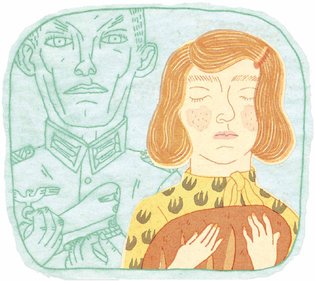
Appropriate, too for the images in the novel. It’s a story with parallel narratives – that of Marie-Laure, the blind Parisian girl who is a prodigious reader and world-creator, and that of Werner, the starkly Aryan orphan with a prodigious talent for electronics, radio in particular. As their two tales unfold against the backdrop of France under Nazis occupation, we get intricately woven and masterfully described scenes and plot moments with richly imagined conflicts and consequences. Symbolism abounds: diamonds, curses, radios and silence, snow-white hair and 20 000 leagues under the sea: it’s all meant to mean something and to mean so much.

It’s tempting to give this an unqualified endorsement, and I do strongly suspect that if you pick it up, you’ll absolutely enjoy the read (I certainly did). I have to admit a certain reluctance, however, as I found two problems: 1. The characters, while compelling for what they do and for what happens to them, are not, on their own, fully imagined or realized. They certainly experience conflict and are called upon to make heroic or challenging choices, they have complex interactions with other characters, but their interior lives remain opaque and stunted. 2. The ending is entirely too tidy for my taste. Resolved. And the leadup – the climaxes – read with the certainty of resolution. In part the flashback structure – we begin in 1944 and move back and forth in time – promises this kind of conclusion, but I suppose there’s also the structural point that we couldn’t create such intricately woven parallel narratives without having them meet (or that certain assurance that we could not put characters with such extraordinary and exceptional lives in such danger and not have some resolution).

My complaints are more a way of saying while this is a book you’ll enjoy reading (much as anyone can enjoy reading WWII fiction, I suppose) it isn’t without problems. Look past these quibbles and you’ll find yourself reading by whatever light you’ve got – probably something backlit and electronic. Which will, I’m sure you know, ruin your eyes and keep you up all night.

1 Comment

Filed under Bestseller, Book Club, Fiction, Prize Winner

The Empathy Exams: On reading (essays)

My bff S. and I have a long standing joke that we have an “ET” connection. Having never seen the movie (I know, I know) I’m not entirely sure what the alien does to form the connection, but the way we understand it there are moments that we just ‘get’ one another, or ‘get’ what the other is going through.

The idea that we can ‘get’ one another, or the idea that there are – and should be – limits to what we imagine we can ‘get’ about one another, or the idea that we can only ever reach towards this kind of understanding, are ideas explored in Leslie Jamison’s excellent collection of essays, The Empathy Exams. [I admit I don’t read many essay collections – though with M.’s prodding and with this experience I suspect I’ll seek out more – and so my commentary will be a welcome counterpoint to the last post on historical fiction.]

One of the threads running through the collection is that of the writer-as-observor or witness, and the parallel role we all take in our connections and interactions with one another. That much as we might like to imagine that we can ‘get’ the other and those we love, we are – in the end – witnesses to and for one another. That we could be witness for one another is one of the ideas I found most engaging in the text. Until reading I had sort of thought of empathy as somehow selfish: let me share my pain or joy with you – selfish for both giver and receiver. But what the opening essay opens up is the notion that in asking questions, in witnessing and listening, we can reveal parts or feelings of the other to herself that she didn’t know she had or felt. The collection weaves this idea – and many others on the theme – through a range of places and people in ways that brought fresh perspective and nuance. Each felt focused on a particular story, but threaded to the wider theme and question. With the exception of the last essay, which I found a bit wearing, each gave, shared, asked and offered.

If my idea of reading has been this sort of sharing of experience, broadening of perspective, temporary adoption of identity and history that changes and shapes the reader, what Jamison’s collection did for me was to nuance my idea that reading is just about expanding and deepening my capacity for care and might equally be a call for conversation – with the author and others – about what and how the reading (re: the experience, the sharing) has changed or is changing.

There’s good evidence – if we believe Science – that reading literary fiction strengthens the readers ability to empathize. Even more so than popular fiction or non-fiction. And so while I might want to take this evidence as vindication of my reading habits, I do think reading this essay collection has affirmed that I need to read more non-fiction for the lens it brings and the questions it explicitly asks.

And so S., I’ve sent you a copy of The Empathy Exams as your late Christmas present. And as a tether across the world to know just how close we are.

Leave a comment

Filed under Book Club, Non-fiction, Prize Winner

Punishment: Retribution and Reconciliation

This past week the Canadian press – and Canadian communities – have been asking a lot of questions about crime and punishment. With the very public revelation of Jian Ghomeshi’s criminal behaviour, the public conversation includes calls for criminal prosecution all the while enacting a sort of collective trial, sentencing and punishment in the press and social media. While listening and reading stories of his violent and repugnant behaviour, I was reading Linden MacIntyre’s new book, Punishment.

Punishment is not about sexual and physical violence. Nor is it about the CBC or the media (though MacIntyre long worked for the CBC). Instead it’s a book about a former prison officer, Tony Breau, who gets involved – is made to be involved – in a small town murder investigation. It’s also about the consequences of telling the truth: the violence, threats and shame that attach to those who speak out (you can see, then, why it might be a book that resonated with what I was reading and hearing in the cultural conversation around violence against women). So it’s a novel that takes on the ‘big’ crime of murder, but it’s also a novel that explores the slippery boundary between what is considered criminal, and the ‘crimes’ outside the criminal code: betrayal in friendship, adultery and the wilful withholding of truth from others.

Punishment offers readers as nuanced and complicated exploration of guilt, punishment, retribution and reconciliation. Early on in the novel it explodes the idea that all those in prison are criminals and that all those on the ‘outside’ are innocent; the novel does not belabour this point, it simply makes the observation that many crimes go unrecognized and unpunished and that many criminals are in prison for complicated reasons. Much of the novel is concerned with how and if Tony can reconcile his past with his present, his moral position with an unjust society, his care for others with the certainty that the truth can be painful. (In a quintessentially Canadian literature way) this struggle is worked out in the small and isolated community, where the big bad criminals come from the United States and the city, where outsiders are suspect and when guilt is both the prelude an apology and an unavoidable state of being.

What the novel does incredibly well (and with a sort of bravery, I think) is to ask readers to consider – just consider – separating the crime from the criminal; the behaviour from the person. It can be hard to empathize. It can be hard to consider empathy. When we are betrayed by lovers or friends, when a singular crime is perpetrated against us or when we are wronged by systemic and entrenched systems, the impulse is not to empathy. The push is to retribution, to punishment. As if in the punishment itself we might understand the crime or feel differently about the criminal. I am not making a novel argument in suggesting that there might be a difference between retributive and restorative justice.  Rather, I’m making an argument that this novel shows – with great care and nuance – how these forms of justice differ and what is at stake for us as individuals and as communities in taking one approach or the other.

1 Comment

Filed under Book Club, Canadian Literature, Fiction

Nora Webster: Unflinching (Lessons in appreciating unlikeable characters)

There are no cats in Colm Tóibín’s Nora Webster. But there is an awful lot of grumpiness. My cat, Titus, makes this sound (I call it playing her like an accordion) when properly prompted, that sounds much like the titular protagonist, like this: *harumph, grump, grump, grump *harumph, grump grump grump

Oh sure, Nora has many good reasons for being a total grump: her husband dies, she’s left to raise four difficult (and well drawn) children, she has to scramble to earn a salary after years of being comfortably supported, in making the salary she has to give up reading for fun, she’s a Catholic sorting out Irish politics. And then, what seems to pain Nora the most is having to rely on others. No, she doesn’t have to actually ask anyone for help, but perhaps just as bad (worse?) she has to accept help that’s offered to her. She’s entirely self-interested and self-obsessed, convinced always that other people are judging her appearance, her spending habits, her parenting style, her grief. For instance, when her daughter goes missing she spends as much time wondering how others will view her reaction as she does worrying about where Aine might be.A self-interest that raises challenging questions about the role of a parent. She rationalizes that her indifference or purposeful silence in response to the obvious needs of her children spares her children humiliation or more pain; the reader is left to wonder whether this silence is yet further evidence of her selfishness in that she doesn’t engage their pain because she’s too busy thinking about her own. To what extent must parents subsume their own feelings to protect/respond to/engage the feelings of their children?

Is it a pleasure to read such a grumpy-grump character? Well, it’s as much pleasure as it is to play Titus like an accordion. A kind of voyeuristic enthusiasm for seeing someone else get it all so perfectly wrong. Someone who could have more friends, greater satisfaction from her relationships, more confidence and comfort in her own skin, but who… doesn’t. Elects not to. Or does she? I suppose it’s not a conscious choice for Nora. She sees it all as put on her. The judgement of others. The circumstances of her life.

When she does make choices – to take singing lessons or to decorate her living room – these choices are couched as concessions to others. She’s not doing these things for her own pleasure or enjoyment, but rather to satisfy others (her singing teacher, her children).  No escaping the guilt.

It makes for a somewhat claustrophobic read. All the same, it’s a fascinating character study and a triumph of writing when this reader stayed with the rather wholly unpleasant Nora and continued to hope she’d do something surprising (like smile) (or care for someone else) while knowing that the book is a reminder that as readers we make unrealistic demands of authors. We expect likeable characters. We ask for a character development that will make our characters better, more heroic, more likeable. What Tobin presents instead is a rich character, who does develop over the novel, but becomes no more heroic, no more noble or likeable. She remains reproachable, unpleasant and grumpy. And instead of complaining about how frustrating and sad (and grumpy) she is, this reader was thankful for the long and deep engagement with the unlikeable.

And because I’m such a delight to be around myself, it was a chance to embody and empathize with the deeply flawed and unpleasant of the world.

2 Comments

Filed under Book Club