Category Archives: American literature

We Are Not Ourselves: Why You Shouldn’t Read Book Reviews

The only book assigned to me in high school that I didn’t finish reading was Samuel Richardson’s Pamela. I made it far enough to write a term essay and also to know I didn’t need to finish reading it (to be fair, Pamela was published as a serial and Richardson probably wanted to finish the thing eons before he did, but popularity being popularity, the guy couldn’t say ‘no’ to churning out another excruciating letter).

I may not be in school anymore (!), but the guilt I feel in not finishing a book remains a combination of panic that I’ll be found out and a sort of bafflement that this terrible book had been assigned in the first place. Sure no one “assigned” Matthew Thomas’ We Are Not Ourselves, but they may as well have: the book reviews proclaimed its excellence and compared it with the genius of Franzen.

And this is why you shouldn’t bother with book reviews. As I committed another day’s worth of reading to this interminable and ponderous novel I kept reminding myself how well it was received elsewhere. Kept urging myself to find in the insufferable level of detail something akin to beauty or marvel. Kept assuring myself that this book had been awarded prizes and so had to be of some quality. The fault was mine, I thought, for being an impatient reader. Well, no more. 250 pages into an infinite waste of time, I stopped. I’d figured out where the plot was going (to give it it’s airing: an Irish-American family lives its life: the mother wants a bigger house, the father has early onset Alzheimer’s and the son is an undefined, ill-described mess of wanting to hit someone) and I didn’t care enough to force myself through the purchase of the overly expensive house, the unravelling of the Alzheimer’s mind and the (one can only assume) eventual character development of the son.

It’s very possible I’m wrong. That in my impatience for excruciating detail and an absence of conflict I’ve missed a gem of a novel. That said, I’d in no way encourage you to read this one. But then, this is a book review, and you’ve already stopped reading it.

1 Comment

Filed under American literature, Book I'll Forget I Read, Fiction, Prize Winner, Worst Books

City of Light: ‘Allegory’ doesn’t mean what you think it does. Or what I think it does.

The thing about an allegory (like a metaphor) is that the comparison is made between two unexpected things (pigs and communist leaders; shadows on the wall and ideas). So when reading Lauren Belfer’s excellent City of Lights I struggled to figure out whether the novel was allegory or something else. A literary term that escapes me, but exists, I’m sure.

So tell me what this literary term is that I’ve missed out on. I’m looking for a term that describes when the fictional plot events/setting/character parallels a contemporary and real plot event/setting/character. Not parallels in an unexpected way, but parallels in a way you recognize the contemporary thing. You’d like an example? Sure.

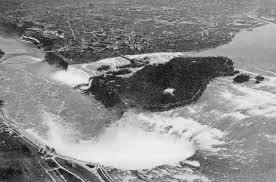
So a bit to set this example up. The novel is a few things: historical fiction, murder mystery, romance, tragedy of manners. The plot goes something like this – it’s 1901, Buffalo is playing host to the pan-american exposition. Industrialists and engineers are developing hydroelectric power at Niagara Falls with all sorts of complications: union organizing and labour conditions; nature-preservationists and eco-terrorism (that the development of the Falls was protested on environmental grounds was an absolute revelation to me); public versus private ownership of resources. Our protagonist, Louise Barrett is headmistress of an exclusive all-girls school and passionate about the way education can transform individual women and reform society as a whole. She’s also afforded unusual social liberties because of her ‘spinster’ status; a status she’s had to assume for good reason (which I won’t spoil here) to do with gender-based violence and independence for women. A man gets murdered. The hydroelectric project gets complicated. The cast of characters and their secrets and lies thickens.

Right, so in this example Louise is talking to a reporter (masquerading as a photographer – because performativity and identity is also a big thing here), Franklin (who is also a potential love interest). Franklin explains his cynicism as to why he doesn’t think the industrialists care about the ordinary people when the choice is between the people and the extraction of a resource:

I served time in the Philippines, remember? I saw our fine and honorable American soldiers using the too-aptly named ‘water cure’ to exact confessions from prisoners; of course the prisoners weren’t ‘white’ so it didn’t matter. (135) He goes on… Electricity should be a public service, not a commodity sold to the highest bidder. The electricity created at Niagara belongs to the people. Not to the industrialists, not to the nature preservationists […] but to the people” (136). 

It parallels waterboarding, right? Electricity – throughout – parallels oil extraction with immediate gains prioritized over long term environmental damage. But it’s not an allegory because it is – in the fictional past – a recognizable reflection and deepening of our understanding of the present. Am I just describing a term called ‘the beauty and wonder of historical fiction’?

Anyway. I really loved this one. The murder mystery, while a driving plot point, wasn’t the focus of the text so much as Louise’s journey to understand her past and present. The historical details about Niagara and hydro development are genuinely fascinating. The socio-political-economic context that underpins the plot is as rich a character in its own right as any. Including the one moment Louise doubts her self-reliance and thinks how lovely it would be to rely on a man, she is a model of feminist independence. So yeah, please read the book and tell me what the term is that I’m looking for. Or maybe you don’t have to read the book because it’s so obvious. It’s probably alliteration. Kidding. (Am I?)

Leave a comment

Filed under American literature, Book Club, Mystery, Prize Winner

I am Pilgrim: Arrogant

Terry Hayes wants you to know he’s written screenplays. He really wants you to know that Nicole Kidman was in one of them. And that he’s kind of a big deal. How do I know this? Well, not just from the eight pages of acknowledgements (thanking, get this, his Norwegian editor ‘the first of many international publishers’ to pick up his book) and the author biography, but from his self-satisfied, falsely-modest, made-for-the-movies protagonist. Our polyonymous protagonist who on every page reminds the reader of what an exceptional spy he is (but oh-no, he really didn’t want this kind of responsibility and power), how materially privileged he is (but no really, he was adopted so he understands alienation and he never really wanted to be a billionaire anyway) how patriotic and brave he is (but seriously, the firefighters on 9/11 were the *real* heroes),  what a genius he is (no for real, he dropped out of Harvard medical school because it wasn’t meaningful enough) and how self-sacrificing he is (of course not, he’s just too dangerous for friends or permanence). Continue reading

4 Comments

Filed under American literature, Bestseller, British literature, Mystery, Popular Posts

Six Books; Seven Days: The Vacation Edition

                                     If you asked my mum I spent the entire cottage week reading and avoiding conversations about weddings, houses and jobs. To be fair I *did* avoid those conversations, but I didn’t spend the *entire* week reading. I also played a lot of hearts, chess, ticket to ride and euchre; made dinner; paddled a canoe and cuddled my nephews (though the photographic evidence suggests I did a fair bit of this cuddling while also reading). 

I should probably blog each book individually, but instead I’ll give you the highlights reel. Thanks to those who made suggestions in advance of cottage week, most of the reads here are terrific and well worth seeking out. So, in the order that I read them (and so with descending memory of what they’re about):

The Cat’s Table – Michael Ondaatje

Basic Plot: Young boy sent on his own on a three week sea voyage; meets other kids; woven passages of how the boat trip does (and does not) influence his later life. Highlights: Ondaatje does so much well here – sweet slices of poetry, characterization, atmosphere and mood. It’s a novel that takes a “small” story (a slice of one man’s life; a trip) and makes it resonate with large themes and a wide audience. Gripes/Grievances: The climax didn’t feel sufficient, not an anti-climax, but a sort of “oh, that’s it?” and a wish that it was more. Overall: Beautifully written; not my favourite plot.

Salvage the Bones  – Jesmyn Ward

Basic Plot: Never a good sign that I had to flip through the book to remember what it was about. But then it all comes back: poor family in the lead up to Hurricane Katrina; the kids in the family are (on the surface) trying to raise pit-bull puppies (to sell; to fight) and trying to conceal a pregnancy; the father in the family tries to prepare the house/kids for the coming storm. Highlights: The scenes during the storm itself are gripping, tense and well written. Gripes/grievances: The plot reads a bit “out of time and place” in that its hard to imagine (though maybe this is the point?) this family existing. But they do and their suffering reads as real and poignant. Overall: I could have done with less time obsessing over the puppies. 

Tenth of December – George Saunders

Loathe as I am to admit it: this collection moved me. Like my experience of all short story collections, I struggle to recall exact plots of the stories (though the story of the experimental drug testing and the other about the human garden gnomes linger), the overall impression of the collection is fresh: fresh narrative voices, images, plots and characters. The whole thing reads like a genius writer from the future has arrived in our present to share how writing will be: imaginative, funny, poignant and challenging. I know I’m late to the bandwagon (and that I’m hardly credible when it comes to recommending short story collections): but go get this one. It’s really, really great.

The Good Lord Bird – James McBride 

Basic Plot: Henry Shackledford (Henrietta aka “Onion”) narrates his history disguised as a girl in the company of abolitionist John Brown as he (Brown) campaigns for the end of slavery. Highlights: I suppose it was getting a sense of this aspect of American history – the raid on Harpers Ferry contributing to the beginning of the Civil War. Gripes: I just didn’t like Henrietta/Henry. At all. I found the character to be annoying, so my patience with the plot stretched. On the plot it was ploddingly paced, overburdened with description and scenes that didn’t add to character. Hard to pinpoint larger thematic questions: just seemed to be a straight-up retelling of history. Overall: It’s rare that I don’t like something N. recommends, but this one fell a bit flat. Sorry, N.

Defending Jacob  – William Landy

It’s probably a rule that you can’t go to the cottage without reading at least one pulp mystery novel. And so I did. I intended to read the first in the series by Mo Hayder (on the suggestion of A.), but couldn’t get a copy from the library (I’m now halfway through a copy – stay tuned!), so settled for this one brought to the cottage by mum. Basic Plot: District Attorney’s son is the prime suspect in the murder of another teenager. DA has to defend his son. Highlights: Pages turned quickly. Gripes: The ending  – promised by the front cover to “chill and thrill” was… disappointing. Not that I saw it coming (surprise!) but that it wasn’t a satisfying outcome to the moral questions the plot tried to ask (a much, much better answer to these questions can be found in the brilliant *We Need to Talk About Kevin*). Overall: I’m enjoying the Mo Hayder so much more. But if you’re stuck on a plane, or holding a sleeping nephew, it does make the time go by quickly.

The Ocean at the End of the Lane – Neil Gaiman

I love the way Neil Gaiman writes about the importance of reading and libraries. I love the idea of loving Neil Gaiman. And I did like The Ocean at the End of the Lane well enough because I love reading about other people who forget all of the things that they ought to remember. But I just don’t *swoon* the way others seem to over this book. Anyway, Basic Plot: boy returns to childhood home and remembers magical/fantastical experience when  otherwordly things wreak havoc, saved by neighbour girl, has remembered/forgotten the experience before. Highlights: I have a terrible memory; it’s comforting to be reminded that our memories alone can be tricked with, played with and held in other places by other people. Gripes: Slow getting going. I worried about the kitten. 


So there it is. The cottage week is done for 2014. I’m now returned to conversations on weddings, houses and jobs. Routines of work, play and reading in the bath with wine. I’m still very open to book suggestions – though be warned that the next six weeks rival that time I moved across the country, started a new job, ran a marathon and co-chaired a conference all at once. So send me gentle reading suggestions. Or free books. Or hugs. 


2 Comments

Filed under American literature, Bestseller, Book Club, Book I'll Forget I Read, Canadian Literature, Fiction, Historical Fiction, Mystery, Prize Winner, Short Stories