There’s much to enjoy in Emma Donoghue’s latest novel, The Wonder. One word of warning: do not make the mistake I did and read the book flap. The person who wrote the book flap should be reprimanded for summarily spoiling a significant plot question in the description. Fear not. I won’t do the same. Continue reading
Category Archives: Canadian Literature
Clara Callan: In which I start writing the review ambivalent, and end up not liking the book; or, the merit of writing reviews
Oh I don’t know. It’s hard sometimes to summon a review. Sometimes you read something and think ‘yes. that was just fine.’ And in the case of Richard Wright’s (why does he insist on the middle initial?) Clara Callan, I have no solid argument against reading it, but I also can’t muster a persuasive case for picking it up. So sure, if you find yourself in a hostel with a free copy (or in my case, a used bookstore with a copy in the $1 bin and your only other reading material is the very boring A Brief History of Seven Killings) then by all means: go in. Continue reading
The Girl Who Was Saturday Night: Metaphorical Cats
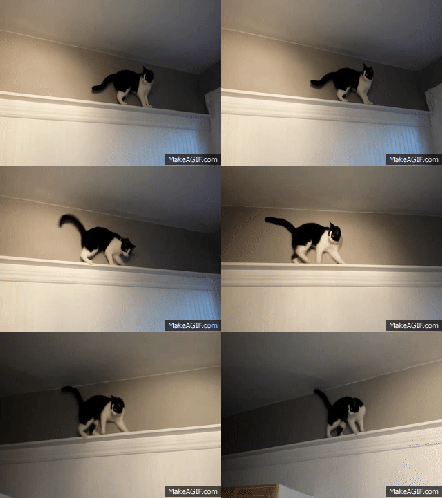
Some people really like Heather O’Neill (e.g. apparently all of Canadian media and award committees). I am not one of those readers. Lullabies for Little Criminals predates the blog, but I remember thinking it was a bit overwrought. Enter The Girl Who Was Saturday Night, O’Neill’s second novel and a repeat effort to make me feel something profound by way of Serious last sentences for every chapter. These sentences have a kind of formula: Feeling/Abstract Noun + unusual metaphor + adjective + reference to a cat. I think these sentences feel pretty good about themselves. Continue reading
Filed under Book Club, Canadian Literature, Fiction, Giller prize, Prize Winner
Do Not Say We Have Nothing: You Probably Know More About Everything Than Me.
I can’t remember how I first came across Madeline Thien. It was almost certainly in the context of a literature class, and probably the responsibility of L. or D. teaching me Canadian literature. The origins don’t matter so much as knowing that I associate Thien with beautiful writing and themes of family, place and home. So when mutliple folks recommended her new book Do Not Say We Have Nothing I was primed to appreciate it. I say ‘appreciate,’ but I could have also said ‘enjoy,’ or ‘marvel,’ or ‘revel.’ It’s a book that takes for granted that its reader will want and appreciate depth in theme and exquisite beauty in writing. It is not for the lazy reader, and doesn’t assume that such readers exist. Continue reading

 Literary Vice