Category Archives: Prize Winner

All the Light We Cannot See: Go For It

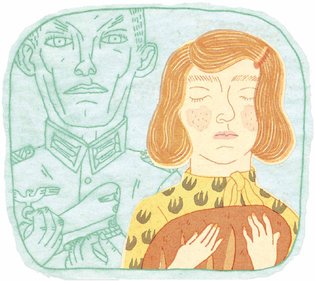
I got a book light in my stocking. How appropriate for the late night staying up to read “just one more chapter” of All the Light We Cannot See. The trouble, of course, is that the chapters in this novel are never more than five page long – most two or three – and so resolving to do “just one more chapter” is a promise to still be reading an hour later. Thankfully I’m on holiday and sleeping in is requisite. If you’re not on holiday you might prepare to be stern with yourself, or accept being a bit groggy eyed as this isn’t a story easily put down.

Appropriate, too for the images in the novel. It’s a story with parallel narratives – that of Marie-Laure, the blind Parisian girl who is a prodigious reader and world-creator, and that of Werner, the starkly Aryan orphan with a prodigious talent for electronics, radio in particular. As their two tales unfold against the backdrop of France under Nazis occupation, we get intricately woven and masterfully described scenes and plot moments with richly imagined conflicts and consequences. Symbolism abounds: diamonds, curses, radios and silence, snow-white hair and 20 000 leagues under the sea: it’s all meant to mean something and to mean so much.

It’s tempting to give this an unqualified endorsement, and I do strongly suspect that if you pick it up, you’ll absolutely enjoy the read (I certainly did). I have to admit a certain reluctance, however, as I found two problems: 1. The characters, while compelling for what they do and for what happens to them, are not, on their own, fully imagined or realized. They certainly experience conflict and are called upon to make heroic or challenging choices, they have complex interactions with other characters, but their interior lives remain opaque and stunted. 2. The ending is entirely too tidy for my taste. Resolved. And the leadup – the climaxes – read with the certainty of resolution. In part the flashback structure – we begin in 1944 and move back and forth in time – promises this kind of conclusion, but I suppose there’s also the structural point that we couldn’t create such intricately woven parallel narratives without having them meet (or that certain assurance that we could not put characters with such extraordinary and exceptional lives in such danger and not have some resolution).

My complaints are more a way of saying while this is a book you’ll enjoy reading (much as anyone can enjoy reading WWII fiction, I suppose) it isn’t without problems. Look past these quibbles and you’ll find yourself reading by whatever light you’ve got – probably something backlit and electronic. Which will, I’m sure you know, ruin your eyes and keep you up all night.

1 Comment

Filed under Bestseller, Book Club, Fiction, Prize Winner

The Empathy Exams: On reading (essays)

My bff S. and I have a long standing joke that we have an “ET” connection. Having never seen the movie (I know, I know) I’m not entirely sure what the alien does to form the connection, but the way we understand it there are moments that we just ‘get’ one another, or ‘get’ what the other is going through.

The idea that we can ‘get’ one another, or the idea that there are – and should be – limits to what we imagine we can ‘get’ about one another, or the idea that we can only ever reach towards this kind of understanding, are ideas explored in Leslie Jamison’s excellent collection of essays, The Empathy Exams. [I admit I don’t read many essay collections – though with M.’s prodding and with this experience I suspect I’ll seek out more – and so my commentary will be a welcome counterpoint to the last post on historical fiction.]

One of the threads running through the collection is that of the writer-as-observor or witness, and the parallel role we all take in our connections and interactions with one another. That much as we might like to imagine that we can ‘get’ the other and those we love, we are – in the end – witnesses to and for one another. That we could be witness for one another is one of the ideas I found most engaging in the text. Until reading I had sort of thought of empathy as somehow selfish: let me share my pain or joy with you – selfish for both giver and receiver. But what the opening essay opens up is the notion that in asking questions, in witnessing and listening, we can reveal parts or feelings of the other to herself that she didn’t know she had or felt. The collection weaves this idea – and many others on the theme – through a range of places and people in ways that brought fresh perspective and nuance. Each felt focused on a particular story, but threaded to the wider theme and question. With the exception of the last essay, which I found a bit wearing, each gave, shared, asked and offered.

If my idea of reading has been this sort of sharing of experience, broadening of perspective, temporary adoption of identity and history that changes and shapes the reader, what Jamison’s collection did for me was to nuance my idea that reading is just about expanding and deepening my capacity for care and might equally be a call for conversation – with the author and others – about what and how the reading (re: the experience, the sharing) has changed or is changing.

There’s good evidence – if we believe Science – that reading literary fiction strengthens the readers ability to empathize. Even more so than popular fiction or non-fiction. And so while I might want to take this evidence as vindication of my reading habits, I do think reading this essay collection has affirmed that I need to read more non-fiction for the lens it brings and the questions it explicitly asks.

And so S., I’ve sent you a copy of The Empathy Exams as your late Christmas present. And as a tether across the world to know just how close we are.

Leave a comment

Filed under Book Club, Non-fiction, Prize Winner

Ship Breaker: The Young Adult Fiction Debate

2014 has been a year for “think pieces” on young adult fiction. Beginning with the Slate “Against YA” , other writers took up the question of why adults read fiction purportedly written and marketed to young adults and many asked whether this was a ‘good’ or ‘bad’ thing (see The New York Times “The Death of Adulthood” , Salon’s defense of The Fault in Our Stars, the New Yorker’s “The Great YA Debate” and Book Riot’s take “23 Things I’d Rather Read than Another Think Piece On What’s ‘Wrong’ With Children’s Literature” — what is a ‘think piece’ anyway, if not another way for Slate to describe an article?)

What I want to do here is not to rehash the same ‘good’ or ‘bad’ question, but rather to describe three moments from Paolo Bacigalupi’s Ship Breaker that, to me anyway, suggest that the genre debate is beside the point. What we would be better off doing, as readers, as cultural consumers, is asking questions about the merits of individual books, how they get read and discussed, what their impact might be on readers of whatever age. When we fall into disparaging an entire [genre][generation] we forget that the nuance and depth of individual books within this genre varies wildly, just as those who read them do. To the extent that we might be better off asking if there are “good” and “bad” readers, rather than ‘good’ or ‘bad’ choices of texts.

Tirade aside – here’s three things about Ship Breaker that I found provocative:

1. The exploration of income inequality and precarious labour: As the novel opens, our protagonist, Nailer, is maneuvering through the dangerous innards of a ship in order to extract valuable copper for his owner/patron. While doing this work we learn that this work will soon be beyond him as he’ll grow too big to fit in the narrow passages; we also witness as he is injured and worries about whether he will be able to work with his injury because ‘time off for illness’ isn’t something his owner/patron will tolerate. Nailer is spared the decision of whether to work with his injury when he stumbles upon his ‘lucky strike’ (more on luck in a minute) – an opportunity for enough money to leave the city in which his fate (to work until he dies) is predetermined. The novel explores at length the luxuries – material and psychological – that come with wealth, not the least of which is access to transport (call it ‘mobility’ if you want the double play on social standing and geographic movement).

2. The tension between luck/fate and choice: Nailer is the son of an abusive father. He is witness and subject to all sorts of violences. All the while, he, his friends and his community put great store in ‘fates’ – to the extent that the fates ought to be appeased with offerings when good ‘luck’ occurs in order to prevent the opposite. When Nailer makes his significant ‘lucky strike’ his friend, Pima, advises him to kill in order to secure the prize. Nailer, unwilling to kill, makes a deliberate choice that is – according to Pima and his context – contrary to expectation. The novel places the idea of predetermination and choice in tension not to suggest these ideas are polarities, but rather to explore the ways the characters travel between positions and struggle to test the limits of both epistemologies.

3. The consequences of resource extraction/consumption on global warming (and the dangers of genetic modifications): The novel is set in the dystopic-future after the floods, droughts and cataclysmic storms of global warming have destroyed infrastructure and government, and rising sea levels have redrawn not just the maps, but the social, political and economic landscapes. As Nailer and co. make their way though the different plot points, and as the different thematic questions are explored, underpinning it it all is this setting of grim disease, pollution and danger wrought by the setting. A setting, the novel takes some pains to remind us, that is the consequence of human greed and over-dependence on non-renewable resources (with some direct links back to income inequality). Hybrid species of part-human/part-dog (or tiger) move through this world – and demand agency (or not) – in fascinating and complicated ways (with some direct links back to fate and choice).

So there you go. Call the YA genre simplistic if you like. Deride those who read it for lacking sophisticated taste or a willingness to engage with complex questions. Or consider each book on its own merits for what it offers each reader. Which is not to say that I liked Ship Breaker. I didn’t really. But even while I don’t want to gush about how much fun it was to read, there are certainly complex ideas at work in the novel well worth exploring for readers of all ages.

P.S. Someone lent me this one and I can’t (at all) remember who recommended it and lent it. SO – if this is your book, let me know and you can have it back, and also: thanks for sending it my way!

1 Comment

Filed under Bestseller, Fiction, Prize Winner, Young Adult Fiction

The Little Stranger: Ghosts of my Ambi(valence)(guity)


Published just after (like months) the first season of Downton Abbey began, Sarah Waters’ The Little Stranger shares the basic plot features of the show (well, sort of): British aristocratic family falls on hard times after the end of the War (this time, WWII) as they are without fortune, but more importantly without a ‘place’ in a world that has moved past the need for lords and ladies.

Place is significant in The Little Stranger as the deteriorating manor house that forms the claustrophobic setting for the novel parallels the degradation of the family’s wealth and social standing. As a good gothic tale, the creaking house is a character in its own right, taking action – at first to protect and then to threaten – the family and any guests. Further gothic elements of maidens in distress, haunting figures and would-be heroes, The Little Stranger is as much an exercise in genre as it is an exploration of the consequences of changing social mores brought about by economic and political turmoil.

That exploration, while complicated and rich in the abstract, is captured in the novel in the minute interactions among characters, casual glances, waylaid gloves and dogs barking at the wrong time. That is to say, the fascination of changing social attitudes falters under the microscopic and magnified lenses of the novel. I am not ordinarily drawn to pages and pages detailing a parlour visit and the composition of the tea tray. Nor was I drawn to it in this instance. I suspect that if you have interest in the time period, or in ghosts and haunted mansions (or in considering how ghosts might be manifestations of our own interests) and mysteries, you’d enjoy the read.

My complaints registered, I should say that I found the mystery element compelling: how/whether the doctor-hero was, in fact, a murderous villain bent on protecting and seizing both the bodies and ideas of the aristocracy. And appropriately haunting. I’ve come back to did-he, didn’t-he in the days since finishing the book, more as wonder of how deceptive first person narration can be and how capable we are of deceiving ourselves – and the pleasure that comes from both.

1 Comment

Filed under British literature, Fiction, Mystery, Prize Winner