Tag Archives: best book blog

A Measure of Light: The Audacity of Belief

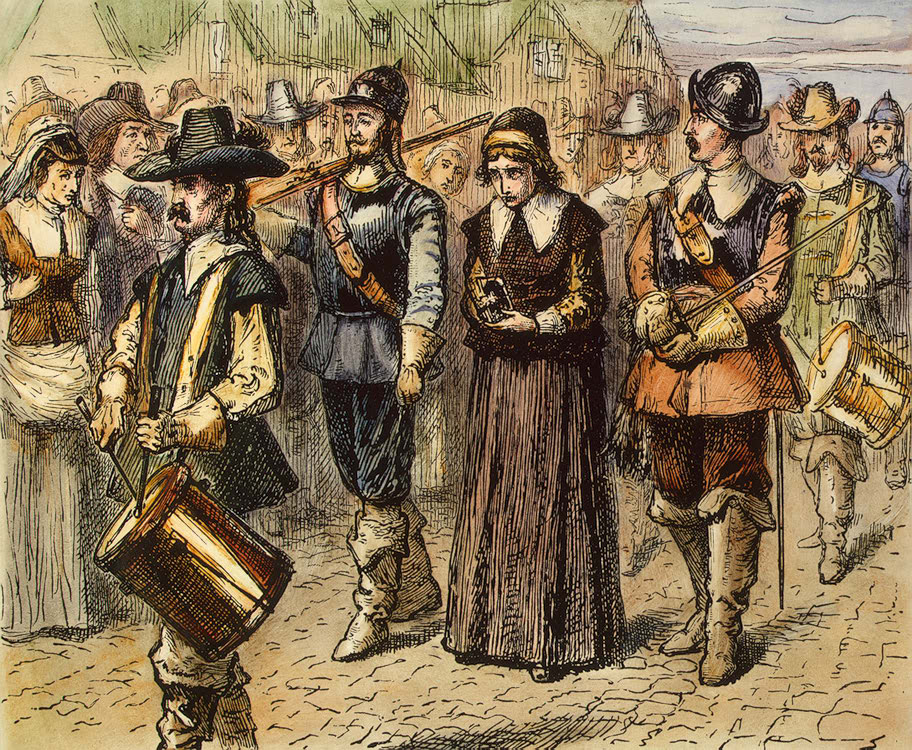
Ask yourself if there is a cause or belief you would die to serve. Or what your death might accomplish for this cause. Hardly speculative questions in our contemporary moment. Where Beth Powning’s A Measure of Light departs from the present of this reader is, well, the setting and plot: 17th century Puritan New England and the emergence of the Quaker movement. Less obviously, it departs in the sense that those who die for their beliefs do so not as suicides where bodies are the available weapons, but rather those who die for their beliefs are killed by the state for holding beliefs that are deemed so threatening, so challenging as to be violently and publicly killed. It’s a grammar slip there, you’ll notice, between the belief being killed and the person. And one worth noticing.

Our protagonist, historical figure Mary Dyer, is killed by the Boston officials that see her views of God (as accessible to all with equal access and without the intercedence of the Church) as heretical and threatening to the socio-political (and importantly economic) well-being of the region. So while she and several of her Friends are publicly hanged, their deaths do not accomplish the aims of the state in that the belief cannot be killed by killing the person. Or at least not easily. Rather, as Powning’s narrative suggests, Mary Dyer the martyr does more to raise the profile of the belief in their death than she does in her actively proselytizing life.

A Measure of Light is a fascinating read for its unravelling of the development of the Quaker movement and its portrait of New England life. It’s a rich (and beautifully written) exploration of what it means to hold beliefs with such conviction and the consequences both for the individual life, but for the family and community of that individual. It’s perhaps even more interesting – at least for me – in its representation of women and women’s bodies in this period. Mary’s journey through faith is irrevocably marked by the death of her three-day old child and the subsequent still-birth of her premature child as she and her community view these tragedies as evidence of her damned soul. I admit, as an atheist and 2015 reader, that I struggled to empathize with her conviction that it was God that spoke through her (markedly female) body, but what I could understand and relate to – only to well – was the feeling of my body, and its interpretation, as outside my control and dominion. The sense that others read what women’s bodies do – and don’t do – in questions about when (not if) these bodies will have children, in how (not whether) these bodies will be held up against impossible standards of beauty and in the sexualization and objectification of these bodies at every turn. So while the patriarchal source might be different – God – the experience of a distorted and disturbed relationship between the self and the body is all too recognizable.

All this to say, that between the resonant and provocative questions about the power of religious conviction to drive (violent) action and the representation of women’s bodies as sites for public debate, A Measure of Light is an exemplary piece of historical fiction, doing what historical fiction does best in representing the past in a way that allows us to better understand our present experience. Given the preponderance of historical fiction in Canadian literature (and no, I’m not just saying that because it’s my thing) and the attention this genre tends to get in awards season, I’d flag A Measure of Light as one likely to come up in discussions of best’s of this year.

Leave a comment

Filed under Canadian Literature, Historical Fiction

An Unnecessary Woman: Books Break Barriers (and other reflections on why we read)

The Canadian Broadcasting Corporation is in the middle of its annual “Canada Reads” competition to pick a book all Canadians should read. This year the contest focuses on books that break barriers. Sure, I think, encourage people to read books that might challenge their assumptions and invite an alternative perspective. Except I sort of think this invitation to burst or break (such violent language for such a gentle activity: or is it?) is what all fiction is about, what all reading is for: the space to inhabit perspectives in ways that make you examine (if not *break*) those assumptions you hold that keep others at a distance, or to simply (simply?) travel an unknown story as more than a tourist, but less than a local.

Certainly Rabih Alameddine’s An Unnecessary Woman explores how reading creates this space of exploration. In a powerful passage on the nature of evil, our narrator foregrounds the responsibility that comes with reading, noting “We all try to explain away the Holocaust, Abu Ghraib or the Sabra Massacre by denying that we could ever do anything so horrible. The committers of those crimes are evil, other, bad apples; something in the German or American psyche makes their people susceptible to following orders, drinking the grape Kool-Aid, killing indiscriminately. You believe that you’re the one person who wouldn’t have delivered the electric shocks in the Milgram experiment because those who did must have been emotionally abused by their parents, or had domineering fathers, or were dumped by their spouses. Anything that makes them different from you. When I read a book, I try my best, not always successfully, to let the wall crumble just a bit, the barricade that separates me from the book. I try to be involved” (100 – emphasis added). Yep, that’s it (for me), that’s why I read (or one of the big reasons).

More than an opportunity for introverted exploration, however, the book posits that reading might be enough to make a meaningful life. Our first person protagonist, Aaliya, is a divorcee in Beirut. Deemed “unnecessary” by her family, she takes a job in a bookshop and spends her life reading during the day and translating – from translations – one book a year into Arabic.

[An aside: Beirut is cast as a complex character in the novel, seen as “the Elizabeth Taylor of cities: insane, beautiful, tacky, falling apart, aging, and forever drama laden. She’ll also marry any infatuated suitor who promises to make her life more comfortable, no matter how inappropriate he is” (88). An aside to the aside: you get a sense from these sentences of the beauty of the writing, right?]

Her work of reading and translating attempts a response to the existential question of what makes a life meaningful and worth living. We get glimpses at different points in the novel of others for whom this question has not been satisfactorily resolved: suicides, isolation, destruction. Those, too, for whom the task of making meaning – through the creation of art or parenting, for instance – is insufficient to satisfy the existential question (cue more suicide). For Aaliya the response of reading and translating, while salutary, is, likewise, insufficient. She thinks “Nothing in my life is working. Giants of literature, philosophy and the arts have influenced my life, but what have I done with this life? I remain a speck in a tumultuous universe that has little concern for me. I am no more than dust, a mote – dust to dust. I am a blade of grass upon which the stormtrooper’s boot stomps” (159).

The conflict of the book – such as it is – focuses around this question: how can we individually make meaning of our lives? How might reading and stories help us in this pursuit? (Perhaps its as Aaliya suggests in one of her bleaker moments that “In order to live, I have to blind myself to my infinitesimal dimensions in this infinite universe” (277).)  So while there is this quasi-conflict, one complaint I have with the book is that it’s more a meditation on the beauty, power and influence of reading than it is a complete narrative on its own. Sure there’s a narrative arc, conflict and character development, but these elements seem a secondary interest to the purpose of exploring the magic of words. So I’d give the strong caveat that while I encourage you to read this one for its masterful meditation on the importance of reading and of story, I’d begin reading with lowered expectations for a nuanced or intrinsically satisfying narrative.

1 Comment

Filed under Booker Prize, Fiction, Prize Winner

We Are Not Ourselves: Why You Shouldn’t Read Book Reviews

The only book assigned to me in high school that I didn’t finish reading was Samuel Richardson’s Pamela. I made it far enough to write a term essay and also to know I didn’t need to finish reading it (to be fair, Pamela was published as a serial and Richardson probably wanted to finish the thing eons before he did, but popularity being popularity, the guy couldn’t say ‘no’ to churning out another excruciating letter).

I may not be in school anymore (!), but the guilt I feel in not finishing a book remains a combination of panic that I’ll be found out and a sort of bafflement that this terrible book had been assigned in the first place. Sure no one “assigned” Matthew Thomas’ We Are Not Ourselves, but they may as well have: the book reviews proclaimed its excellence and compared it with the genius of Franzen.

And this is why you shouldn’t bother with book reviews. As I committed another day’s worth of reading to this interminable and ponderous novel I kept reminding myself how well it was received elsewhere. Kept urging myself to find in the insufferable level of detail something akin to beauty or marvel. Kept assuring myself that this book had been awarded prizes and so had to be of some quality. The fault was mine, I thought, for being an impatient reader. Well, no more. 250 pages into an infinite waste of time, I stopped. I’d figured out where the plot was going (to give it it’s airing: an Irish-American family lives its life: the mother wants a bigger house, the father has early onset Alzheimer’s and the son is an undefined, ill-described mess of wanting to hit someone) and I didn’t care enough to force myself through the purchase of the overly expensive house, the unravelling of the Alzheimer’s mind and the (one can only assume) eventual character development of the son.

It’s very possible I’m wrong. That in my impatience for excruciating detail and an absence of conflict I’ve missed a gem of a novel. That said, I’d in no way encourage you to read this one. But then, this is a book review, and you’ve already stopped reading it.

1 Comment

Filed under American literature, Book I'll Forget I Read, Fiction, Prize Winner, Worst Books

Adult Onset: What you need to know about being a parent (without having kids)

I’m not a parent. Most of the significant members of my social circles have become parents in the last year or so (friends, colleagues, siblings). It’s been hard at times to be the child-less 30-something among a seemingly ever-expanding network of parents. Sure you say, they don’t stop being siblings or friends, and you’re right, they don’t, but they become something else, too. And in becoming, add to their vocabularies, stories and frames of reference experiences that I can only imagine and witness: baby-led weaning, sleep training, pumps, exhaustion and marital discord. At this point in my life I am interested in parenting in the way I am interested in filing my own taxes: I’m conscious of the merits of taking part, wary of the responsibility and the risk of fucking it up, and secretly suspicious that the claims of it being ‘so hard’ are overstated.

Anne Marie MacDonald’s Adult Onset takes up these questions about parenting by following one parent – Mary Rose – over the course of a week as she grapples with the tensions of raising kids in the particular moment of yuppy, 2014, Toronto. Okay, so the particular moment of 2014 Toronto, but also Mary Rose’s own experience as a child and how her relationship to her parents colours her self-conceptualization and realization of her own identity as a parent. That is to say, there’s a bit of past-present blurring and Mary Rose-and-her-mother blurring  throughout.

It would be oversimplified to say her understanding of parenting is ‘fraught,’ but it is. Her parents experienced miscarriages, stillbirths and the death of a child; these experiences contributed to postpartum depression that necessarily impacted the way Mary Rose experienced her own childhood and the way she conceptualized what the acceptable activities and attitudes of parents include. Mary Rose and her partner Hillary raise an adopted child and a biological child (for Hillary, but not for Mary Rose), complicating in the novel how biological connections shape – and don’t – parenting. They’re also lesbian parents in a 2014 Toronto that has legalized gay marriage and (as of yesterday) introduced gay marriage into the curriculum, but still encounter tension in the representation and construction of normalized ideas of ‘family’ and ‘parent’. Add the complications of parenting in an era of anxiety, hyper-vigilance and over-protection (I recently read and enjoyed Hanna Rosin’s “The Overprotected Kid” which is well worth a read if you’re interested in how surveillance culture is impacting parenting norms). Add to that the week depicted is one in which Mary Rose must parent “alone” as Hillary is away.

I’d probably have enjoyed Adult Onset a lot more if I wasn’t currently surrounded by new parents. Don’t get me wrong – I love the babies in my life and the parents raising them. I don’t mind – in fact, I usually enjoy – hearing about teething, naps, day care and the toll it takes on the body.  At the moment I’m invited to watch and to listen the transformation and power of parenting in my real life, and so the opportunity to do the same in a novel is – while beautifully rendered, full of complication and nuance, exceptional writing and strong characters – not immediately exciting. But it was a great read and will – no doubt – lend itself to a rich discussion at the next book club (where, yes, I’m the only non-parent).

2 Comments

Filed under Book Club, Canadian Literature, Fiction