Tag Archives: best book blog

The Illuminations: Beautiful doesn’t always mean you like it.

I’ve recently started a book club. It’s given me an occasion to talk to my mum, J., about the book club she’s been a part of for the past 30+ years (how long?). She was giving me advice (solicited, this time) on how her book club operates. They each rate the book, but with the rule (enforced?) that the rating cannot take into account the balance of “well, I found the book beautiful, *but* it just didn’t resonate with me.” That is to say, the rating has to be on your overall impression of the book in ways that don’t allow for separating out the well-crafted sentence from the one that moves you.

This blog sometimes feels to me like this kind of exercise in declaring my overall impression of a book. And in the case of Andrew O’Hagan’s The Illuminations I find it difficult to do so. I didn’t like the book – I’ll come right out with that – but not for any reason I can find to pin down. It’s beautifully written. It addresses complex and nuanced questions about nationalism, identity, memory, gender and maternity. It focuses on provocative settings: the 2001- war in Afghanistan (how do Western soldiers understand their involvement – as a game? a proxy? What counts as “real” violence?), a retirement home (what are the limits of independence and community? what do we owe our parents and what do they owe us?) and the remembered – or misremembered – scenes of an aging woman with dementia (what can she know about her own life? how is her identity reconstituted by those who know her now – and then?).

I wonder if my own over-attachment to character is what gets in the way the novel resonating with me. I say that because the novel shares the focus on the characters (the soldier, the grandmother, the children, the neighbours). And so while complex, human and empathetic, I found myself at a loss to work out who I was best meant to identify and attach to, who I was meant to care about their conflict and change. I suppose a different reader (a better reader?) might be able to see this richness in character as an opportunity – all the more to engage with! – rather than a drawback.

But according to the rules of book club, at least J’s book club, I have to say that I didn’t like the book.

One final note to end on: I love reading the acknowledgement sections of any novel. I like imagining how the novel I’ve just read was built and shared by a community of people. On occasion I recognize names in the sort of recognize a who’s-who. So when I read in the plot of the novel a reference to the university I attended, I imagined while reading who I might know who had come into contact with the characters (or author). Delight then, in reading in the acknowledgements that one of my favourite, certainly most influential, professors M. was in the acknowledgements. I suppose I should be surprised – the feminist elements, focus on photography, interest in the every day should have given me the clues as I was reading. But there you go. So hooray to M. for her involvement in this beautiful book. That I just happened to not like very much.

Leave a comment

Filed under Book I'll Forget I Read, Fiction, Prize Winner

City of Light: ‘Allegory’ doesn’t mean what you think it does. Or what I think it does.

The thing about an allegory (like a metaphor) is that the comparison is made between two unexpected things (pigs and communist leaders; shadows on the wall and ideas). So when reading Lauren Belfer’s excellent City of Lights I struggled to figure out whether the novel was allegory or something else. A literary term that escapes me, but exists, I’m sure.

So tell me what this literary term is that I’ve missed out on. I’m looking for a term that describes when the fictional plot events/setting/character parallels a contemporary and real plot event/setting/character. Not parallels in an unexpected way, but parallels in a way you recognize the contemporary thing. You’d like an example? Sure.

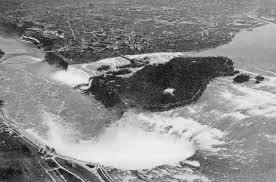
So a bit to set this example up. The novel is a few things: historical fiction, murder mystery, romance, tragedy of manners. The plot goes something like this – it’s 1901, Buffalo is playing host to the pan-american exposition. Industrialists and engineers are developing hydroelectric power at Niagara Falls with all sorts of complications: union organizing and labour conditions; nature-preservationists and eco-terrorism (that the development of the Falls was protested on environmental grounds was an absolute revelation to me); public versus private ownership of resources. Our protagonist, Louise Barrett is headmistress of an exclusive all-girls school and passionate about the way education can transform individual women and reform society as a whole. She’s also afforded unusual social liberties because of her ‘spinster’ status; a status she’s had to assume for good reason (which I won’t spoil here) to do with gender-based violence and independence for women. A man gets murdered. The hydroelectric project gets complicated. The cast of characters and their secrets and lies thickens.

Right, so in this example Louise is talking to a reporter (masquerading as a photographer – because performativity and identity is also a big thing here), Franklin (who is also a potential love interest). Franklin explains his cynicism as to why he doesn’t think the industrialists care about the ordinary people when the choice is between the people and the extraction of a resource:

I served time in the Philippines, remember? I saw our fine and honorable American soldiers using the too-aptly named ‘water cure’ to exact confessions from prisoners; of course the prisoners weren’t ‘white’ so it didn’t matter. (135) He goes on… Electricity should be a public service, not a commodity sold to the highest bidder. The electricity created at Niagara belongs to the people. Not to the industrialists, not to the nature preservationists […] but to the people” (136). 

It parallels waterboarding, right? Electricity – throughout – parallels oil extraction with immediate gains prioritized over long term environmental damage. But it’s not an allegory because it is – in the fictional past – a recognizable reflection and deepening of our understanding of the present. Am I just describing a term called ‘the beauty and wonder of historical fiction’?

Anyway. I really loved this one. The murder mystery, while a driving plot point, wasn’t the focus of the text so much as Louise’s journey to understand her past and present. The historical details about Niagara and hydro development are genuinely fascinating. The socio-political-economic context that underpins the plot is as rich a character in its own right as any. Including the one moment Louise doubts her self-reliance and thinks how lovely it would be to rely on a man, she is a model of feminist independence. So yeah, please read the book and tell me what the term is that I’m looking for. Or maybe you don’t have to read the book because it’s so obvious. It’s probably alliteration. Kidding. (Am I?)

Leave a comment

Filed under American literature, Book Club, Mystery, Prize Winner

A Man Called Ove: How to tell if the book you’re reading is sentimental crap. Or if you are cruel and unfeeling.

I’m a graduate of a PhD program in English and Cultural Studies. My training was all about – well, most of the time – explaining why something was bad. Oversimplified! (see? I’m good at explaining why I’m bad, too). What it was about was cultivating my critical faculties. My ability to take something apart and show all the ways it was ‘problematic’. There’s a whole set of verbs you can use: problematize, trouble, unpack… all in an effort to have us reconsider the taken-for-granted and the assumed. Sometimes I worried – like L. – that I was being trapped in a culture of criticism that not only meant I had a harder time building or believing in something (that is, being earnest or sincere), but that I was only ever to think about the books I was reading in terms of ‘good’ books (those that were self-aware enough to know they were problematic) and those ‘bad’ books.

So I’m tempted to say that Fredrick Backman’s A Man Called Ove is problematic, but I’m not going to (even though I just did, see?). Instead I’ll say that it’s at once wonderfully enjoyable and a lesson in the conventions of best-selling novels: a story of a man who tries to kill himself because he’s grieving the death of his wife, but can’t kill himself because he finds purpose in building community (how’s that for the elevator pitch?).

The chapters read as headlines (“A Man Called Ove Finds a Screwdriver” “A Man Called Ove Buys Bread”) (which I recently learned is a pretty common strategy in writing a novel, to sketch out your chapters as newspaper headlines) and the narrative – in translation, no less – is funny, warm, cozy and safe. You’re meant to see Ove as his neighbours do, a crotchety old man who is actually the funny, warm, cozy and safe man that parallels his narrative.

It’s a book I’d suggest if you were worried that living in your townhouse in the suburbs was making you less community-focused. Or if you thought that maybe you couldn’t have intergenerational friendships. Or if you were concerned that you were xenophobic or homophobic (or that maybe your granddad was). It’s a book that takes any worry you might have about your existence – or modern life – and banishes it away with the calmest, safest, warmest, funniest, hug-of-sentimentality.

It’s a book you’ll read and you’ll cry in your oatmeal. You’ll be glad you read it for the warmth it gave you all day. You’ll read it knowing there are problems with the narrative construction, with the character, with the politics of the text, but you won’t mind because it makes you feel so good. And whether that makes the book itself good or bad, I’m not one to say. I think there are some occasions (certainly not all, let’s not get carried away), when it’s okay to enjoy a book because it’s enjoyable. And this one really is.

6 Comments

Filed under Book Club, Fiction, Funny

The Hundred Thousand Kingdoms: Yawn

Netflix knows I’m a feminist. Untrue. Netflix knows I like movies and TV shows with “strong female protagonists.” May as well be the same thing. I should probably create that as a category on this blog, too. I do like books with women who are complicated, deep and challenging. I guess because I like reading about nuanced, complex characters and turns out, women are those, too. What I do not like reading are stock ‘strong female protagonists’ you know the sort who have ‘boy-like’ figures and unwieldy curly hair and piercing eyes (you noticed those were all descriptors of appearance, too, huh?). Who are awkward or ungainly, who aren’t supposed to succeed, but do because they are overlooked because of their previously stated ‘unconventional’ appearance. These female characters are confident, they’re independent and yet they end up relying on men (or in this case gods) (see the Divergent series for a great parallel, here, or Twilight for that matter) and don’t see it as reliance (or an abdication of their independence), but as a admission that their fierceness is all exteriority and really they do need help and someone has finally recognized their preciousness. Someone sees them for who they really are. Yawn.

It wasn’t just that The Hundred Thousand Kingdoms has one of these stock ‘unconventional’ strong female protagonists (who is secretly not-as-strong-as-she-looks and needs her man). Usually I can accept the character – or the text – on its terms and enjoy other elements, or enjoy the character needing others (because that can be enjoyable, too). But this book was just terrible in so many other ways, too. Woe was me that this was the only book I took on the plane with me (lesson here in packing more than one book in your carry-on. I made the same mistake in only bringing How to Be Both on the flight-there and finished it in the first half of the flight leaving me bookless and bereft – or maybe a lesson in getting an e-reader? but we all know how that ended last time: submerged in the tub).

Anyway, here are the ways it was terrible (in addition to its really sucky protagonist):

Overly and unnecessarily complex world-building: one of the reasons I love fantasy is for reading the way the worlds are constructed and imagined, the elements of magic (and where they appear) the alternate and parallel societal structures and the ways these are played with, the introduction of geography and the effort to situate the reader among these elements. One of the reasons I disliked this book was it made no effort to guide the reader in these elements. It assumed familiarity (to the point I thought maybe I was reading book two in a series) and in consequence overwhelmed this reader with detail, hierarchies, names, relationships and histories. It was too much and not enough all at once.

Inconsequential Plot: The thrust? Some gods have been made ‘slaves’ to a race of people and are being ‘held captive’ in human bodies. Our ‘daring’ female protagonist happens to have a duel soul – sharing her soul with that of one of these gods – only she didn’t know she had this duel soul until the sexy-god-man revealed it to her (yawn). With her duel soul she can emancipate the slaved gods and punish their captors. To do so she’ll be killed (or will she? or will the sexy-god-man save her? you might as well predict the outcome). This plot has potential! Make some connections to social inequality, to racial inequality, to inequality! make connections to forms of violence and oppression. Make the god characters someone I could care about by describing more than their “cavernous dark eyes”. No such luck.

Tired tropes of other characters: Evil step-sister? check. Punishing patriarch? check. Wise woman with potions and herbs? (re: witch) check. Sexy-dangerous lover? (Edward, anyone?) double check.

So yeah, this wasn’t a good book for me. But a bazillion other people seem to really love it (getting both Hugo and Nebula nominations for best book). So… tell me where I’m wrong. I’m willing to change (because, I too, am secretly not-as-confident-as-I-look). Untrue.

Leave a comment

Filed under Book I'll Forget I Read, Canadian Literature, Fiction, Worst Books