Tag Archives: best book blog

How to be Both: Gimmick or Genius?

Ali Smith’s *How to be Both* has a bit of a gimmick. The book is divided into two, free-standing – if entirely inter-related – halves: “camera” and “eyes.” In half of the books printed and sold the section “camera” begins the book; in the other half of the books printed and sold the book begins with “eyes.” Whether you pick up a book that begins with “camera” or “eyes” is entirely chance (unless, I suppose, if you went looking for a particular starting point). One of the questions the book asks, then, is how the framing of a story – its order, narrator, what you already know about the story – changes its interpretation. It asks the question in its form – camera or eyes? – but then throughout as we explore how a teenage girl grapples with her mother’s death and asks similar questions about what she can know about her mother, what she can know about what her mother saw and did, based on the remaining frames and her memory. So, too, we explore it in the the story in the realm of art and art history, asking what we as viewers bring to an interpretation, whether our own biographies or our own sense of what the picture ought to mean based on where it is placed (a gallery or museum), what it stands next to, the notoriety of its painter, the legacy of the work.

While reading How to Be Both and knowing the split – the purposeful division and the call to think about how stories are framed in the very structure of the narrative – this reader couldn’t help but – and here’s the genius of the book (or the gimmick?) ask how my interpretation was inevitably being shaped, purposefully being manipulated by order. So of course I’m more attached to the first half of the book (I read it with “Eyes” beginning) because this is the story that came to me first, that I attached to first, that I connected with first (obviously primacy has some resonance for me). I can’t possibly know now – without magic, that is – how I’d react if I’d read “Camera” first – I certainly tried, knowing it was impossible, to hold these two ideas in balance at the same time. It is, then, a sort of formal-genius to use the form to so brilliantly work at the reader’s engagement with the content.

On the content – knowing I can’t really separate here (or ever) from the form – I’m less inclined to declare genius and more to say very good. There’s something playful in the absences of dialogue tags and curious disorientation as we’re dropped into the middle of an already unfurling (and recoiling, and reverberating) story, working as detectives to figure out who characters are, what the plot threads are, where we are in time and space  (what genre we’re in, for that matter). It’s playful but also a lot of cognitive work to keep the layers and threads in order – or in purposeful disorder – as well as to be mulling the formal qualities and the readerly tensions. It’s like we have to be both immersed in the narrative and outside the text considering how our reading is shaping the meaning. We have to be both as readers reading about how to have two things that you can’t have at the same time happen at the same time. Not that play can’t be work (or vice versa), just an alert that you may want to read this one fully focused and not in short bursts – it’s not something that you can read two pages of, put down and come back without re-reading those two pages. So read it, but read it slowly and watch while you also experience the genius of form-content-reader-interpretation happen to you while you read about.

2 Comments

Filed under Book Club, Fiction, Prize Winner

Mr Mac and Me: In Praise of the Small

Esther Freud’s Mr Mac and Me sets out to tell the story of the impact of the beginning of the First World War on a British coastal village and the people who live there. Ranging from the introduction of blackout and rationing to the surveillance of ‘enemy aliens’ to grief in response to devastating casualties to the introduction of local building code restrictions the novel charts the pervasiveness of the changes. It does so beautifully, fully and quietly.

By focusing on the narrative of one – foot twisted – teenage boy, Thomas, the reader is offered a particular, if expansive, lens through which to view the depth and extent of the impact of the war. In the opening moments of the story Thomas befriends a tourist couple, Charles Rennie Mackintosh and Margaret MacDonald, who speak German and use binoculars to look at flowers (dangerous, indeed). [Not being much of an art follower I didn’t realize Mackintosh (the titular “Mac”) was a “real life” artist until doing a bit of reading beyond the text. Turns out he’s a big enough deal to have his own “society” and a number of proper biographies]. The collected experiences of Thomas and Mac are not grand or typically heroic, they are, instead, small and sincere (for instance Thomas borrows Mac’s binoculars in an attempt to save him from prison). Yet in the smallness of their story are woven the titanic changes of the time and the contours of total war: shifting gender roles, cataclysmic technological changes, xenophobia, state control of movement/habit and economy and the uncertainty of what is to come (I found this most impressive, that as we readers know how and when the war will end, Freud achieves the opacity of the future for her characters in a subtle, yet masterful, way).

The uncertainty of what is to come concludes the novel. I am, myself, uncertain about how I feel about the conclusion. Rather than spoil anything, I’d encourage you to read Mr Mac and Me and to let me know how you reacted to its ending and what you think it means for the power – and limits – of self-actualization and imagination.

2 Comments

Filed under British literature, Historical Fiction

All the Light We Cannot See: Go For It

I got a book light in my stocking. How appropriate for the late night staying up to read “just one more chapter” of All the Light We Cannot See. The trouble, of course, is that the chapters in this novel are never more than five page long – most two or three – and so resolving to do “just one more chapter” is a promise to still be reading an hour later. Thankfully I’m on holiday and sleeping in is requisite. If you’re not on holiday you might prepare to be stern with yourself, or accept being a bit groggy eyed as this isn’t a story easily put down.

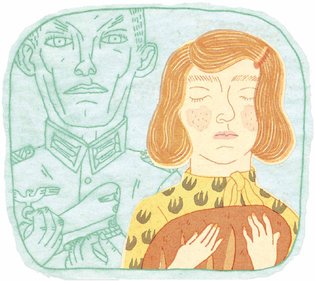
Appropriate, too for the images in the novel. It’s a story with parallel narratives – that of Marie-Laure, the blind Parisian girl who is a prodigious reader and world-creator, and that of Werner, the starkly Aryan orphan with a prodigious talent for electronics, radio in particular. As their two tales unfold against the backdrop of France under Nazis occupation, we get intricately woven and masterfully described scenes and plot moments with richly imagined conflicts and consequences. Symbolism abounds: diamonds, curses, radios and silence, snow-white hair and 20 000 leagues under the sea: it’s all meant to mean something and to mean so much.

It’s tempting to give this an unqualified endorsement, and I do strongly suspect that if you pick it up, you’ll absolutely enjoy the read (I certainly did). I have to admit a certain reluctance, however, as I found two problems: 1. The characters, while compelling for what they do and for what happens to them, are not, on their own, fully imagined or realized. They certainly experience conflict and are called upon to make heroic or challenging choices, they have complex interactions with other characters, but their interior lives remain opaque and stunted. 2. The ending is entirely too tidy for my taste. Resolved. And the leadup – the climaxes – read with the certainty of resolution. In part the flashback structure – we begin in 1944 and move back and forth in time – promises this kind of conclusion, but I suppose there’s also the structural point that we couldn’t create such intricately woven parallel narratives without having them meet (or that certain assurance that we could not put characters with such extraordinary and exceptional lives in such danger and not have some resolution).

My complaints are more a way of saying while this is a book you’ll enjoy reading (much as anyone can enjoy reading WWII fiction, I suppose) it isn’t without problems. Look past these quibbles and you’ll find yourself reading by whatever light you’ve got – probably something backlit and electronic. Which will, I’m sure you know, ruin your eyes and keep you up all night.

1 Comment

Filed under Bestseller, Book Club, Fiction, Prize Winner

The Empathy Exams: On reading (essays)

My bff S. and I have a long standing joke that we have an “ET” connection. Having never seen the movie (I know, I know) I’m not entirely sure what the alien does to form the connection, but the way we understand it there are moments that we just ‘get’ one another, or ‘get’ what the other is going through.

The idea that we can ‘get’ one another, or the idea that there are – and should be – limits to what we imagine we can ‘get’ about one another, or the idea that we can only ever reach towards this kind of understanding, are ideas explored in Leslie Jamison’s excellent collection of essays, The Empathy Exams. [I admit I don’t read many essay collections – though with M.’s prodding and with this experience I suspect I’ll seek out more – and so my commentary will be a welcome counterpoint to the last post on historical fiction.]

One of the threads running through the collection is that of the writer-as-observor or witness, and the parallel role we all take in our connections and interactions with one another. That much as we might like to imagine that we can ‘get’ the other and those we love, we are – in the end – witnesses to and for one another. That we could be witness for one another is one of the ideas I found most engaging in the text. Until reading I had sort of thought of empathy as somehow selfish: let me share my pain or joy with you – selfish for both giver and receiver. But what the opening essay opens up is the notion that in asking questions, in witnessing and listening, we can reveal parts or feelings of the other to herself that she didn’t know she had or felt. The collection weaves this idea – and many others on the theme – through a range of places and people in ways that brought fresh perspective and nuance. Each felt focused on a particular story, but threaded to the wider theme and question. With the exception of the last essay, which I found a bit wearing, each gave, shared, asked and offered.

If my idea of reading has been this sort of sharing of experience, broadening of perspective, temporary adoption of identity and history that changes and shapes the reader, what Jamison’s collection did for me was to nuance my idea that reading is just about expanding and deepening my capacity for care and might equally be a call for conversation – with the author and others – about what and how the reading (re: the experience, the sharing) has changed or is changing.

There’s good evidence – if we believe Science – that reading literary fiction strengthens the readers ability to empathize. Even more so than popular fiction or non-fiction. And so while I might want to take this evidence as vindication of my reading habits, I do think reading this essay collection has affirmed that I need to read more non-fiction for the lens it brings and the questions it explicitly asks.

And so S., I’ve sent you a copy of The Empathy Exams as your late Christmas present. And as a tether across the world to know just how close we are.

Leave a comment

Filed under Book Club, Non-fiction, Prize Winner