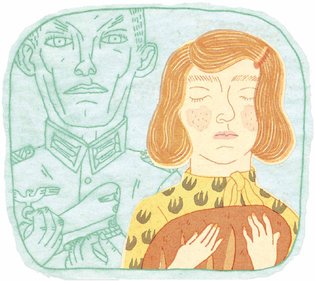
I admit I bought in to the hype around The Girl on the Train. I heard about it three times in two days and couldn’t resist the summer blockbuster appeal. I bought in to the point of buying the book (something I rarely do what with the existence of libraries and the scarcity of free money), though I got it for $10 as a ‘Heather’s Pick’ at Chapters (my local and fantastic bookshop was sold out and I had to have it Right Now). I’m embarrassed by the whole thing. (Would I be as embarrassed if it had been a better book? Or if J. hadn’t warned me that it wasn’t as great as people were saying?). Continue reading
Tag Archives: Bestseller
The Girl on the Train: Over-hyped, misogynistic nonsense
Filed under Bestseller, Book Club, Popular Posts, Worst Books
The Pale Blue Eye: Murder Mystery Mash-up
I don’t have much to say about Louis Bayard’s The Pale Blue Eye. I enjoyed reading it? It was captivating (if entirely forgettable)? The novel is set in the 19th century (hooray), is a murder mystery (fun) and includes a fictionalized Edgar Allen Poe (what fun). We follow our protagonist retired police detective as he sets about trying to solve the murder and dismemberment of an army cadet. Poe is recruited to help him in his efforts. Layers of mystery and some romance.
My little description makes it sound like the book is trashy or easy. It’s not! It has a remarkable ending, sets up a complex and compelling relationship between the detective and Poe. I just don’t have much more to say than that.
I’d take it to the beach and read it. Maybe. No, what I think it’s best for is a book-on-tape long car ride. Captivating for plot, tone and setting. Take that to your audio-book source of choice and enjoy!
Filed under Bestseller, Book I'll Forget I Read, Fiction, Mystery
All the Light We Cannot See: Go For It
I got a book light in my stocking. How appropriate for the late night staying up to read “just one more chapter” of All the Light We Cannot See. The trouble, of course, is that the chapters in this novel are never more than five page long – most two or three – and so resolving to do “just one more chapter” is a promise to still be reading an hour later. Thankfully I’m on holiday and sleeping in is requisite. If you’re not on holiday you might prepare to be stern with yourself, or accept being a bit groggy eyed as this isn’t a story easily put down.
Appropriate, too for the images in the novel. It’s a story with parallel narratives – that of Marie-Laure, the blind Parisian girl who is a prodigious reader and world-creator, and that of Werner, the starkly Aryan orphan with a prodigious talent for electronics, radio in particular. As their two tales unfold against the backdrop of France under Nazis occupation, we get intricately woven and masterfully described scenes and plot moments with richly imagined conflicts and consequences. Symbolism abounds: diamonds, curses, radios and silence, snow-white hair and 20 000 leagues under the sea: it’s all meant to mean something and to mean so much.
It’s tempting to give this an unqualified endorsement, and I do strongly suspect that if you pick it up, you’ll absolutely enjoy the read (I certainly did). I have to admit a certain reluctance, however, as I found two problems: 1. The characters, while compelling for what they do and for what happens to them, are not, on their own, fully imagined or realized. They certainly experience conflict and are called upon to make heroic or challenging choices, they have complex interactions with other characters, but their interior lives remain opaque and stunted. 2. The ending is entirely too tidy for my taste. Resolved. And the leadup – the climaxes – read with the certainty of resolution. In part the flashback structure – we begin in 1944 and move back and forth in time – promises this kind of conclusion, but I suppose there’s also the structural point that we couldn’t create such intricately woven parallel narratives without having them meet (or that certain assurance that we could not put characters with such extraordinary and exceptional lives in such danger and not have some resolution).
My complaints are more a way of saying while this is a book you’ll enjoy reading (much as anyone can enjoy reading WWII fiction, I suppose) it isn’t without problems. Look past these quibbles and you’ll find yourself reading by whatever light you’ve got – probably something backlit and electronic. Which will, I’m sure you know, ruin your eyes and keep you up all night.
Filed under Bestseller, Book Club, Fiction, Prize Winner
The Magicians: Or, When Smug Authors Are Obviously Smug
I suppose Lev Grossman thought he was being very clever in The Magicians when he has his magician protagonist mock Harry Potter. And ever more sly when his magician characters yearn to journey to a barely disguised Narnia which has taken all the over-the-top Christian symbols of Narnia and replaced them with hedonistic moments and cursing. As if in the coy wink we all share at the expense of Narnia (and feeling so very clever for having pieced together *as if this was some kind of challenge* the parallel). Suffice it to say I don’t think it’s particularly commendable to simply mock popular (young adult) fantasy or fairy tales just because. Sure, please mock it if you have something properly interesting or provocative to say – make it a dialogue between novels and we’d have something worth discussing. I mean, look at Daughter of the Forest if you want a thoughtful (if problematic) remaking of earlier fantasy/fairy tales. Or all of Angela Carter.
Alas, The Magicians has only smug takedowns for the sake of being like “look at me, I’m smugly taking down Narnia.” I admit to enjoying the first 50 pages in its world-building and descriptions of boarding school (true life confessions: I often wish I could attend a boarding school, but then so does everyone else when that boarding school is made of magic, everyone is witty and good-looking and genius is a prerequisite). But other than that? I continued reading just so I could be sure there wasn’t some momentous turn-around so that when I wrote this review I could feel justified in saying: don’t waste your time the way I wasted mine.
Filed under Worst Books

 Literary Vice