Tag Archives: book club

A Tale for the Time Being: You Probably Haven’t Heard Of This Book; Here’s Why You Should Read It

Or maybe you have heard of Ruth Ozeki’s A Tale for the Time Being. After all, it was shortlisted for the Booker Prize, hyped in all of the right places. All the same it slipped through my Canlit net, and seems to have for all those I’ve talked about the book with as I’ve been reading it, and so I’ll assume you haven’t heard of it either (you’re my made-up audience, so I may as well, right?).

This idea of the reader-audience and how readers make novels mean something by reading them is one of the (many) preoccupations of this fantastically rich and layered story. At one point our protagonist-cum-author notes “Surely a reader wasn’t capable of this bizarre kind of conjuration, pulling words from the void? But apparently she had done just that, or else she was crazy. Or else… Together we’ll make magic… Who had conjured whom?” (392). The role of reader in the novel is complex: with two threaded narratives – that of Ruth, an author living on an island in British Columbia who finds a diary washed up on the beach and that of the diarist, Nao, an American-Japanese schoolgirl – that both reflect, influence and respond to one another, one of the questions the novel asks is how readers determine and impact the meaning and influence of a story. Within the novel itself this question is explored in the relationship between Ruth and Nao, but the novel expands this question with metafictional play and probity to include this reader, too. So you ought to read it because the novel presupposes its existence depends on your reading it.

You ought to read it because the philosophical questions it explores like the nature of time and quantum mechanics; the role of animals in the interconnected web of being; restitution, responsibility and war; the relationship of class and identity (and bullying); the purpose of art and art-making; – are those questions that make both for great dissertations and for great discussions (and I know you have a thesis you want to write or a book club to attend [*cough* this was a book club choice for the book club I attend]). These questions look esoteric when I write them down, and there are moments of the novel – like reading the Appendixes on Schrodinger’s Cat – that stray in that direction, but the overwhelming feeling this novel evoked for me was exhilaration: it’s simply thrilling to see a masterful exploration of questions of time, identity and the nature of meaning in life through grounded (if somewhat fantastical) story.

And you ought to read it because I say so. Okay, not that. But because it’s beautiful.  Layered with complexity and richness, yet not so dense as to be inaccessible or off-putting. And you see it and think 400 pages, really? And I say, consider the time it takes to read. No really, consider “time” and “takes”: what does it mean to “take time”? Once you’re asking that question you may as well be reading the novel because in reading you find time, time-taking, time-making – well, you might have a different feeling on the other side (which assumes you ever leave a novel once you’ve read it… another question for another time being).

1 Comment

Filed under Book Club, Canadian Literature, Fiction, Prize Winner

A Measure of Light: The Audacity of Belief

Ask yourself if there is a cause or belief you would die to serve. Or what your death might accomplish for this cause. Hardly speculative questions in our contemporary moment. Where Beth Powning’s A Measure of Light departs from the present of this reader is, well, the setting and plot: 17th century Puritan New England and the emergence of the Quaker movement. Less obviously, it departs in the sense that those who die for their beliefs do so not as suicides where bodies are the available weapons, but rather those who die for their beliefs are killed by the state for holding beliefs that are deemed so threatening, so challenging as to be violently and publicly killed. It’s a grammar slip there, you’ll notice, between the belief being killed and the person. And one worth noticing.

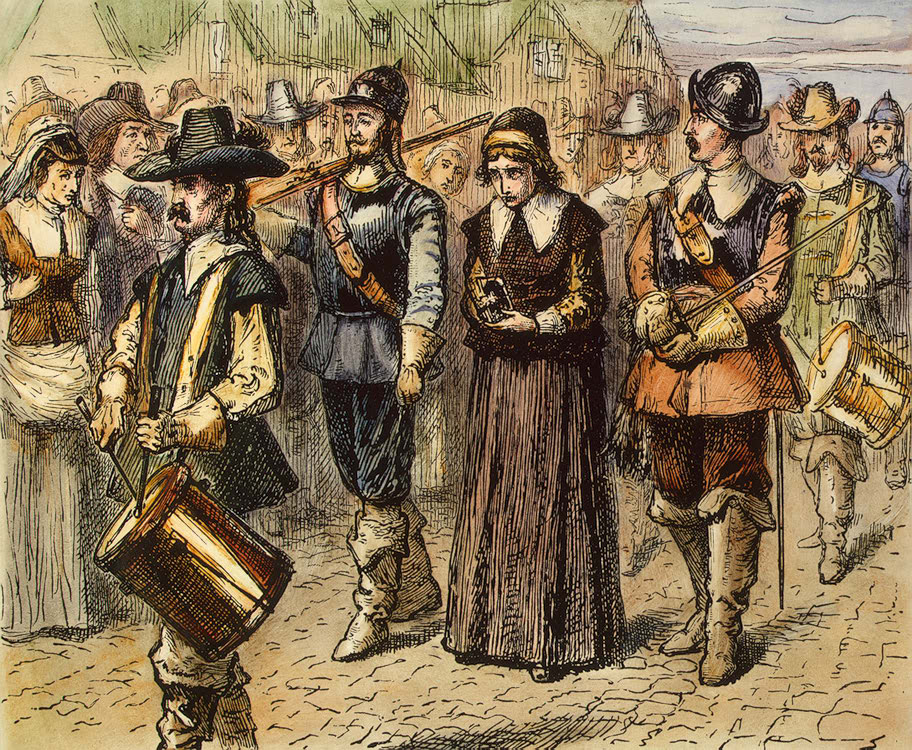
Our protagonist, historical figure Mary Dyer, is killed by the Boston officials that see her views of God (as accessible to all with equal access and without the intercedence of the Church) as heretical and threatening to the socio-political (and importantly economic) well-being of the region. So while she and several of her Friends are publicly hanged, their deaths do not accomplish the aims of the state in that the belief cannot be killed by killing the person. Or at least not easily. Rather, as Powning’s narrative suggests, Mary Dyer the martyr does more to raise the profile of the belief in their death than she does in her actively proselytizing life.

A Measure of Light is a fascinating read for its unravelling of the development of the Quaker movement and its portrait of New England life. It’s a rich (and beautifully written) exploration of what it means to hold beliefs with such conviction and the consequences both for the individual life, but for the family and community of that individual. It’s perhaps even more interesting – at least for me – in its representation of women and women’s bodies in this period. Mary’s journey through faith is irrevocably marked by the death of her three-day old child and the subsequent still-birth of her premature child as she and her community view these tragedies as evidence of her damned soul. I admit, as an atheist and 2015 reader, that I struggled to empathize with her conviction that it was God that spoke through her (markedly female) body, but what I could understand and relate to – only to well – was the feeling of my body, and its interpretation, as outside my control and dominion. The sense that others read what women’s bodies do – and don’t do – in questions about when (not if) these bodies will have children, in how (not whether) these bodies will be held up against impossible standards of beauty and in the sexualization and objectification of these bodies at every turn. So while the patriarchal source might be different – God – the experience of a distorted and disturbed relationship between the self and the body is all too recognizable.

All this to say, that between the resonant and provocative questions about the power of religious conviction to drive (violent) action and the representation of women’s bodies as sites for public debate, A Measure of Light is an exemplary piece of historical fiction, doing what historical fiction does best in representing the past in a way that allows us to better understand our present experience. Given the preponderance of historical fiction in Canadian literature (and no, I’m not just saying that because it’s my thing) and the attention this genre tends to get in awards season, I’d flag A Measure of Light as one likely to come up in discussions of best’s of this year.

Leave a comment

Filed under Canadian Literature, Historical Fiction

A Man Called Ove: How to tell if the book you’re reading is sentimental crap. Or if you are cruel and unfeeling.

I’m a graduate of a PhD program in English and Cultural Studies. My training was all about – well, most of the time – explaining why something was bad. Oversimplified! (see? I’m good at explaining why I’m bad, too). What it was about was cultivating my critical faculties. My ability to take something apart and show all the ways it was ‘problematic’. There’s a whole set of verbs you can use: problematize, trouble, unpack… all in an effort to have us reconsider the taken-for-granted and the assumed. Sometimes I worried – like L. – that I was being trapped in a culture of criticism that not only meant I had a harder time building or believing in something (that is, being earnest or sincere), but that I was only ever to think about the books I was reading in terms of ‘good’ books (those that were self-aware enough to know they were problematic) and those ‘bad’ books.

So I’m tempted to say that Fredrick Backman’s A Man Called Ove is problematic, but I’m not going to (even though I just did, see?). Instead I’ll say that it’s at once wonderfully enjoyable and a lesson in the conventions of best-selling novels: a story of a man who tries to kill himself because he’s grieving the death of his wife, but can’t kill himself because he finds purpose in building community (how’s that for the elevator pitch?).

The chapters read as headlines (“A Man Called Ove Finds a Screwdriver” “A Man Called Ove Buys Bread”) (which I recently learned is a pretty common strategy in writing a novel, to sketch out your chapters as newspaper headlines) and the narrative – in translation, no less – is funny, warm, cozy and safe. You’re meant to see Ove as his neighbours do, a crotchety old man who is actually the funny, warm, cozy and safe man that parallels his narrative.

It’s a book I’d suggest if you were worried that living in your townhouse in the suburbs was making you less community-focused. Or if you thought that maybe you couldn’t have intergenerational friendships. Or if you were concerned that you were xenophobic or homophobic (or that maybe your granddad was). It’s a book that takes any worry you might have about your existence – or modern life – and banishes it away with the calmest, safest, warmest, funniest, hug-of-sentimentality.

It’s a book you’ll read and you’ll cry in your oatmeal. You’ll be glad you read it for the warmth it gave you all day. You’ll read it knowing there are problems with the narrative construction, with the character, with the politics of the text, but you won’t mind because it makes you feel so good. And whether that makes the book itself good or bad, I’m not one to say. I think there are some occasions (certainly not all, let’s not get carried away), when it’s okay to enjoy a book because it’s enjoyable. And this one really is.

6 Comments

Filed under Book Club, Fiction, Funny

All the Light We Cannot See: Go For It

I got a book light in my stocking. How appropriate for the late night staying up to read “just one more chapter” of All the Light We Cannot See. The trouble, of course, is that the chapters in this novel are never more than five page long – most two or three – and so resolving to do “just one more chapter” is a promise to still be reading an hour later. Thankfully I’m on holiday and sleeping in is requisite. If you’re not on holiday you might prepare to be stern with yourself, or accept being a bit groggy eyed as this isn’t a story easily put down.

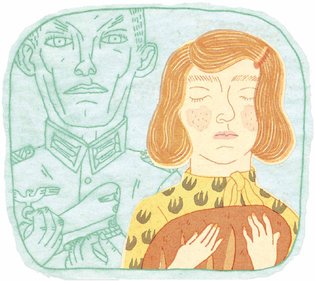
Appropriate, too for the images in the novel. It’s a story with parallel narratives – that of Marie-Laure, the blind Parisian girl who is a prodigious reader and world-creator, and that of Werner, the starkly Aryan orphan with a prodigious talent for electronics, radio in particular. As their two tales unfold against the backdrop of France under Nazis occupation, we get intricately woven and masterfully described scenes and plot moments with richly imagined conflicts and consequences. Symbolism abounds: diamonds, curses, radios and silence, snow-white hair and 20 000 leagues under the sea: it’s all meant to mean something and to mean so much.

It’s tempting to give this an unqualified endorsement, and I do strongly suspect that if you pick it up, you’ll absolutely enjoy the read (I certainly did). I have to admit a certain reluctance, however, as I found two problems: 1. The characters, while compelling for what they do and for what happens to them, are not, on their own, fully imagined or realized. They certainly experience conflict and are called upon to make heroic or challenging choices, they have complex interactions with other characters, but their interior lives remain opaque and stunted. 2. The ending is entirely too tidy for my taste. Resolved. And the leadup – the climaxes – read with the certainty of resolution. In part the flashback structure – we begin in 1944 and move back and forth in time – promises this kind of conclusion, but I suppose there’s also the structural point that we couldn’t create such intricately woven parallel narratives without having them meet (or that certain assurance that we could not put characters with such extraordinary and exceptional lives in such danger and not have some resolution).

My complaints are more a way of saying while this is a book you’ll enjoy reading (much as anyone can enjoy reading WWII fiction, I suppose) it isn’t without problems. Look past these quibbles and you’ll find yourself reading by whatever light you’ve got – probably something backlit and electronic. Which will, I’m sure you know, ruin your eyes and keep you up all night.

1 Comment

Filed under Bestseller, Book Club, Fiction, Prize Winner