Break In Case of Emergency is funny. You’ll read it and laugh at the satire of office life. You’ll laugh a little at the portrayal of income inequality in 30 something friend groups (that sudden realization that your friends make way more (or less) money than you do; or that your friend inherited a heap of money and so never has to think about whether to replace their air conditioner). You’ll chuckle at the representation of hipster politics: the effort to be *seen doing good. It’s the story of Jen – 30 something artist, who starts the novel unemployed and begins working at a (parody of) nonprofit dedicated to enhancing the lives of (all) women. The novel offers sharp observations on white, middle class feminism, on the changing dimensions of female friendship and a whole heap of a lot about fertility. Jen wants a baby. A lot. And she’s infertile. (and some stuff about New York, but who cares).
I guess if you’re an any-age someone you could stand to read this novel for how it demonstrates the extent to which (young-ish) women are bombarded All. The. Time. by messages about their (in)fertile bodies, the judgements heaped upon these bodies for reproducing (or not), the myriad of outrageous and hurtful things that get said out of assumptions about why you have (or more obviously haven’t) had a baby. Continue reading
Tag Archives: feminism
The Last Town on Earth: A Lengthy Post Worth Reading Because Trump Isn’t Mentioned
Thomas Mullen’s The Last Town on Earth opens 1918 in Washington state as the Spanish flu outbreak begins. Historical fiction, the novel imagines the lives of the citizens in the fictious Commonwealth after the town votes to ‘reverse’ quarantine: as no one in the town is yet sick, they vote to forbid entry or exit from the town and post guards to ensure the quarantine is followed. It closely follows the Worthy family, the patriarch of whom, Charles, is the mill owner and unelected leader of the town; the (adopted) son, Philip, is our protagonist. Continue reading
Filed under American literature, Book Club, Fiction, Historical Fiction, Prize Winner
The Illuminations: Beautiful doesn’t always mean you like it.
I’ve recently started a book club. It’s given me an occasion to talk to my mum, J., about the book club she’s been a part of for the past 30+ years (how long?). She was giving me advice (solicited, this time) on how her book club operates. They each rate the book, but with the rule (enforced?) that the rating cannot take into account the balance of “well, I found the book beautiful, *but* it just didn’t resonate with me.” That is to say, the rating has to be on your overall impression of the book in ways that don’t allow for separating out the well-crafted sentence from the one that moves you.
This blog sometimes feels to me like this kind of exercise in declaring my overall impression of a book. And in the case of Andrew O’Hagan’s The Illuminations I find it difficult to do so. I didn’t like the book – I’ll come right out with that – but not for any reason I can find to pin down. It’s beautifully written. It addresses complex and nuanced questions about nationalism, identity, memory, gender and maternity. It focuses on provocative settings: the 2001- war in Afghanistan (how do Western soldiers understand their involvement – as a game? a proxy? What counts as “real” violence?), a retirement home (what are the limits of independence and community? what do we owe our parents and what do they owe us?) and the remembered – or misremembered – scenes of an aging woman with dementia (what can she know about her own life? how is her identity reconstituted by those who know her now – and then?).
I wonder if my own over-attachment to character is what gets in the way the novel resonating with me. I say that because the novel shares the focus on the characters (the soldier, the grandmother, the children, the neighbours). And so while complex, human and empathetic, I found myself at a loss to work out who I was best meant to identify and attach to, who I was meant to care about their conflict and change. I suppose a different reader (a better reader?) might be able to see this richness in character as an opportunity – all the more to engage with! – rather than a drawback.
But according to the rules of book club, at least J’s book club, I have to say that I didn’t like the book.
One final note to end on: I love reading the acknowledgement sections of any novel. I like imagining how the novel I’ve just read was built and shared by a community of people. On occasion I recognize names in the sort of recognize a who’s-who. So when I read in the plot of the novel a reference to the university I attended, I imagined while reading who I might know who had come into contact with the characters (or author). Delight then, in reading in the acknowledgements that one of my favourite, certainly most influential, professors M. was in the acknowledgements. I suppose I should be surprised – the feminist elements, focus on photography, interest in the every day should have given me the clues as I was reading. But there you go. So hooray to M. for her involvement in this beautiful book. That I just happened to not like very much.
Filed under Book I'll Forget I Read, Fiction, Prize Winner
City of Light: ‘Allegory’ doesn’t mean what you think it does. Or what I think it does.
The thing about an allegory (like a metaphor) is that the comparison is made between two unexpected things (pigs and communist leaders; shadows on the wall and ideas). So when reading Lauren Belfer’s excellent City of Lights I struggled to figure out whether the novel was allegory or something else. A literary term that escapes me, but exists, I’m sure.
So tell me what this literary term is that I’ve missed out on. I’m looking for a term that describes when the fictional plot events/setting/character parallels a contemporary and real plot event/setting/character. Not parallels in an unexpected way, but parallels in a way you recognize the contemporary thing. You’d like an example? Sure.
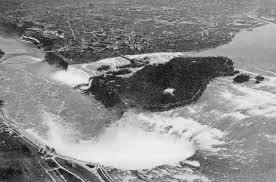
So a bit to set this example up. The novel is a few things: historical fiction, murder mystery, romance, tragedy of manners. The plot goes something like this – it’s 1901, Buffalo is playing host to the pan-american exposition. Industrialists and engineers are developing hydroelectric power at Niagara Falls with all sorts of complications: union organizing and labour conditions; nature-preservationists and eco-terrorism (that the development of the Falls was protested on environmental grounds was an absolute revelation to me); public versus private ownership of resources. Our protagonist, Louise Barrett is headmistress of an exclusive all-girls school and passionate about the way education can transform individual women and reform society as a whole. She’s also afforded unusual social liberties because of her ‘spinster’ status; a status she’s had to assume for good reason (which I won’t spoil here) to do with gender-based violence and independence for women. A man gets murdered. The hydroelectric project gets complicated. The cast of characters and their secrets and lies thickens.
Right, so in this example Louise is talking to a reporter (masquerading as a photographer – because performativity and identity is also a big thing here), Franklin (who is also a potential love interest). Franklin explains his cynicism as to why he doesn’t think the industrialists care about the ordinary people when the choice is between the people and the extraction of a resource:
I served time in the Philippines, remember? I saw our fine and honorable American soldiers using the too-aptly named ‘water cure’ to exact confessions from prisoners; of course the prisoners weren’t ‘white’ so it didn’t matter. (135) He goes on… Electricity should be a public service, not a commodity sold to the highest bidder. The electricity created at Niagara belongs to the people. Not to the industrialists, not to the nature preservationists […] but to the people” (136).
It parallels waterboarding, right? Electricity – throughout – parallels oil extraction with immediate gains prioritized over long term environmental damage. But it’s not an allegory because it is – in the fictional past – a recognizable reflection and deepening of our understanding of the present. Am I just describing a term called ‘the beauty and wonder of historical fiction’?
Anyway. I really loved this one. The murder mystery, while a driving plot point, wasn’t the focus of the text so much as Louise’s journey to understand her past and present. The historical details about Niagara and hydro development are genuinely fascinating. The socio-political-economic context that underpins the plot is as rich a character in its own right as any. Including the one moment Louise doubts her self-reliance and thinks how lovely it would be to rely on a man, she is a model of feminist independence. So yeah, please read the book and tell me what the term is that I’m looking for. Or maybe you don’t have to read the book because it’s so obvious. It’s probably alliteration. Kidding. (Am I?)
Filed under American literature, Book Club, Mystery, Prize Winner

 Literary Vice