Tag Archives: historical fiction

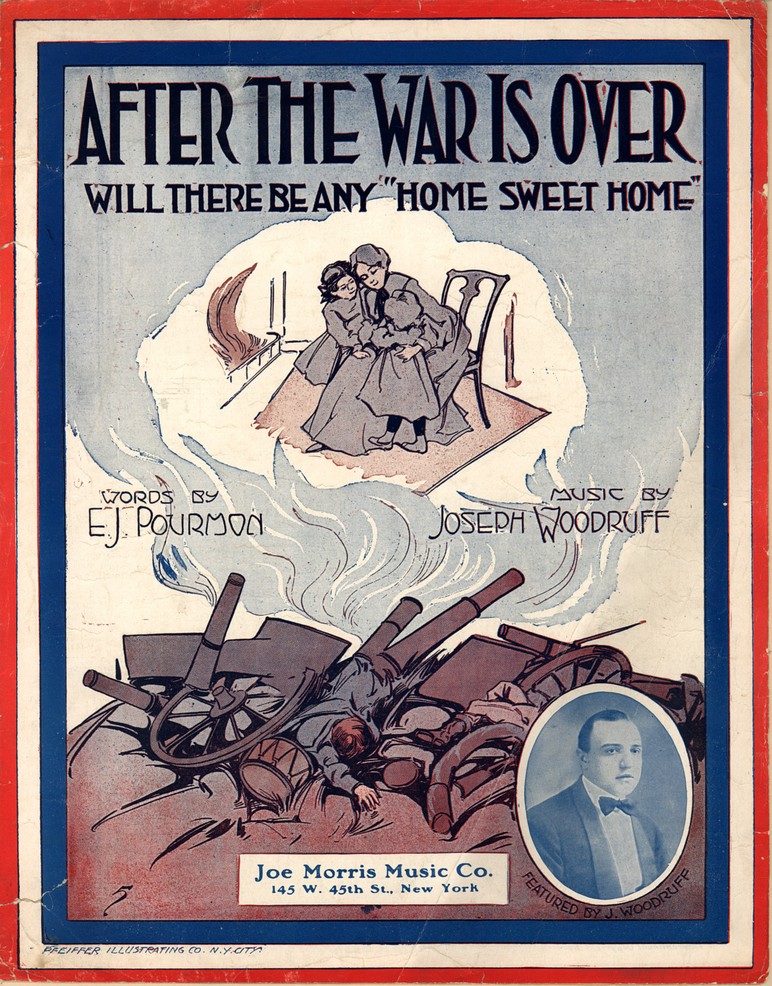
After the War is Over: Altogether too many descriptions of hats

Here are a few reasons I didn’t enjoy Jennifer Robson’s *After the War is Over*:

1. It was altogether ridiculously predictable in plot: to the point that I anticipated the union of our lower-class protagonist with her Lord for so many chapters I skimmed through yet another obstacle-in-the-path-of-true-love, stopping only to admire the frequent use of ‘visage’ and ‘shirtwaist’ (and other lovely period diction).

2. On the subject of unnecessary attention to historical particulars: It included many (many) pointless detours in plot with the sole purpose of showing off historical detail. Details that were only there (I can only assume) because the author holds a PhD in History and seems quite taken with historical specificity for post-Great War era fashion, dances and food. Detours like visits to dress shops, or bedroom dance lessons. Page long descriptions of historical bathing suits. Really. Detours with no discernable relation to character or theme development. Detours entirely devoted to hats.

3. The protagonist is a repressed, self-righteous free spirit just waiting for the right (rich, handsome, rich, cultured, sensitive, rich) man to liberate her from her self-imposed dourness and expose the true glow of her unique petals of utter stunning beauty flower.

Here is 1 1/2 reasons I did:

1. Because Downtown Abbey got it right: there’s something fascinating about the historical moment of 1919 in which class and gender hierarchies (nevermind accepted and expected rules of decorum) get shaken.

1.5 Because it includes a beautiful scene of our protagonist casting her vote in the first election that allowed women (of certain classes) to vote. And because this reader cannot resist swelling feeling of gratitude and respect for those women (and men) who fought – and fight – so hard for franchise.  That said, this scene takes up the first three pages of the book. So you could read those and then… stop.

Leave a comment

Filed under Bestseller, Book I'll Forget I Read, British literature, Canadian Literature, Historical Fiction

A Measure of Light: The Audacity of Belief

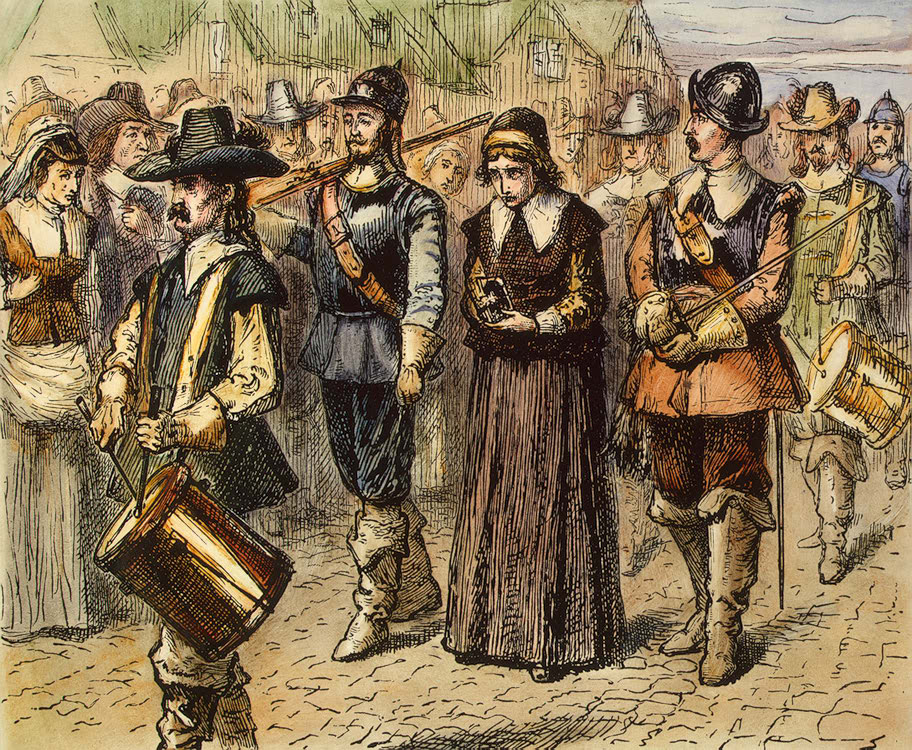
Ask yourself if there is a cause or belief you would die to serve. Or what your death might accomplish for this cause. Hardly speculative questions in our contemporary moment. Where Beth Powning’s A Measure of Light departs from the present of this reader is, well, the setting and plot: 17th century Puritan New England and the emergence of the Quaker movement. Less obviously, it departs in the sense that those who die for their beliefs do so not as suicides where bodies are the available weapons, but rather those who die for their beliefs are killed by the state for holding beliefs that are deemed so threatening, so challenging as to be violently and publicly killed. It’s a grammar slip there, you’ll notice, between the belief being killed and the person. And one worth noticing.

Our protagonist, historical figure Mary Dyer, is killed by the Boston officials that see her views of God (as accessible to all with equal access and without the intercedence of the Church) as heretical and threatening to the socio-political (and importantly economic) well-being of the region. So while she and several of her Friends are publicly hanged, their deaths do not accomplish the aims of the state in that the belief cannot be killed by killing the person. Or at least not easily. Rather, as Powning’s narrative suggests, Mary Dyer the martyr does more to raise the profile of the belief in their death than she does in her actively proselytizing life.

A Measure of Light is a fascinating read for its unravelling of the development of the Quaker movement and its portrait of New England life. It’s a rich (and beautifully written) exploration of what it means to hold beliefs with such conviction and the consequences both for the individual life, but for the family and community of that individual. It’s perhaps even more interesting – at least for me – in its representation of women and women’s bodies in this period. Mary’s journey through faith is irrevocably marked by the death of her three-day old child and the subsequent still-birth of her premature child as she and her community view these tragedies as evidence of her damned soul. I admit, as an atheist and 2015 reader, that I struggled to empathize with her conviction that it was God that spoke through her (markedly female) body, but what I could understand and relate to – only to well – was the feeling of my body, and its interpretation, as outside my control and dominion. The sense that others read what women’s bodies do – and don’t do – in questions about when (not if) these bodies will have children, in how (not whether) these bodies will be held up against impossible standards of beauty and in the sexualization and objectification of these bodies at every turn. So while the patriarchal source might be different – God – the experience of a distorted and disturbed relationship between the self and the body is all too recognizable.

All this to say, that between the resonant and provocative questions about the power of religious conviction to drive (violent) action and the representation of women’s bodies as sites for public debate, A Measure of Light is an exemplary piece of historical fiction, doing what historical fiction does best in representing the past in a way that allows us to better understand our present experience. Given the preponderance of historical fiction in Canadian literature (and no, I’m not just saying that because it’s my thing) and the attention this genre tends to get in awards season, I’d flag A Measure of Light as one likely to come up in discussions of best’s of this year.

Leave a comment

Filed under Canadian Literature, Historical Fiction

City of Light: ‘Allegory’ doesn’t mean what you think it does. Or what I think it does.

The thing about an allegory (like a metaphor) is that the comparison is made between two unexpected things (pigs and communist leaders; shadows on the wall and ideas). So when reading Lauren Belfer’s excellent City of Lights I struggled to figure out whether the novel was allegory or something else. A literary term that escapes me, but exists, I’m sure.

So tell me what this literary term is that I’ve missed out on. I’m looking for a term that describes when the fictional plot events/setting/character parallels a contemporary and real plot event/setting/character. Not parallels in an unexpected way, but parallels in a way you recognize the contemporary thing. You’d like an example? Sure.

So a bit to set this example up. The novel is a few things: historical fiction, murder mystery, romance, tragedy of manners. The plot goes something like this – it’s 1901, Buffalo is playing host to the pan-american exposition. Industrialists and engineers are developing hydroelectric power at Niagara Falls with all sorts of complications: union organizing and labour conditions; nature-preservationists and eco-terrorism (that the development of the Falls was protested on environmental grounds was an absolute revelation to me); public versus private ownership of resources. Our protagonist, Louise Barrett is headmistress of an exclusive all-girls school and passionate about the way education can transform individual women and reform society as a whole. She’s also afforded unusual social liberties because of her ‘spinster’ status; a status she’s had to assume for good reason (which I won’t spoil here) to do with gender-based violence and independence for women. A man gets murdered. The hydroelectric project gets complicated. The cast of characters and their secrets and lies thickens.

Right, so in this example Louise is talking to a reporter (masquerading as a photographer – because performativity and identity is also a big thing here), Franklin (who is also a potential love interest). Franklin explains his cynicism as to why he doesn’t think the industrialists care about the ordinary people when the choice is between the people and the extraction of a resource:

I served time in the Philippines, remember? I saw our fine and honorable American soldiers using the too-aptly named ‘water cure’ to exact confessions from prisoners; of course the prisoners weren’t ‘white’ so it didn’t matter. (135) He goes on… Electricity should be a public service, not a commodity sold to the highest bidder. The electricity created at Niagara belongs to the people. Not to the industrialists, not to the nature preservationists […] but to the people” (136). 

It parallels waterboarding, right? Electricity – throughout – parallels oil extraction with immediate gains prioritized over long term environmental damage. But it’s not an allegory because it is – in the fictional past – a recognizable reflection and deepening of our understanding of the present. Am I just describing a term called ‘the beauty and wonder of historical fiction’?

Anyway. I really loved this one. The murder mystery, while a driving plot point, wasn’t the focus of the text so much as Louise’s journey to understand her past and present. The historical details about Niagara and hydro development are genuinely fascinating. The socio-political-economic context that underpins the plot is as rich a character in its own right as any. Including the one moment Louise doubts her self-reliance and thinks how lovely it would be to rely on a man, she is a model of feminist independence. So yeah, please read the book and tell me what the term is that I’m looking for. Or maybe you don’t have to read the book because it’s so obvious. It’s probably alliteration. Kidding. (Am I?)

Leave a comment

Filed under American literature, Book Club, Mystery, Prize Winner

All True Not a Lie In It: In which I do not brag about reading historical fiction (that’s a lie)

[Here’s something true: if you’re not me, you’re looking at this picture and you’re thinking, wait, is that Fess Parker playing Daniel Boone? If you are me, you’re thinking, Daniel Boone, now that name sounds faintly familiar, but who names their kid Fess?]

Here is something else true (and its not much of a brag, but it’s a bit of a brag): I’ve read a lot of Canadian historical fiction. I’m being loose with what counts as Canadian here. And with historical. And fictional (think Pierre Berton). I’m not reporting my historical fiction habit for the congratulations and admiration (though I’d take both), but more to say that when I read a new novel in the genre, I’ve got a lot to compare it with. Like if you’re a wine drinker (looking at you C & R) you can describe the subtle differences and tasting notes because you pay attention and you’ve had a lot of it. Really what I’m saying is that whatever you do or consume a lot of, you get to know the qualities and characteristics that make one thing great and another just okay. And that if maybe you didn’t consume so much of that one thing, you’d be more likely to think the thing that was ‘just okay’ was really great. Like without so many reference points for comparison you’d confuse vinegar for wine, right? I guess I’m just saying that historical fiction is my go-to wine, it’s the thing I’ll read because I can be certain I’ll enjoy (at the very least) its genre conventions and I can tell when my usual table wine has been swapped for a serious vintage or for something cheap and watery.

In the case of Alix Hawley’s All True Not a Lie In It I’d say we’ve got something of a ‘pretty good ‘ wearing the label of ‘really fucking awesome’. Take the title – great, right? If I were going to go back and re-write my thesis (an act of revisionist history in itself), I’d probably use the novel’s title to unpack the spectrum of history telling and the conventions of historiographic metafiction. I’d use the novel’s use of the present tense (which is actually obnoxious to read for 400 pages) to talk about the ways the genre blurs the boundary of issues and questions of the past with those of the present, making ‘present’ in its tense choice concerns about treaties and land rights, colonialism and the ‘post’-colonial and heredity and belonging. Except, well, the novel makes these concerns present, but without doing much more than showing them to the reader. To say ‘ah, I think maybe white settlers stole indigenous land and murdered people’ and ‘umm maybe Daniel Boone was a complicated man’ -so what? Why, after walking around with him on seemingly interminable journeys from one part of Pennsylvania to another part of Kentucky, does his story resonate, beyond being an interesting tale about a ‘American frontiersmen’?

So sure, the novel has some compelling plot bits and some decent descriptions of setting. It has the key features of the genre that I love – a playing about with truth and fiction, omission and imagination, opportunity for reimagining and awakening. Yet, with its historical star for a protagonist, he’s flat in the narrative (perhaps a relationship here? because he was ‘real’ there was less need to make the imaginative leap to make him a fully realized character on the page?). I didn’t believe his pain and didn’t much care for his survival. (I did appreciate that we see the mechanics of how his accidental heroism is constructed and glorified into a story of the nation and rugged American pioneering).  And the very key element I look for in great historical fiction – the resonance to the current moment – is made only tenuously through tense (or tense!ously) and without any of the potential punch it could deliver.

All this to say: go! read it if you’re interested in Daniel Boone’s biography. Read it if you have a passing interest in Little House on the Prairie (it reminded me a lot of the series, actually). Read it for the joy of the genre. But read it knowing you’re drinking a $12 bottle that’s being sold for $25.

Leave a comment

Filed under Book I'll Forget I Read, Canadian Literature, Fiction, Historical Fiction