Monthly Archives: December 2015

The Heart Goes Last: Your Contract to Read All Atwood Has Been Voided. Thank God.

As a student of Can Lit I am always going to get the new Margaret Atwood novel. It was in the contract I signed when I chose my field. Or did I not read the fine print? Or bother to inquire? If I had I might not have so readily signed on because at a certain point (as in The Heart Goes Last) reading the new Atwood is an obligation and chore, rather than pleasure and delight.

I jest about contract signing because this novel-that-ought-to-have-been-a-short-story-but-who-is-going-to-tell-that-to-Atwood focuses on the ways people ‘freely’ choose their subjugation and constraint. Yawn hegemony. Made more complex, perhaps, by the setting of a post-depression era North America where 50% unemployment means the collapse of society as we know it. You could read other reviews that will praise the way this question of choice is taken up in relation to technology. You won’t read that here because I read this as – at best – an obvious consideration of the reach of technology in regulating individual life and desire. You don’t have to look far – *cough* The Circle – for similar, if far better executed, allegories and literary prophesies.

*spoiler alert* Though it’s not much of a spoiler as so much of this plot is either predictable or uninspired: Stan and Charmaine, out of work, sign on to live in Consilience, a town that provides employment and safety. The trade off is the town is selling body parts and making people into sex slaves. The bit about working for a month in a prison and a month in the town is neither necessary to know nor interesting in the plot, it seems to be there just for shock value.

Had this been an interesting novel (or a compressed and worthy short story) I might have been taken with the ideas explored around individual choice. The tone of the novel blames Stan and Charmaine for their choice to sign on to Consilience, as if they ought to have read the fine print or been brave enough to choose ‘freedom over security’ (that familiar binary). One of the unitarian principles I appreciate is the idea that individuals have choice, but choice within constraints. That what we can do for a more just society is to create conditions under which individuals have the maximum range of choice and are equipped and supported in choosing. (This push to create ‘choice conditions’ is part of the reason the church has such an aggressive (if you can call unitarians aggressive about anything) social justice mandate as part of their non-doctrine-doctrine.) So sure, you can make an argument that the two ought to have chosen violence over the promises of the town, they ought to have known such a thing was (in every way the adage) too good to be true. But you could also make an argument they – like we – made a choice inasmuch as they could choose anything within their constraints. It bears repeating, however, that the novel doesn’t do much – at all – to further this line of questioning or explore this nuance. It simply blames them – and us – for being dupes and moves on.

So don’t be a dupe. Give this one a pass. You can choose how to spend your reading time, even if I can’t.
2 Comments

Filed under Bestseller, Canadian Literature, Fiction, Worst Books

The Mountain Story: The Book You Wouldn’t Bring if You Were Lost on a Mountain

If you were lost (on a mountain) what book would you want to have with you? Pragmatic answers about edible plants or wilderness survival have no place here. You certainly wouldn’t want to pack Lori Lansens’ The Mountain Story. Maybe it’s just me (it’s probably just me), but I could have easily done without this one. Lori Lansens is something of a Can Lit showstopper – her novels The Girls, Rush Home Road and The Wife’s Tale have been best-sellers (and not the Canadian kind of best seller where you get featured on the CBC, but fancy New York Times best-sellers). So what is it these readers are gravitating towards?

Sure The Mountain Story has an engaging plot. From page one our protagonist, Wolf Truly, has set out to kill himself (cue conflict) by jumping off a cliff (for real) on the mountain he has climbed and hiked through his teen years. Enter the merry band of misfit women – three generations in three women – who, through a series of unfortunate events (for real), find themselves and Wolf, lost and trapped on the mountain. Plot is built on conflict (or so the books on writing tell me) and this one is full of yawn-inducing man-versus-nature conflict: finding water, finding food, coyotes, broken arms, broken bridges, snakes. Interweaving these necessary hiccups on the road to salvation (and we know they get saved, the story is told retroactively) are pieces of Wolf’s story from before the mountain: why he wants to kill himself, the deal with his father (isn’t there always a deal with the father?), the love interest, the deal with his mother (there’s definitely always a deal with the mother). I had a hard time deciding which parts of the story I found more tedious – the mountain or the backstory, but I’ll go with the mountain because there it felt most like I was working my way through a story arc written in an elementary school writing class.

I suppose these pieces of an adventure story could be interesting if there were characters that offered anything like complexity or curiosity. As it is Wolf (despite his name) is neither. The three women – so forgettable I’ve forgotten their names – are likewise Women Who Get Lost on the Mountain rather than characters with depth. Of course there’s a love story – what more romantic setting might you imagine than being stranded on a mountain as you attempt to kill yourself? And of course there’s familial tension – how could you not bicker with your mother while stranded on a mountain? And sacrifice. And heroism. And yawnyawnyawn.


Leave a comment

Filed under Book I'll Forget I Read, Canadian Literature, Fiction

Everything I Never Told You: Secrets, Lies and Misunderstandings

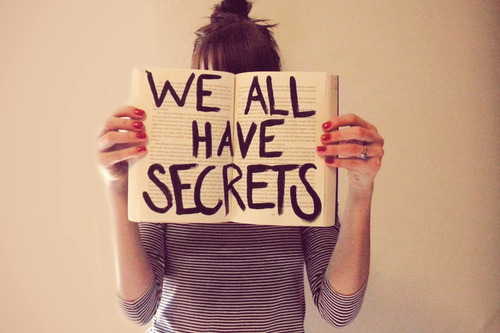
One of the questions at the heart of Celeste Ng’s excellent Everything I Never Told You is what might be the difference among secrets, lies and silences, and where responsibility falls for speaking (truth or lies) and for listening.

At first blush the novel is about unravelling mystery and secrets. The opening sentence “Lydia is dead,” invites the immediate line of questioning of who, what, when, where and how. Talk about using conflict to drive plot. In exploring the mystery of her death we learn of Lydia’s family – Marilyn, James, Nath and Hannah – and how they collectively and individually both keep secrets and assign meaning to one another’s behaviours (and silences).

To me the most engrossing parts of the novel are those when characters inaccurately – and frustratingly – ascribe meaning to someone else. Layers of misunderstanding and misinterpretation are confounded by a resolute and seemingly intractable refusal to ask one another about the validity of these (deeply held) (and false) beliefs. Of course the more certain we are of the motivations and beliefs of those we love the less likely we are to realize we might be best off checking whether these are, after all, true. Hardly the case that those we love are lying to us, or keeping secrets, rather the responsibility for the falsehood is ours as we fail to check our assumptions and instead walk around certain of the falsehood we have created.

It’s been well established that I love good character-driven stories, and the characters here are richly drawn. There are moments when their motivations seem a bit rigidly defined by what the character is ‘like,’ but these motivations do evolve as the characters learn about themselves, grow and change.

The first line (and chapters) primed me for a murder mystery, but this is not a who-dunnit novel. The initial frenetic pace of setting the scene for Lydia’s death tempers after the opening chapters and settles into something more of a family and character drama. I say that not as a complaint, but more of a caution that while you may find yourself staying up late to read this one it won’t be because you’re driven to figure out the crime, so much as to figure out when – and if – the family members will recognize their false assumptions, the limits of their beliefs about themselves and those they love, the necessity to openly share.

I’ll be putting this one on my ‘books to buy or borrow’ list (post to come soon…) as you think about possible holiday shopping. I’d say it’s a great book to buy for any reader on your list, and perhaps for yourself. And certainly one to prompt you to ask yourself what do I actually know about my family and myself, what stories do I tell myself, and when is a secret simply the question we never thought or borthered to ask.

1 Comment

Filed under American literature, Fiction, Mystery, New York Times Notable, Prize Winner

My Brilliant Friend

2014-09-13 16.48.27I listen to a lot of podcasts: Longform, This American Life, Radiolab, Slate Political/Cultural/DoubleX Gabfest, Wait wait don’t tell me, Hardcore History, The House, Pop Culture Happy Hour, Planet Money… (& Serial, duh, but back before it was cool, double duh). And most of these podcasts include some kind of ‘recommendations’ section where the hosts will suggest something they’re enjoying and think listeners might enjoy too. Most of the time the suggestions are cultural objects (occasionally they’re hilarious (and lazy) suggestions like ‘nutmeg,’ or ‘leggings’.) But in the past year Elena Ferrante’s Neapolitan series (beginning with My Brilliant Friend) has been recommended on almost all of them. There’s only so many times a book can be suggested before you feel like you’re ignoring a fated read. So I coopted their recommendations as my own and urged  *my* brilliant friend S. read with me. And then my other brilliant book club friends, too.

So we’ve all be reading it and I’m anxious to hear what these smart women have to say about the book. Because that’s what reading My Brilliant Friend taught me: that we don’t trust our own sense of what we like, or don’t like, or want, or don’t want, half as much as we trust that of our friends.

Back it up – what’s the book about? Written by an Italian author, the novel is set in a working class Naples in the 1960s-ish (I’m guessing a bit on the date). It follows two young girls, Elena and Lila as they mature themselves and in their friendship. Narrated by Elena, the novel focuses on their development from school girls to sexually mature women in the midst of changing social and economic conditions. The novel explores fascinating questions in friendship: how does friendship change when one friend gets married? when one friend has access to (much) more money than another? when one has sex?  [I’ll admit that when this description (or something like it) was offered to me in all of these recommendations I thought *yawn* but the books (at least the first) are well worth the read.]

In the particular setting of Naples the significant division between the two friends is access to education. Both Elena and Lila begin in school together, but as they age only Elena’s family has the resources (and sees the value) in continuing to send Elena to school. While both girls achieve extraordinary academic success, Elena views Lila as naturally intellectually curious (Lila teachers herself Greek!) and sees herself as an academic-imposter, succeeding only by virtue of her proximity to Lila.

The extent of Elena’s envy for Lila bothered me (and S.), at least bothered me at first. I assured myself that I’d never harboured such feelings of jealousy for any of my friends… But the more I considered their relationship I saw that in the envy of Lila’s beauty and her intellectual gifts Elena doesn’t desire something she doesn’t also have (Elena’s potentially untrustworthy narrative includes unimpeachable evidence of her academic success in the form of report cards) – rather she desires the confidence she assumes Lila has, she wants to feel like she’s good enough and to believe it.

Putting thematic questions aside, the book has a complex and nuanced narrative voice as this reader struggled to decide whether to trust Elena, or how far to trust her. Having been in my own 13 year old mind, I can assure you it’s not a  trustworthy place: perceptions of self are necessarily skewed. The novel manages this narrative tension through balancing Elena’s self-depracting, self-loathing perception against demonstrable outward evidence countering this view. Reminding us of the thematic issue of how much we assume we are (the only) deficient one, or that every one else (*cough* Lila) has their shit together. When… they don’t.

As if to prove it – I was tempted to write “It says something about my reading habits in the last four months that S., who had her first baby in the summer, finished the first book before me.” As if it was a contest about reading. Or friendship. Or life. (but isn’t it?)

2 Comments

Filed under Bestseller, Book Club, Fiction