Category Archives: Mystery

Station Eleven: Why are you having a baby when the world is ending?

I’ve wanted a baby since my lady bits started twitching in my late twenties. I’ve been asked – and had trouble replying – why I want a baby. It’s a good question, and one we (collective humanity we and my partner-and-me-we) should probably be able to answer before we go ahead and have one. Enter me reading Emily St John Mandel’s (excellent) Station Eleven and feeling ever more sure that the world as we know it is ending, and that having a baby is… [enter your adjective]: risky, selfish, hopeful, terrifying, absurd, brave. Sure, when I was born in the 80s my parents must have felt a similar sense of foreboding: the Cold War threat of nuclear annihilation probably made it feel pretty scary to have a kid. And without the same frame of reference, I can’t be sure, except the arrival of disasters brought on by global warming makes the ‘threat’ not a possibility, but a reality.

So what does my baby-end-of-the-world-angst have to do with Station Eleven? The book narrates the post-apocolyptic world of a mix-matched cast of characters for whom the mantra “Survival is Insufficient” prompts them to not just survive, but to make and appreciate art, to maintain friendships and romances, and to form complicated relationships with ideas of past and future. It also gave this reader the scope and space to consider the [enter your adjective] of being a parent in any world, the massive responsibility and the abnegation of self called for by culture and circumstance (am I more or less likely to have a baby now? Time will tell).

With characters scattered in time and geography, the novel moves back and forward as readers are invited to piece together the events surrounding the collapse and the journies and connections of different characters (much, I might add, as one of these characters might be positioned to try to make sense of their world). We witness a magnificiently drawn setting of winter Toronto (really, not since the mostly wretched The Night Circus have I enjoyed a setting quite so much) and scenes along the north-east seaboard of North America (less brilliant than that of Toronto). Our characters are a little uneven in how successfully they’re drawn, but for the most part their motivations are well grounded in past events and rich personalities. (I would add that the narration of the lives of these characters ‘before’ the collapse is excellent – our knowledge of the imminanent end to their existence through the juxtaposition of their present adds urgency and poignancy to already great narration).

The past is captured in the creation and curation of the “Museum of Civilization” – an effort on the part of a few characters to preserve the history of the world that was lost, and to teach future generations about the cultures destroyed through their objects. The Museum is contrasted with characters who have ‘lost’ memories of the first years after the collapse. A sense that while remembering and presevation is a critical part of rebuilding culture, so too, an active forgetting (of the violence and isolation, we presume) is required for the same.

The future gestured to at the end of the novel is one of an expansion of connectivity (the lights go on again), the spread of ideas (the creation of a newspaper) and expanded travel (the networks of roads grow). It is a future, though, predicated on the tenacity and hope of its populace. The willingness of each character individually, and the groups collectively, to learn from one another and to trust one another (as in newspaper interviews and expansions of communities).

More than the (truly excellent) video game The Last of Us, the TV series The Walking Dead and the host of other post-apocolyptic futures we’ve encountered in recent years, Station Eleven calls on us to consider not only the everyday marvels and luxuries that surround our priviledged lives, but the threads of civilization that make a human life worth living: art, community, a connection to the past, a sense of hope for the future.

4 Comments

Filed under Bestseller, Book Club, Fiction, Mystery, Prize Winner, Reader Request

Strange Bodies: Why we need the Humanities

Sometimes – let’s admit it, often – I’m asked about the purpose of the Humanities. Why not take a course in accounting? Or better yet, something in engineering? Why not, indeed.

Marcel Theroux’s Strange Bodies gives us the great, and oft repeated, justification for the Humanities: the Humanities let us explore the moral and ethical dimensions of our current (and future) worlds, with keen critical awareness and imaginative and robust analyses of complex problems. And what does that mean?

In the novel it means humans have developed the capacity to download an individual consciousness (not as far off as you might think) into a ‘new’ (that is to say, harvested) body. It means the humans involved need to work out all the philosophical and ethical implications of this new technology: who/what/where is the individual? what is the relationship among body, mind and spirit? how can one consent to a technological and biological process with unknown or unforeseen outcomes? just because we can do something with technology, ought we to? It means we read a novel to explore these questions through story in a way that lets the nuances and complexities of the questions unfold through plot and character.

We also get the book’s provocative thematic question on the relationship between immortality achieved in text and immortality in body. That is, the novel poses that all writers of all ages who have active readers have already achieved a certain kind of immortality (hardly a new argument, but a fascinating one all the same). In writing and reading we engage in a dialogue that transcends time and space. (you might want to say ‘dun dun dun’ right now – as if you’ve just realized something brand new and shocking, rather than something you’ve always known).

I admit I found the conceit of the novel exciting at first. I eagerly read the quasi-mystery, quasi-thriller as I worked to figure out how our protagonist could be at once living and dead. Midway through the book, once the urgency of the mystery resolved into the still-urgent-if-less-car-chasing-and-explosions questions of the nature of humanity, identity, memory and the soul, I was a little less wholly captivated. Call me a lazy reader, or more properly, call me one who likes her philosophy and ethics neatly packed in a story compelling in its own right. That is, I’m a student of literature, and not of philosophy.

But I’m nevertheless a proud student of the Humanities. I see this novel as a prescient and provocative call to question (if not challenge) the way we make use of technology and the way we work towards technological change that is neither good nor bad on its own. So we need the Humanities to help us make sense, to urge us to pause, to discuss, to question. And we need this book as a captivating means to do just this work.

Leave a comment

Filed under Fiction, Mystery

The Pale Blue Eye: Murder Mystery Mash-up

I don’t have much to say about Louis Bayard’s The Pale Blue Eye. I enjoyed reading it? It was captivating (if entirely forgettable)? The novel is set in the 19th century (hooray), is a murder mystery (fun) and includes a fictionalized Edgar Allen Poe (what fun). We follow our protagonist retired police detective as he sets about trying to solve the murder and dismemberment of an army cadet. Poe is recruited to help him in his efforts. Layers of mystery and some romance.

My little description makes it sound like the book is trashy or easy. It’s not! It has a remarkable ending, sets up a complex and compelling relationship between the detective and Poe. I just don’t have much more to say than that.

I’d take it to the beach and read it. Maybe. No, what I think it’s best for is a book-on-tape long car ride. Captivating for plot, tone and setting. Take that to your audio-book source of choice and enjoy!

Leave a comment

Filed under Bestseller, Book I'll Forget I Read, Fiction, Mystery

City of Light: ‘Allegory’ doesn’t mean what you think it does. Or what I think it does.

The thing about an allegory (like a metaphor) is that the comparison is made between two unexpected things (pigs and communist leaders; shadows on the wall and ideas). So when reading Lauren Belfer’s excellent City of Lights I struggled to figure out whether the novel was allegory or something else. A literary term that escapes me, but exists, I’m sure.

So tell me what this literary term is that I’ve missed out on. I’m looking for a term that describes when the fictional plot events/setting/character parallels a contemporary and real plot event/setting/character. Not parallels in an unexpected way, but parallels in a way you recognize the contemporary thing. You’d like an example? Sure.

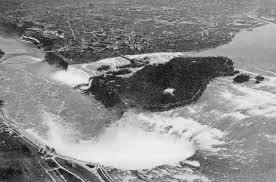
So a bit to set this example up. The novel is a few things: historical fiction, murder mystery, romance, tragedy of manners. The plot goes something like this – it’s 1901, Buffalo is playing host to the pan-american exposition. Industrialists and engineers are developing hydroelectric power at Niagara Falls with all sorts of complications: union organizing and labour conditions; nature-preservationists and eco-terrorism (that the development of the Falls was protested on environmental grounds was an absolute revelation to me); public versus private ownership of resources. Our protagonist, Louise Barrett is headmistress of an exclusive all-girls school and passionate about the way education can transform individual women and reform society as a whole. She’s also afforded unusual social liberties because of her ‘spinster’ status; a status she’s had to assume for good reason (which I won’t spoil here) to do with gender-based violence and independence for women. A man gets murdered. The hydroelectric project gets complicated. The cast of characters and their secrets and lies thickens.

Right, so in this example Louise is talking to a reporter (masquerading as a photographer – because performativity and identity is also a big thing here), Franklin (who is also a potential love interest). Franklin explains his cynicism as to why he doesn’t think the industrialists care about the ordinary people when the choice is between the people and the extraction of a resource:

I served time in the Philippines, remember? I saw our fine and honorable American soldiers using the too-aptly named ‘water cure’ to exact confessions from prisoners; of course the prisoners weren’t ‘white’ so it didn’t matter. (135) He goes on… Electricity should be a public service, not a commodity sold to the highest bidder. The electricity created at Niagara belongs to the people. Not to the industrialists, not to the nature preservationists […] but to the people” (136). 

It parallels waterboarding, right? Electricity – throughout – parallels oil extraction with immediate gains prioritized over long term environmental damage. But it’s not an allegory because it is – in the fictional past – a recognizable reflection and deepening of our understanding of the present. Am I just describing a term called ‘the beauty and wonder of historical fiction’?

Anyway. I really loved this one. The murder mystery, while a driving plot point, wasn’t the focus of the text so much as Louise’s journey to understand her past and present. The historical details about Niagara and hydro development are genuinely fascinating. The socio-political-economic context that underpins the plot is as rich a character in its own right as any. Including the one moment Louise doubts her self-reliance and thinks how lovely it would be to rely on a man, she is a model of feminist independence. So yeah, please read the book and tell me what the term is that I’m looking for. Or maybe you don’t have to read the book because it’s so obvious. It’s probably alliteration. Kidding. (Am I?)

Leave a comment

Filed under American literature, Book Club, Mystery, Prize Winner