Tag Archives: canadian literature

A Tale for the Time Being: You Probably Haven’t Heard Of This Book; Here’s Why You Should Read It

Or maybe you have heard of Ruth Ozeki’s A Tale for the Time Being. After all, it was shortlisted for the Booker Prize, hyped in all of the right places. All the same it slipped through my Canlit net, and seems to have for all those I’ve talked about the book with as I’ve been reading it, and so I’ll assume you haven’t heard of it either (you’re my made-up audience, so I may as well, right?).

This idea of the reader-audience and how readers make novels mean something by reading them is one of the (many) preoccupations of this fantastically rich and layered story. At one point our protagonist-cum-author notes “Surely a reader wasn’t capable of this bizarre kind of conjuration, pulling words from the void? But apparently she had done just that, or else she was crazy. Or else… Together we’ll make magic… Who had conjured whom?” (392). The role of reader in the novel is complex: with two threaded narratives – that of Ruth, an author living on an island in British Columbia who finds a diary washed up on the beach and that of the diarist, Nao, an American-Japanese schoolgirl – that both reflect, influence and respond to one another, one of the questions the novel asks is how readers determine and impact the meaning and influence of a story. Within the novel itself this question is explored in the relationship between Ruth and Nao, but the novel expands this question with metafictional play and probity to include this reader, too. So you ought to read it because the novel presupposes its existence depends on your reading it.

You ought to read it because the philosophical questions it explores like the nature of time and quantum mechanics; the role of animals in the interconnected web of being; restitution, responsibility and war; the relationship of class and identity (and bullying); the purpose of art and art-making; – are those questions that make both for great dissertations and for great discussions (and I know you have a thesis you want to write or a book club to attend [*cough* this was a book club choice for the book club I attend]). These questions look esoteric when I write them down, and there are moments of the novel – like reading the Appendixes on Schrodinger’s Cat – that stray in that direction, but the overwhelming feeling this novel evoked for me was exhilaration: it’s simply thrilling to see a masterful exploration of questions of time, identity and the nature of meaning in life through grounded (if somewhat fantastical) story.

And you ought to read it because I say so. Okay, not that. But because it’s beautiful.  Layered with complexity and richness, yet not so dense as to be inaccessible or off-putting. And you see it and think 400 pages, really? And I say, consider the time it takes to read. No really, consider “time” and “takes”: what does it mean to “take time”? Once you’re asking that question you may as well be reading the novel because in reading you find time, time-taking, time-making – well, you might have a different feeling on the other side (which assumes you ever leave a novel once you’ve read it… another question for another time being).

1 Comment

Filed under Book Club, Canadian Literature, Fiction, Prize Winner

Higher Ed: Bulimia isn’t the worst part

Tessa McWatt beat me to the novel I haven’t written in Higher Ed. The novel takes up the current state of higher education in Britain (to be fair, I’d write the novel about Canadian higher ed, so perhaps there’s still a market – not). Through the interwoven narratives of five characters – the administrator, the film professor, the waiter, the law student and the civil servant – the novel explores the way we live in alienated, precarious and exhausted existences and how we might live otherwise.

Metaphors work to give contour to this exploration. Our administrator, Francine, works as a Quality Assurance officer at the University, helping programs through the absurd and demeaning process of justifying their existence by way of forms, counts, assessment checks and more forms. Francine, our character-stand-in for the university itself, has a distorted self image and bulimic practices. She wants to be ever trimmer, ever more efficient, to see herself, and more importantly to be seen by others, as successful. Yet, as any bulimic would know, in the attempt to purge, all she succeeds in doing is wasting energy on what isn’t important (and getting – ironically – bloated in the process). She sells out her ideals (and her body) to get ahead, only to discover that in the process of proving her worth to others she’s forgotten her own sense of self and priorities. Read the last paragraph again replacing “she” with “the university” and you see how the metaphor works in the novel.

Enter the civil servant who works disposing of the forgotten or “lonely dead,” those who have no one but the state on which to rely when they die. The civil servant, Ed, works with his once estranged daughter, the law student, Olivia, to bring some kind of meaning to these sanitized and bureaucratic deaths complete with mass graves and – again – forms. Their attempts at meaning take the shape we all recognize as meaning-makers: song, storytelling and poetry. As the two characters make this lone and ultimately futile (like life, the novel poses) effort, they deepen their relationship and come to trust and rely on one another. Pitted against the horror of the forgotten, lonely, death this quickening of a relationship is meant – I suspect – to offer us some hope and solace.

And there’s the crux. The novel suggests we live and function among cold and uncaring bureaucracies that are driven by profit and absent either individual or community. Yet, against these efficiency efforts the novel offers budding relationships and clumsy romance. As if to say we may have forgotten how to reach out to one another, how to use poetry to understanding our humanity and how to speak to one another in words not in text(s), but we are not so far gone that we can’t try to, maybe, hazard the attempt at, remembering and connecting.

In other words it’s not an overly optimistic or heartwarming story. Instead, as a sort-of administrator in higher ed myself, I find the call for connection, for real conversation, for extended empathy as at one and the same time entirely appealing and utterly insufficient. We live in the tragic gap, says Parker Palmer, between the reality we recognize and the reality we imagine as possible. In this novel we sit precisely in that space between what the university (what our society) is– profit driven – and what it could be – people driven. And from this gap we’re meant to both witness and imagine. If only we had a way to do that. Oh wait, we do: we can read.

2 Comments

Filed under Book Club, British literature, Canadian Literature, Fiction

A Measure of Light: The Audacity of Belief

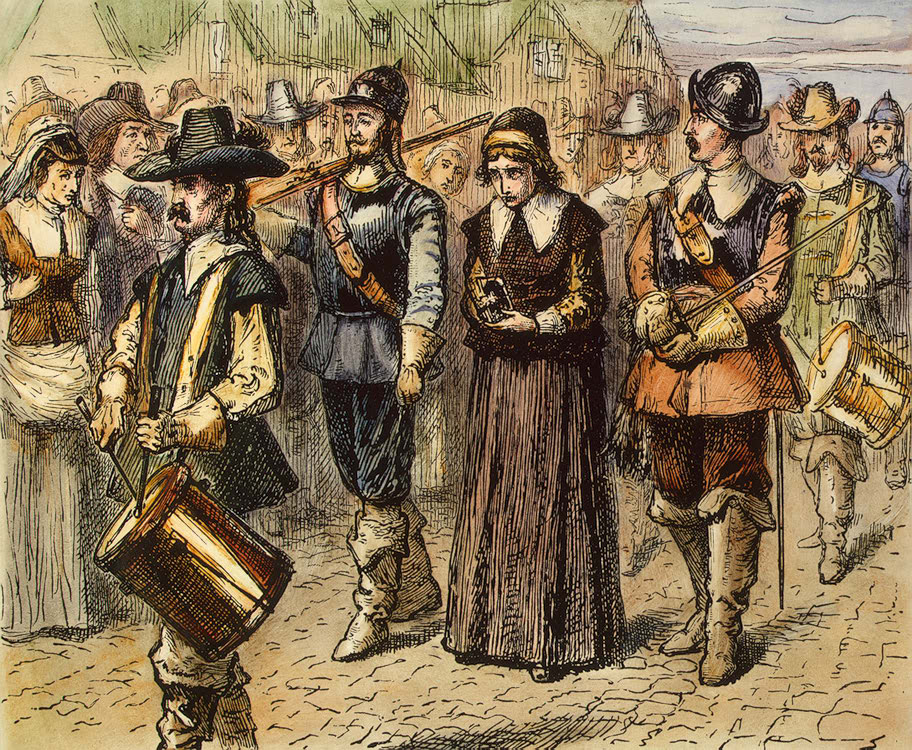
Ask yourself if there is a cause or belief you would die to serve. Or what your death might accomplish for this cause. Hardly speculative questions in our contemporary moment. Where Beth Powning’s A Measure of Light departs from the present of this reader is, well, the setting and plot: 17th century Puritan New England and the emergence of the Quaker movement. Less obviously, it departs in the sense that those who die for their beliefs do so not as suicides where bodies are the available weapons, but rather those who die for their beliefs are killed by the state for holding beliefs that are deemed so threatening, so challenging as to be violently and publicly killed. It’s a grammar slip there, you’ll notice, between the belief being killed and the person. And one worth noticing.

Our protagonist, historical figure Mary Dyer, is killed by the Boston officials that see her views of God (as accessible to all with equal access and without the intercedence of the Church) as heretical and threatening to the socio-political (and importantly economic) well-being of the region. So while she and several of her Friends are publicly hanged, their deaths do not accomplish the aims of the state in that the belief cannot be killed by killing the person. Or at least not easily. Rather, as Powning’s narrative suggests, Mary Dyer the martyr does more to raise the profile of the belief in their death than she does in her actively proselytizing life.

A Measure of Light is a fascinating read for its unravelling of the development of the Quaker movement and its portrait of New England life. It’s a rich (and beautifully written) exploration of what it means to hold beliefs with such conviction and the consequences both for the individual life, but for the family and community of that individual. It’s perhaps even more interesting – at least for me – in its representation of women and women’s bodies in this period. Mary’s journey through faith is irrevocably marked by the death of her three-day old child and the subsequent still-birth of her premature child as she and her community view these tragedies as evidence of her damned soul. I admit, as an atheist and 2015 reader, that I struggled to empathize with her conviction that it was God that spoke through her (markedly female) body, but what I could understand and relate to – only to well – was the feeling of my body, and its interpretation, as outside my control and dominion. The sense that others read what women’s bodies do – and don’t do – in questions about when (not if) these bodies will have children, in how (not whether) these bodies will be held up against impossible standards of beauty and in the sexualization and objectification of these bodies at every turn. So while the patriarchal source might be different – God – the experience of a distorted and disturbed relationship between the self and the body is all too recognizable.

All this to say, that between the resonant and provocative questions about the power of religious conviction to drive (violent) action and the representation of women’s bodies as sites for public debate, A Measure of Light is an exemplary piece of historical fiction, doing what historical fiction does best in representing the past in a way that allows us to better understand our present experience. Given the preponderance of historical fiction in Canadian literature (and no, I’m not just saying that because it’s my thing) and the attention this genre tends to get in awards season, I’d flag A Measure of Light as one likely to come up in discussions of best’s of this year.

Leave a comment

Filed under Canadian Literature, Historical Fiction

Adult Onset: What you need to know about being a parent (without having kids)

I’m not a parent. Most of the significant members of my social circles have become parents in the last year or so (friends, colleagues, siblings). It’s been hard at times to be the child-less 30-something among a seemingly ever-expanding network of parents. Sure you say, they don’t stop being siblings or friends, and you’re right, they don’t, but they become something else, too. And in becoming, add to their vocabularies, stories and frames of reference experiences that I can only imagine and witness: baby-led weaning, sleep training, pumps, exhaustion and marital discord. At this point in my life I am interested in parenting in the way I am interested in filing my own taxes: I’m conscious of the merits of taking part, wary of the responsibility and the risk of fucking it up, and secretly suspicious that the claims of it being ‘so hard’ are overstated.

Anne Marie MacDonald’s Adult Onset takes up these questions about parenting by following one parent – Mary Rose – over the course of a week as she grapples with the tensions of raising kids in the particular moment of yuppy, 2014, Toronto. Okay, so the particular moment of 2014 Toronto, but also Mary Rose’s own experience as a child and how her relationship to her parents colours her self-conceptualization and realization of her own identity as a parent. That is to say, there’s a bit of past-present blurring and Mary Rose-and-her-mother blurring  throughout.

It would be oversimplified to say her understanding of parenting is ‘fraught,’ but it is. Her parents experienced miscarriages, stillbirths and the death of a child; these experiences contributed to postpartum depression that necessarily impacted the way Mary Rose experienced her own childhood and the way she conceptualized what the acceptable activities and attitudes of parents include. Mary Rose and her partner Hillary raise an adopted child and a biological child (for Hillary, but not for Mary Rose), complicating in the novel how biological connections shape – and don’t – parenting. They’re also lesbian parents in a 2014 Toronto that has legalized gay marriage and (as of yesterday) introduced gay marriage into the curriculum, but still encounter tension in the representation and construction of normalized ideas of ‘family’ and ‘parent’. Add the complications of parenting in an era of anxiety, hyper-vigilance and over-protection (I recently read and enjoyed Hanna Rosin’s “The Overprotected Kid” which is well worth a read if you’re interested in how surveillance culture is impacting parenting norms). Add to that the week depicted is one in which Mary Rose must parent “alone” as Hillary is away.

I’d probably have enjoyed Adult Onset a lot more if I wasn’t currently surrounded by new parents. Don’t get me wrong – I love the babies in my life and the parents raising them. I don’t mind – in fact, I usually enjoy – hearing about teething, naps, day care and the toll it takes on the body.  At the moment I’m invited to watch and to listen the transformation and power of parenting in my real life, and so the opportunity to do the same in a novel is – while beautifully rendered, full of complication and nuance, exceptional writing and strong characters – not immediately exciting. But it was a great read and will – no doubt – lend itself to a rich discussion at the next book club (where, yes, I’m the only non-parent).

2 Comments

Filed under Book Club, Canadian Literature, Fiction